Canada Increases the Immigration Targets 2026
What Do the New Plans Mean for You?
Canada’s upcoming 2026–2028 Immigration Levels Plan is widely expected to set higher permanent resident targets than previous cycles, reflecting the country’s need for workers and population growth. These numbers are more than statistics; they represent how Canada plans to respond to labour shortages, an aging population, and mounting provincial demands for more newcomers. Understanding these trends now can help you shape a stronger strategy for your immigration journey.
1. What Is the Immigration Levels Plan and Why Does It Matter?
The Immigration Levels Plan is the federal roadmap that outlines how many permanent residents Canada aims to welcome each year, usually over a three‑year period. Targets are divided across economic immigration, family reunification, and humanitarian or special programs, guiding systems like Express Entry and the Provincial Nominee Programs (PNPs).
1.1 Current Targets and Why an Increase Is Expected
The 2024–2026 plan already set unusually high targets to support economic growth and offset demographic pressures. Following national consultations in 2025 on the 2026–2028 plan, many provinces have argued for higher allocations to fill gaps in healthcare, trades, and infrastructure, making an increase in 2026 targets very likely.
Book Your Consultation Session →
2. Why Is Canada Likely to Raise Immigration Targets in 2026?
Canada faces a combination of workforce shortages, demographic change, and regional pressures that collectively push immigration levels upward. These realities shape not only how many newcomers are admitted, but also which profiles are prioritized.

2.1 Skills Shortages and an Aging Population
- A growing share of Canada’s workforce is reaching retirement age, reducing the pool of experienced workers.
- Persistent vacancies in healthcare, long‑term care, construction, and services point to structural shortages.
- Immigration has become a core tool for maintaining economic growth and sustaining social programs such as healthcare and pensions.
2.2 Provincial Pressure for Larger Allocations
Provinces and territories argue that they understand their local labour markets best and need greater influence over who settles in their regions. Through expanded PNP allocations, they aim to attract newcomers into priority sectors such as energy, agriculture, technology, and healthcare, depending on their specific needs.
3. How Could Higher Targets Affect Different Immigration Streams?
If Canada raises its 2026 targets, economic immigration is expected to remain the main focus, with positive spillovers for other categories.
3.1 Economic Immigration: Express Entry and PNP
A concise way to understand potential impacts:
| Stream | How it may benefit from higher targets |
|---|---|
| Express Entry | More or larger draws and potentially more frequent invitations. |
| Provincial Nominee Programs | Larger allocations for provinces to nominate candidates. |
| Occupation‑based pathways | Ongoing or expanded draws for specific sectors like health or trades. |
3.2 Family Reunification and Special Programs
Higher overall targets can ease pressure on the family class, potentially improving processing capacity for spousal and parental sponsorships. The government may also preserve or expand pilot programs linked to long‑term care, healthcare, rural communities, and other strategic priorities.
Book Your Consultation Session →
4. What Does This Mean for You as a Prospective Immigrant or Student?
From an individual standpoint, higher immigration targets mean more opportunity but not automatic approval. The deciding factor remains how well your profile aligns with Canada’s economic and regional priorities.
4.1 Potential Advantages for Strong Profiles
- Increased chances of receiving an Invitation to Apply if your Express Entry score is already competitive.
- More doors open through PNPs, especially if you are flexible about your destination province or region.
- Stronger transition pathways from temporary status (student or worker) to permanent residence in economic categories.
4.2 Why Proactive Planning Is Essential
As Canada’s reputation remains attractive globally, a rise in targets is likely to be matched by high volumes of applicants. Candidates who invest early in improving language scores, gaining relevant work experience, and exploring less saturated provinces will be in the best position to benefit.
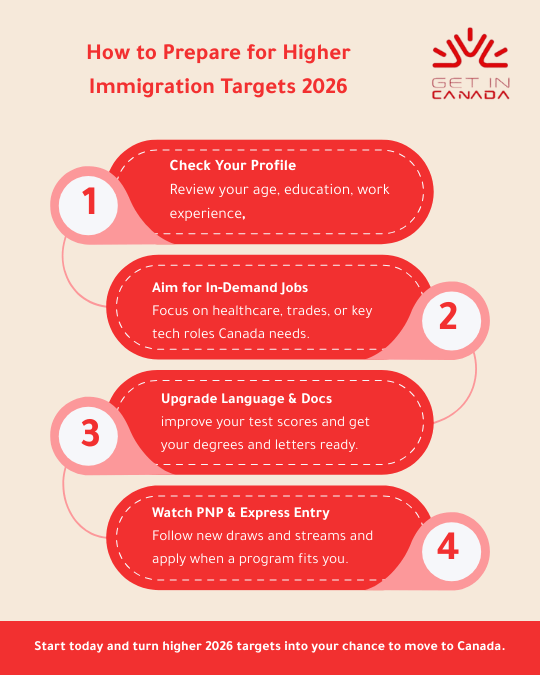
5. How Can You Prepare for the New 2026 Immigration Targets?
The most effective strategy is to use the time before the official announcement to strengthen your profile.
Practical steps include:
- Assessing your current CRS‑style profile (age, education, language, work experience) and identifying gaps.
- Targeting occupations that appear consistently in Canadian skills‑shortage and labour‑demand reports.
- Exploring PNP pathways in provinces that actively seek your skillset rather than focusing only on major cities.
- Organizing documents, reference letters, degrees, translations, so you can move quickly when a suitable window opens.
Conclusion: Turning Canada’s 2026 Targets into Your Opportunity
Canada’s likely move to increase immigration targets in 2026 is a clear signal that newcomers will continue to play a central role in the country’s economic and demographic future. However, it is not the size of the targets alone that determines success, but how well you align your skills, experience, and plans with Canada’s evolving needs. By acting now, improving your language, targeting in‑demand occupations, and understanding provincial options, you can turn an abstract policy announcement into a concrete opportunity to build a long‑term life in Canada.