Express Entry CEC Draw Sees Lower Cut-Off Score
Canada’s latest Express Entry draw for the Canadian Experience Class (CEC) marks a notable shift in immigration trends, as the CRS cut-off score fell to one of its lowest points in recent years. Thousands of candidates received Invitations to Apply (ITAs), reinforcing IRCC’s strategy of prioritizing workers already integrated into the Canadian labour market.
This draw has generated strong interest among candidates tracking the Express Entry next draw, particularly those with mid-range CRS scores who were previously just outside the threshold.
1. Overview of the Latest Express Entry CEC Draw
In the most recent Express Entry latest draw, IRCC focused exclusively on CEC candidates, issuing a high number of invitations. This targeted approach immediately impacted the CRS threshold, pushing the cut-off score downward.
From a policy perspective, this reflects Canada’s intent to retain skilled workers who already have Canadian work experience, reducing long-term labour shortages while supporting economic stability. The draw also signals continued flexibility within the Express Entry visa system.
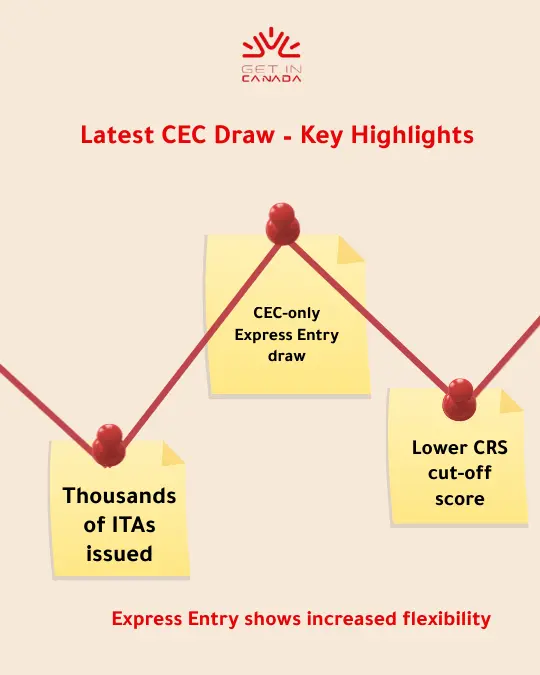
Key details from the draw include:
- A CEC-only selection round
- Thousands of ITAs issued
- A lower-than-usual CRS cut-off score
2. Why the CEC Cut-Off Score Reached a New Low
The drop in the CEC cut-off score is not the result of a single factor, but rather a combination of operational and strategic decisions. One major contributor was the large volume of invitations issued in a single round.
At the same time, IRCC continues to adjust draws based on labour market demand and annual immigration targets. By lowering the threshold, the department expanded access to candidates with solid profiles who may not have extremely high CRS scores.
Contributing factors include:
- Higher ITA volumes
- Strong demand for experienced workers
- A focus on in-Canada applicants
Book Your Consultation Session →
3. What This Means for Express Entry Candidates
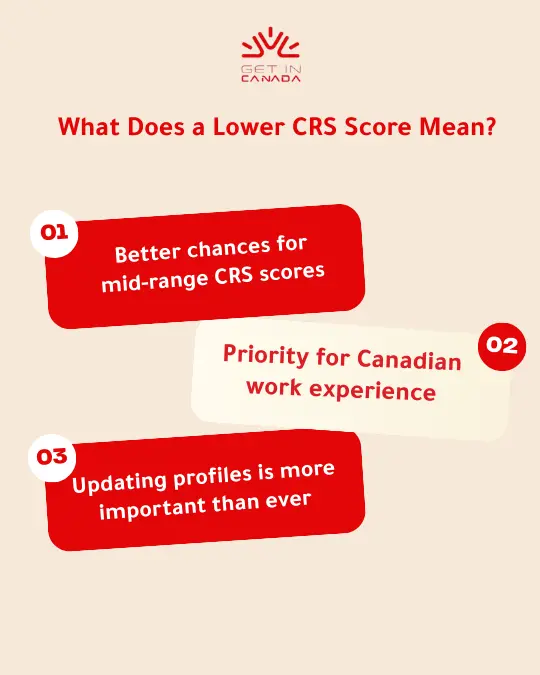
For many candidates, this draw represents a meaningful opportunity. Applicants who were previously close to the cut-off may now find themselves well within the competitive range.
This is especially relevant for individuals with Canadian work experience who maintain an up-to-date Express Entry profile. Even small improvements—such as language scores or additional experience can now have a greater impact.
Candidates should consider:
- Recalculating scores using an Express Entry Calculator
- Reviewing profile accuracy and completeness
- Monitoring upcoming draw patterns
4. Express Entry Next Draw: Analytical Outlook
While IRCC does not release an official schedule, recent draw patterns provide insight into Express Entry next draw predictions. The repeated focus on CEC rounds suggests that similar draws may continue in the near term.
However, future outcomes will depend on the number of candidates in the pool, immigration targets, and broader economic conditions. As a result, CRS scores may fluctuate even if the overall trend remains favourable.
Current indicators suggest:
- Continued CEC-focused draws
- Competitive but more accessible CRS ranges
- Ongoing adjustments throughout the year
5. Express Entry Canada Requirements Remain Consistent
Despite recent changes in CRS cut-off scores, the core Express Entry Canada requirements remain unchanged. Applicants must still meet the same eligibility criteria in order to enter the Express Entry pool.
The main eligibility requirements include:
- Skilled work experience in an eligible occupation
- Meeting minimum language proficiency levels
- Recognized educational credentials
It is important to distinguish between eligibility and ranking. Meeting these requirements allows a candidate to create an Express Entry profile, but receiving an invitation depends on how the profile ranks against others in the pool, not on eligibility alone.
6. Conclusion
The latest CEC draw confirms that Express Entry is evolving toward a more targeted and responsive system. Lower CRS thresholds and higher ITA volumes indicate a clear preference for candidates already contributing to Canada’s economy.
For applicants, staying informed and proactive is critical. In a system where policy direction can shift quickly, preparation remains the strongest advantage.