New Immigration and Asylum Measures in Canada (Bill C-12) in 2026
1. Introduction
Canada has recently introduced major changes to its immigration and asylum system through Bill C-12, also known as the Strengthening Canada’s Immigration System and Borders Act. These updates aim to improve border security, reduce system pressure, and ensure a more efficient immigration process.
However, while the government emphasizes efficiency and control, these new measures also bring significant implications for immigrants, asylum seekers, and temporary residents planning their future in Canada.
In addition, these reforms come at a time when Canada is experiencing increased migration demand, which makes understanding the new rules even more important for anyone considering moving to the country.
Book Your Consultation Session →
2. What Is Bill C-12 and Why It Matters
Bill C-12 represents one of the most significant immigration reforms in Canada in recent years. It focuses on strengthening border security while modernizing how immigration applications and asylum claims are processed. Moreover, the law introduces stricter rules and expanded government powers, aiming to reduce misuse of the asylum system and better manage increasing migration flows. This shift reflects Canada’s effort to balance openness with control.
Furthermore, the legislation allows authorities to act more quickly in response to unexpected situations, such as surges in asylum claims or national emergencies, which previously caused delays in the system.
3. Key Changes to Canada’s Immigration System
The new law introduces several structural changes that directly impact immigration processes. In addition, these changes give authorities more control over applications and documents.
At the same time, these updates are designed to improve flexibility in handling large volumes of applications, especially during critical situations.
Main updates include:
- Expanded power to suspend or cancel visas and permits
- Ability to pause entire immigration programs in emergencies
- Increased data sharing between government agencies
- Stronger enforcement at borders and inspection points
Moreover, these changes aim to streamline communication between departments, which can lead to faster processing times. However, they also require applicants to be more cautious and compliant with immigration rules.
Book Your Consultation Session →
4. New Rules for Asylum Seekers in Canada
One of the most impactful aspects of Bill C-12 is the overhaul of the asylum system. The government is clearly targeting delays and misuse of refugee claims.
For example, a one-year deadline has been introduced for submitting asylum applications after entering Canada. If this deadline is missed, the claim may no longer be eligible for a full hearing. Additionally, stricter eligibility rules mean that some applicants may be redirected to alternative processes instead of the traditional refugee system. This could significantly change how claims are handled.
Furthermore, these updates encourage applicants to act quickly and prepare their documentation properly, as delays may result in losing important opportunities for protection.
5. Who Will Be Affected the Most?
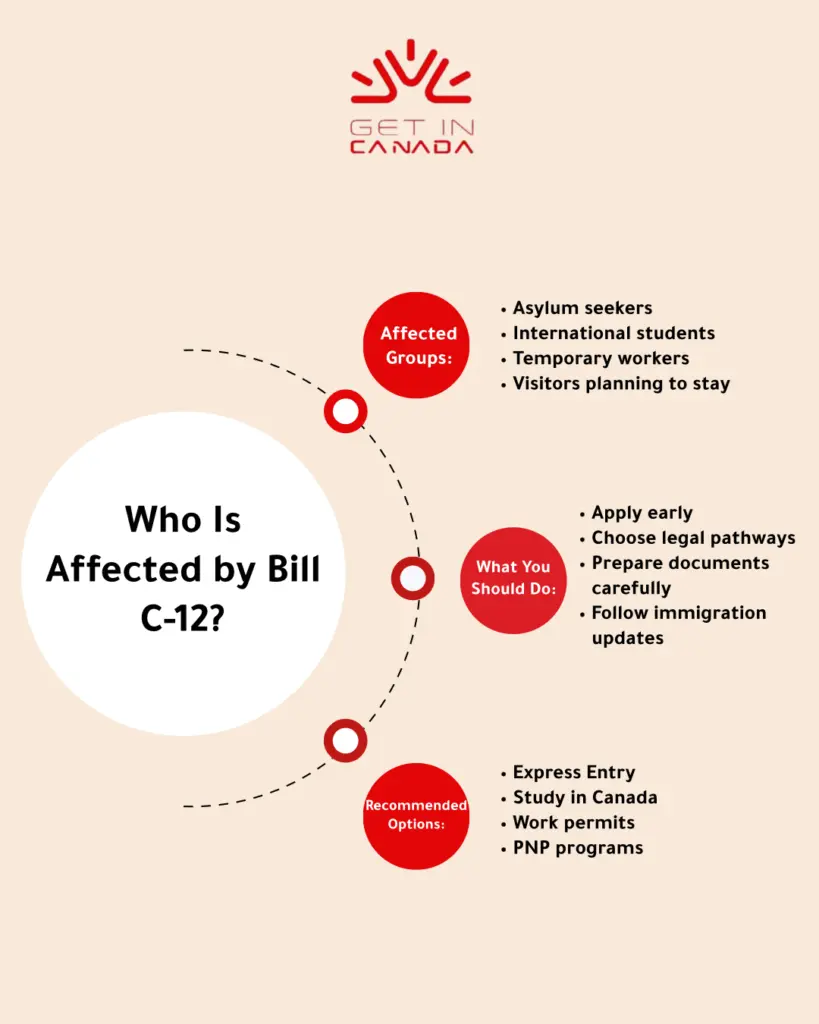
These changes will affect a wide range of individuals, especially those already in Canada or planning to apply soon. In particular, the following groups may experience the biggest impact:
- Asylum seekers and refugee claimants
- International students and temporary workers
- Visitors considering staying long-term
- Applicants with pending immigration files
In addition, individuals who rely on flexible immigration pathways may find the system more restrictive. Therefore, staying updated and seeking proper guidance is now more important than ever. Moreover, those with incomplete or delayed applications could face higher risks under the new rules.
Read also:
- How to Get Canadian PR with a Two-Year College Degree
- The 8 Most Strategic Cities for Newcomers to Canada 2026
- Government Instructions Leave the Door Open for PGP Canada to Return in 2026
- Express Entry CEC Draw Sees Lower Cut-Off Score
6. Pros and Goals of the New Immigration Law
From the government’s perspective, Bill C-12 aims to create a more efficient and secure system.
On one hand, the law helps:
- Reduce backlogs in immigration processing
- Prevent abuse of the asylum system
- Improve border security and monitoring
Furthermore, it allows faster decision-making during emergencies, which can be critical for national safety and system stability.
In addition, the government believes these measures will increase public confidence in the immigration system, ensuring that resources are directed toward genuine applicants.
Book Your Consultation Session →
7. Concerns and Criticism of Bill C-12
Despite its goals, the law has raised concerns among experts and advocacy groups. Critics argue that stricter rules could limit access to protection for genuine refugees. For instance, denying claims after one year or redirecting cases to faster processes may reduce fairness in decision-making. In addition, expanded government powers over permits and applications have sparked debates about transparency and accountability.
Moreover, some experts warn that faster processes may lead to mistakes or insufficient review of complex cases. Therefore, balancing efficiency with fairness remains a key challenge.
8. Summary of Key Changes
This comparison highlights how significantly the system has shifted toward stricter control and faster response mechanisms. As a result, applicants must be more prepared and informed before starting their immigration journey.
| Area | Before Bill C-12 | After Bill C-12 |
|---|---|---|
| Asylum deadline | No strict 1-year limit | 1-year deadline enforced |
| Government powers | Limited control | Expanded authority |
| Application processing | Standard procedures | Can be paused or canceled |
| Border enforcement | Moderate | Stronger and more flexible |
9. What This Means for Your Immigration Plans
If you are planning to move to Canada, timing and strategy are now more important than ever. Instead of relying on uncertain pathways like asylum, it is highly recommended to explore structured immigration programs such as:
- Express Entry
- Study permits
- Work permits
- Provincial Nominee Programs (PNPs)
Moreover, having a clear immigration plan can help you avoid risks associated with the new law. In addition, working with trusted guidance or agencies can significantly improve your chances of success. Therefore, preparation, accuracy, and timing are now essential factors in achieving your immigration goals.
10. Conclusion
Bill C-12 marks a turning point in Canada’s immigration system. While it aims to strengthen borders and improve efficiency, it also introduces stricter rules that applicants must carefully navigate. Ultimately, staying informed and choosing the right immigration strategy is essential in 2026 and beyond. If you are considering Canada as your destination, now is the time to plan wisely and act strategically.
In conclusion, understanding these changes early can give you a strong advantage and help you make better decisions for your future in Canada.