LMIA Exempt Expansion Meets Low Wage LMIA Reopening
Introduction
Canada is entering 2026 with notable adjustments to its temporary work permit system. While the federal government is increasing targets for LMIA-exempt permits, it is simultaneously reopening low-wage LMIA processing in regions where unemployment has declined.
This dual approach signals a more data-driven immigration strategy focused on addressing labour shortages while maintaining oversight of foreign worker intake.
1. Canada Raises Targets for LMIA-Exempt Work Permits
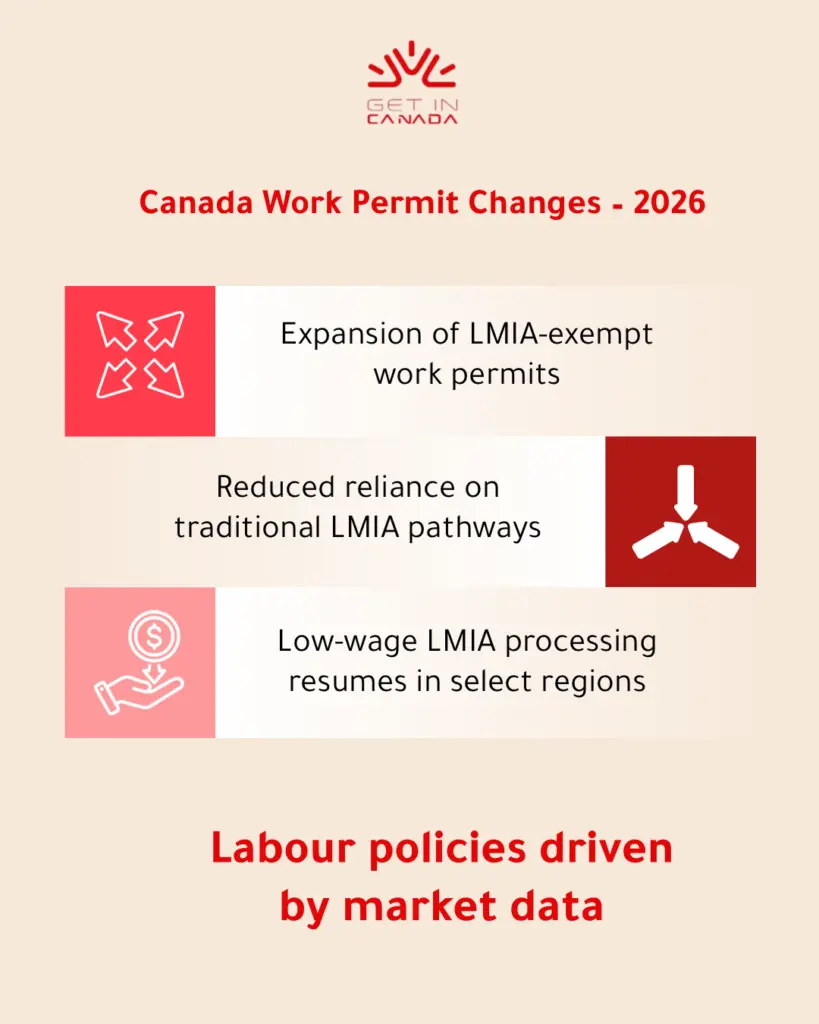
The federal government has increased its admissions target for LMIA-exempt work permits under the International Mobility Program to 170,000 workers, representing a 32% increase from earlier projections.
At the same time, the admissions target for LMIA-based permits through the Temporary Foreign Worker Program has been reduced to 60,000, highlighting a shift toward faster and more flexible hiring pathways.
Because all LMIA-exempt permits are issued through the International Mobility Program, which allows employers to hire foreign workers without proving a Canadian candidate is unavailable, this increase reflects Canada’s preference for streamlined labour entry routes. In short, Canada appears to be prioritizing efficiency while still protecting domestic employment.
Book Your Consultation Session →
2. Freeze on PGWP Fields Adds Policy Stability
Alongside higher admissions targets, the government confirmed that eligible fields of study for Post-Graduation Work Permits (PGWPs) will remain unchanged in 2026.
Under these rules, graduates from certain non-exempt programs must complete studies linked to labour shortages to qualify for a PGWP. By freezing the list, policymakers are aiming to provide predictability for students and employers reducing the risk of sudden eligibility changes.
3. Low-Wage LMIA Processing Officially Resumes
Starting January 9, 2026, Service Canada resumed accepting low-wage LMIA applications in multiple metropolitan areas after unemployment rates dropped below 6%, the threshold that had triggered a freeze.
The reopened regions include Vancouver, Winnipeg, Kingston, Halifax, Moncton, Saint John, Fredericton, and Montréal.
| Region | Previous Rate → New Rate |
|---|---|
| Halifax | 6.1% → 5.2% |
| Moncton | 7.3% → 5.5% |
| Saint John | 7.3% → 5.8% |
| Fredericton | 6.7% → 5.2% |
| Kingston | 6.6% → 5.6% |
| Winnipeg | 7.3% → 5.7% |
| Vancouver | 6.8% → 5.9% |
However, Quebec continues a separate freeze on low-wage LMIA processing in Montréal and Laval until December 31, 2026, despite lower unemployment, the next labour market update is expected on April 10, 2026, meaning eligibility could shift again.
Eligible Regions at a Glance
| Region | Province |
|---|---|
| Vancouver | British Columbia |
| Winnipeg | Manitoba |
| Kingston | Ontario |
| Halifax | Nova Scotia |
| Moncton | New Brunswick |
| Saint John | New Brunswick |
| Fredericton | New Brunswick |
| Montréal | Quebec |
4. Why These Two Policies Are Happening Together
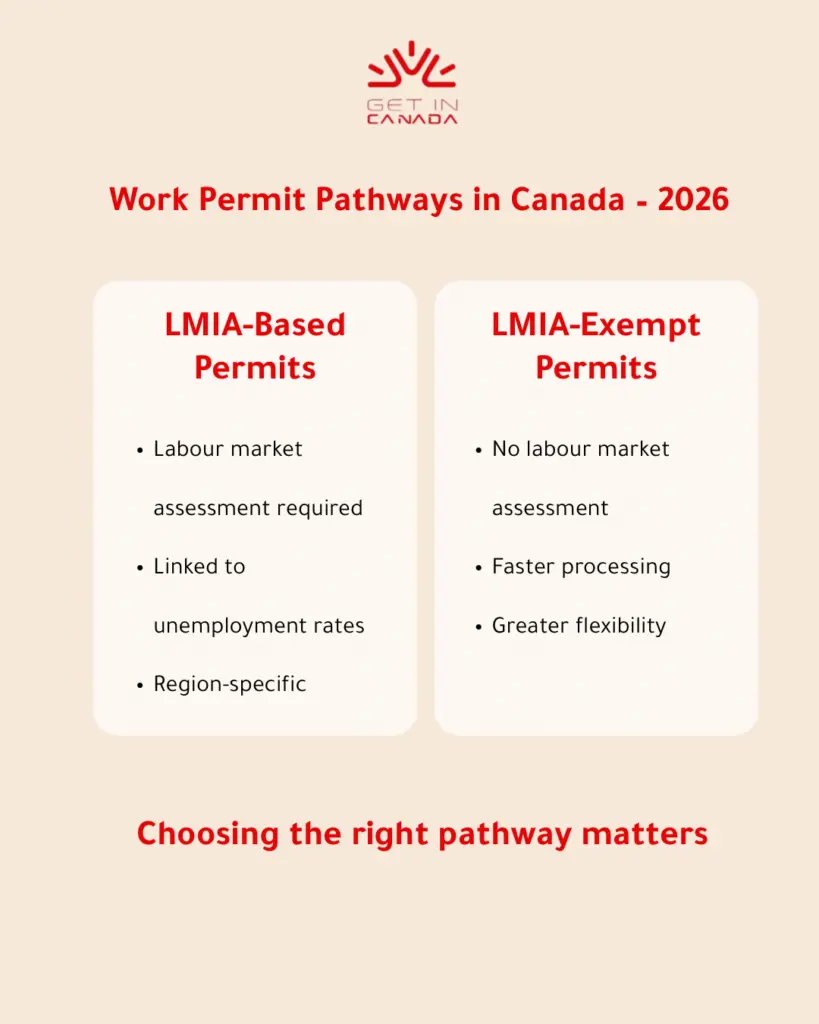
At first glance, expanding LMIA-exempt permits while reopening LMIA processing may seem contradictory. In reality, both policies serve the same objective: aligning immigration with real-time labour market conditions.
What this signals:
- Faster entry routes for high-impact talent
- Controlled hiring in lower-wage sectors
- Regional decision-making based on unemployment data
Rather than choosing one pathway over another, Canada is building a hybrid system that balances economic growth with workforce protection.
5. What This Means for Foreign Workers
For applicants, the evolving landscape creates both opportunity and urgency. Increased LMIA-exempt admissions suggest more accessible pathways, while the reopening of LMIA processing expands hiring options in specific cities.
Potential advantages include:
- More work permit pathways
- Improved hiring flexibility
- Expanded regional job opportunities
However, policy shifts also mean applicants must stay informed; especially as eligibility rules and labour data continue to evolve.
6. Strategic Insight for Employers
Employers should reassess recruitment strategies in light of these updates. LMIA-exempt pathways can reduce administrative burden, while reopened LMIA streams allow businesses in qualifying regions to address staffing shortages quickly.
Because unemployment metrics are reviewed regularly, these windows of opportunity may change, making proactive hiring decisions increasingly important.
Book Your Consultation Session →
7. Canada’s Labour Strategy
Taken together, these updates illustrate a broader transformation in Canada’s immigration approach. By increasing LMIA-exempt admissions while selectively reopening LMIA processing, the government is moving toward a system that is:
- More responsive to economic shifts
- Regionally targeted
- Focused on long-term workforce sustainability
For both workers and employers, adaptability is becoming just as important as eligibility.
Conclusion
Canada’s decision to expand LMIA-exempt work permits while resuming low-wage LMIA processing marks a pivotal moment in the country’s labour policy. Rather than tightening or loosening immigration outright, policymakers are refining how talent enters the workforce, prioritizing flexibility without losing control.
For foreign workers, understanding these parallel changes could be the difference between securing an opportunity and missing it. And for employers, aligning hiring strategies with these evolving rules will be essential in navigating Canada’s increasingly dynamic labour market.