Have Canada’s Asylum Laws Changed in 2026? Key Updates to Know
Navigating the international protection framework requires a clear, strategic understanding of the latest structural shifts across federal borders. Canada’s legal system is currently experiencing rapid, comprehensive policy transformations designed to streamline application processing, reduce heavy case backlogs, and modify client screening mechanisms. This comprehensive update outlines the operational rules, statutory timelines, and evidentiary benchmarks you must know to effectively manage your case this year.
1. Overview of Canada’s asylum system
The operational structure of Canada’s protection mechanism is designed to evaluate humanitarian folders through coordinated federal channels, ensuring that those fleeing genuine persecution receive safe harbor. The system functions through a distinct separation of powers between initial eligibility screening at borders and final merit adjudications.
The Dual-Agency Framework
- First Contact & Screening: Initial processing, identity verification, and security routing are managed jointly by the Canada Border Services Agency (CBSA) and Immigration, Refugees and Citizenship Canada (IRCC).
- The Adjudication Body: Eligible folders are traditionally routed to the Immigration and Refugee Board of Canada (IRB), an independent, quasi-judicial tribunal tasked with assessing risk factors before granting status.
Legal Standards of Evaluation
Evaluating refugee files relies heavily on analyzing personal testimonies, biometric data, and regional country condition profiles against the official benchmarks dictated by Canada asylum laws 2026 updates. To remain compliant with Canada asylum laws 2026 parameters, the system strictly measures whether a claimant meets the international definition of a Convention Refugee or a Person in Need of Protection based on a well-founded fear of persecution.
Book Your Consultation Session →
2. Have asylum laws changed in Canada in 2026?
The structural answer is a definitive yes, following major legislative changes and policy directives designed to limit system backlogs and protect domestic resources.
If you are evaluating how to apply, you must know that seeking asylum in Canada 2026 is governed by newly active ineligibility bars, tighter border enforcement protocols, and automated screening frameworks. Anyone looking for asylum in Canada 2026 must understand that these updates permanently change processing speeds, international data-sharing protocols, and the statutory criteria required to secure a full, oral tribunal hearing before the IRB.
| Legislative Area | Past Policy Framework | New 2026 Rule Enforcement |
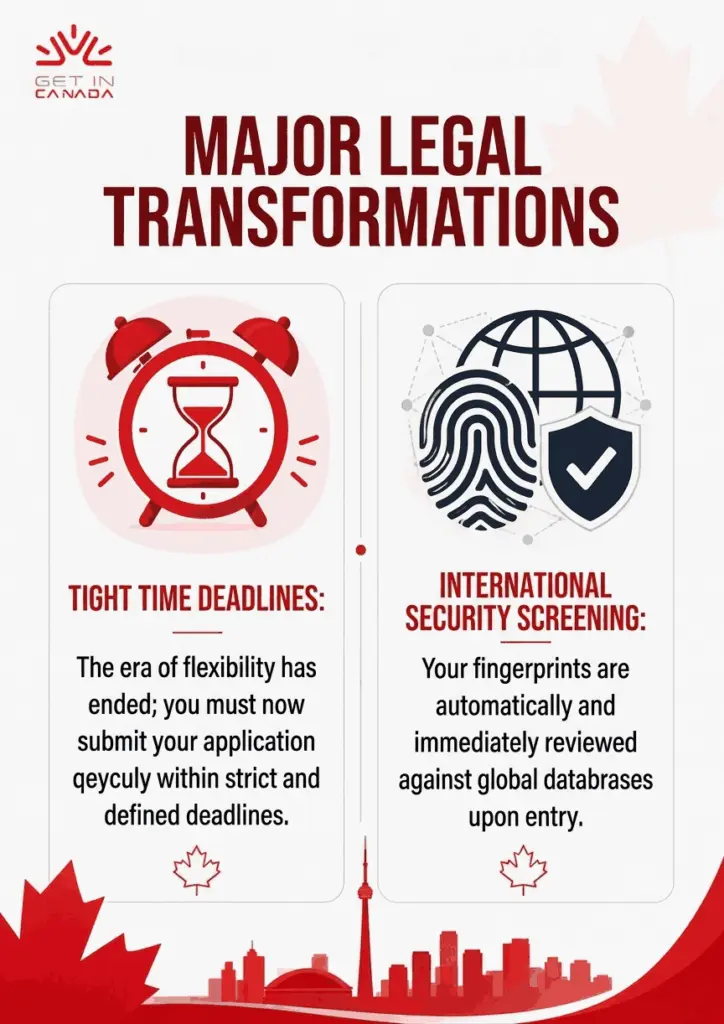
| Inland Filing Windows | Flexible timelines with extended grace periods. | Strict, non-negotiable temporal boundaries for submission. |
| Biometric Cross-Checking | Restricted to specific international databases. | Automated, global biometric matching with Five Eyes partners. |
| Tribunal Routing | Majority of claims automatically referred to the IRB. | Heavy diversion of ineligible profiles to paper-based assessments. |
3. What should asylum seekers know before applying?
The absolute first step to a successful folder submission is knowing the rigid procedural deadlines and structural communication requirements that could invalidate your active account.
Critical Pre-Filing Benchmarks
• Managing a refugee claim Canada pathway requires recognizing that a failure to present core identity paperwork promptly triggers an automatic abandonment order.
• When preparing a refugee claim Canada application, claimants must ensure their current physical residential address, phone lines, and email portals are constantly updated within federal databases to avoid missing critical, time-sensitive legal mandates.
• The burden of proof rests entirely on the applicant, meaning that vague or uncorroborated testimonies without initial documentation will severely weaken the profile from day one.
Book Your Consultation Session →
4. Steps to make a refugee claim in Canada
Initiating the application path requires following a precise, legally binding sequence of administrative steps via authorized digital portals or designated ports of entry.
Detailed Phase Breakdown
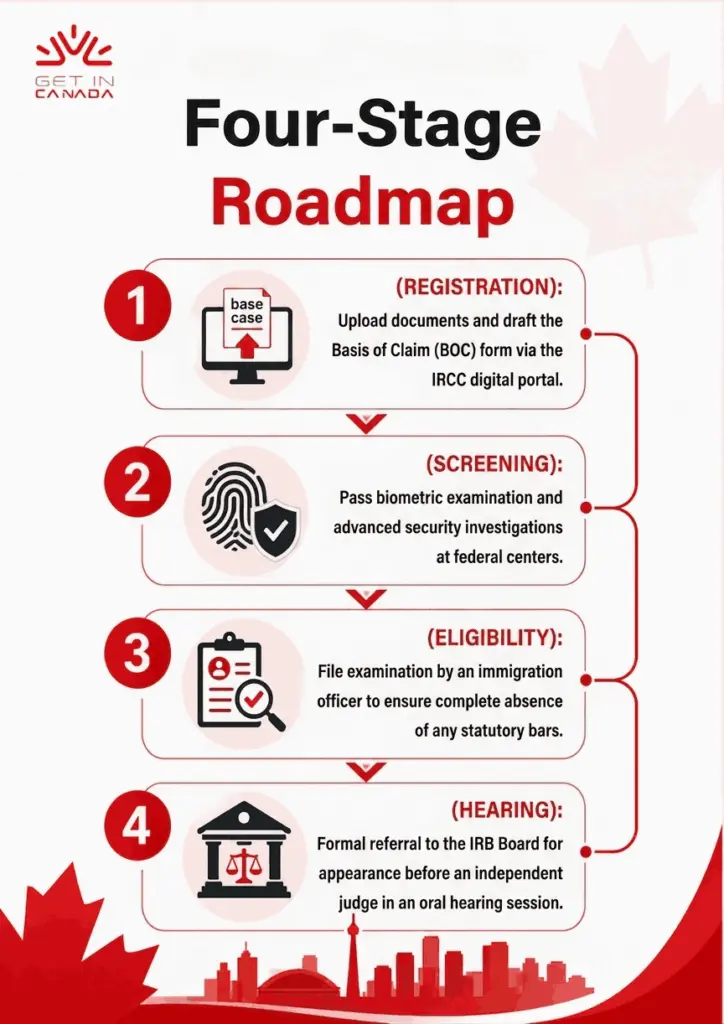
- Portal Account Creation: Initiating the official Canada refugee process begins by uploading your core personal document folder, identity records, and your highly detailed, completed Basis of Claim (BOC) form via the IRCC online application portal.
- Biometrics and Security Screening: Once submitted in the Canada refugee process, you must successfully pass mandatory biometric screening (fingerprints and photos) and national security examinations at a designated federal office.
- The Eligibility Determination: An immigration officer reviews the core framework of the file to check for statutory bars. If no ineligibility criteria are triggered, your folder passes the initial federal screening.
- IRB Tribunal Referral & Final Hearing: In this final stage of the Canada refugee process, the file receives an official referral to the Immigration and Refugee Board (IRB), where an independent judge schedules and conducts a full, oral merit hearing to issue the final protection decision.
5. Common documents required
Fulfilling the official Canada asylum requirements means compiling an airtight, verifiable portfolio of personal evidence that establishes both your identity and the credibility of your persecution narrative. Meeting all Canada asylum requirements from day one is the only way to avoid immediate administrative delays.
Mandatory Identity and Civil Records
• Valid or expired international passports, official travel documents, and national identity cards.
• Original birth certificates, marriage certificates, and family household registry books.
• Visas, travel itineraries, plane tickets, and any entry/exit stamps verifying your physical route to Canada.
Corroborative Persecution Evidence
• Certified medical records, psychological evaluations, or police reports documenting past physical harm.
• Written statements from community leaders, human rights organizations, or legal bodies confirming your personalized risk.
• Official media publications, threat messages, or regional documentation detailing the dangerous country conditions affecting you.
• Note: To satisfy Canada asylum requirements, all foreign-language documents must be accompanied by certified English or French translations produced by a legally recognized, sworn translator.
6. How long does the asylum process take?
Processing timelines remain highly fluid as federal departments transition to newly automated screening frameworks and digital tracking mechanisms.
According to the newest Canada immigration updates 2026 briefs, the system aims to aggressively clear inactive or structurally flawed folders to prioritize urgent, highly credible files. Following the mandates in the Canada immigration updates 2026 guidelines, despite these structural efficiency targets, complex cases involving extensive international background checks, security delays, or secondary appeals continue to experience significant wait times, often extending for several months. Applicants must prepare financially and logistically for a prolonged administrative journey while waiting for their final merit hearing date.
Book Your Consultation Session →
7. Common mistakes to avoid
A single administrative oversight, contradictory statement, or delayed response can lead to the permanent closure of an otherwise valid protection application.
Fatal Pitfalls in Profile Management
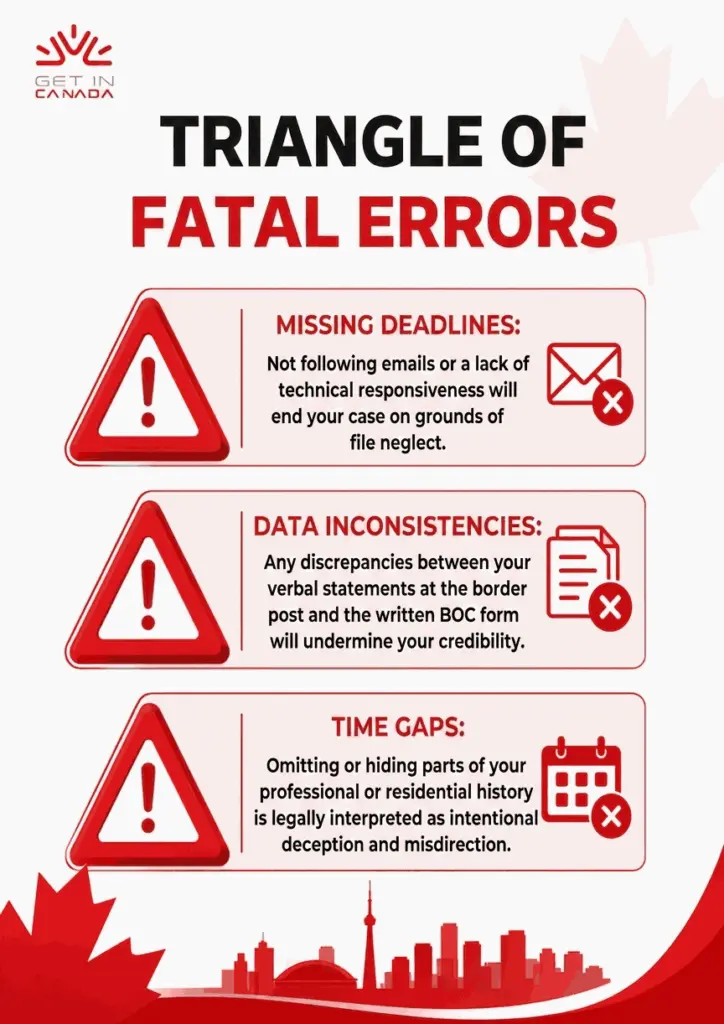
• Missing Scheduled Appointments: A primary error affecting refugee protection Canada seekers is missing scheduled screening interviews or biometric dates due to technological glitches or unmonitored email accounts.
• Information Discrepancies: Providing conflicting dates, locations, or names between your initial border declaration and your finalized BOC form triggers immediate credibility investigations, heavily compromising your status for refugee protection Canada programs.
• Omission of History: Leaving gaps in your employment records, residential addresses, or previous international visa applications is viewed by reviewers as fraudulent concealment, heavily jeopardizing the entire claim for refugee protection Canada.
8. When to seek professional help
Attempting to navigate these intense legislative changes and complex institutional rules without guided expertise exposes your folder to severe operational risks.
When Counsel Becomes Mandatory
• The moment you experience complications during your initial eligibility interview or receive an official notice of procedural fairness.
• If your profile involves complex cross-border elements, such as previous residency or protection applications in other global nations.
• When you require formal representation to present complex arguments before the independent IRB review boards during an oral hearing.
• Working with a licensed, experienced advocate ensures your personal narrative is legally aligned with international human rights standards, avoiding costly procedural errors.
FAQ About Have Canada’s Asylum Laws Changed in 2026?
For more Canadian visa inquiries? Click here to start the process with our help →
Conclusion
Staying ahead of Canada’s rapidly evolving protection laws is the only definitive way to safeguard your folder from sudden administrative closure or flat ineligibility rulings. Navigating these newly enforced deadlines, strict documentation standards, and complex cross-border data-sharing rules demands absolute precision at every stage of your application. At Get In Canada, we ensure your paperwork is thoroughly audited, legally structured, and fully compliant with active federal frameworks. Take the initiative to check your filing timelines today, organize your evidence seamlessly, and build a secure, legally sound strategy for your future.