Top Mistakes Middle East Business Owners Make When Assessing Canada in 2026

Expanding into Canada sounds like a safe, logical move for many business owners across the Middle East—and in many ways, it is. Canada offers political stability, access to global markets, and a strong legal system. But here’s the uncomfortable truth: a lot of entrepreneurs approach Canada with assumptions that simply don’t hold up in 2026.
The result? Delays, unexpected costs, and sometimes failed expansion plans. If you’re seriously considering Canada, understanding these common mistakes will save you time, money, and frustration.
1. Mistake #1: Assuming Canada Is One Unified Market
Many business owners treat Canada as a single, uniform market. In reality, each province operates almost like its own economic ecosystem. Regulations, taxes, labor costs, and even consumer behavior can differ significantly between provinces.
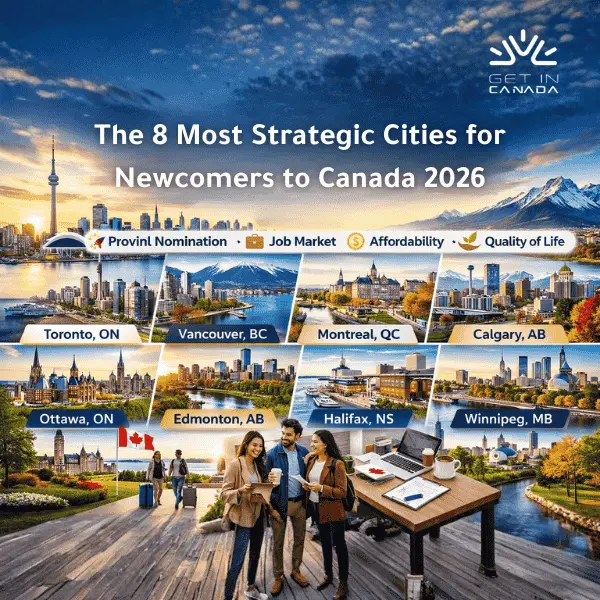
For example, Ontario is the economic hub with the highest concentration of businesses, while Alberta attracts entrepreneurs with lower taxes and a business-friendly environment. Meanwhile, Quebec has unique language laws and cultural dynamics that directly impact operations.
Choosing the wrong province for your industry can quietly drain your margins.
2. Mistake #2: Underestimating Costs
Canada is stable, but it’s not cheap. Labor, rent, compliance, and logistics can be significantly higher than what many Middle Eastern entrepreneurs are used to.
Business owners often build financial projections based on optimistic assumptions, only to discover:
- Hiring skilled employees costs more than expected
- Office and warehouse spaces are expensive in major cities
- Compliance and licensing fees add up quickly
Without a realistic cost structure, even profitable businesses can struggle in their first year.
Book Your Consultation Session →
3. Mistake #3: Overlooking Regulatory Complexity
Canada is known for transparency, but that doesn’t mean simplicity. Regulations are strict, detailed, and vary by industry and province.
Common surprises include:
- Industry-specific licensing requirements
- Import/export restrictions
- Employment laws that strongly favor workers
If you don’t have proper legal and business guidance early on, you may find yourself fixing costly compliance mistakes later.
4. Mistake #4: Expecting Fast Immigration Through Business
Many entrepreneurs assume that opening a business automatically leads to fast immigration approval. This is one of the biggest misconceptions.
Programs like Express Entry are points-based and highly competitive, while business immigration pathways require detailed plans, proof of funds, and real economic contribution.
In short: having a business idea is not enough you need a structured, well-documented strategy.
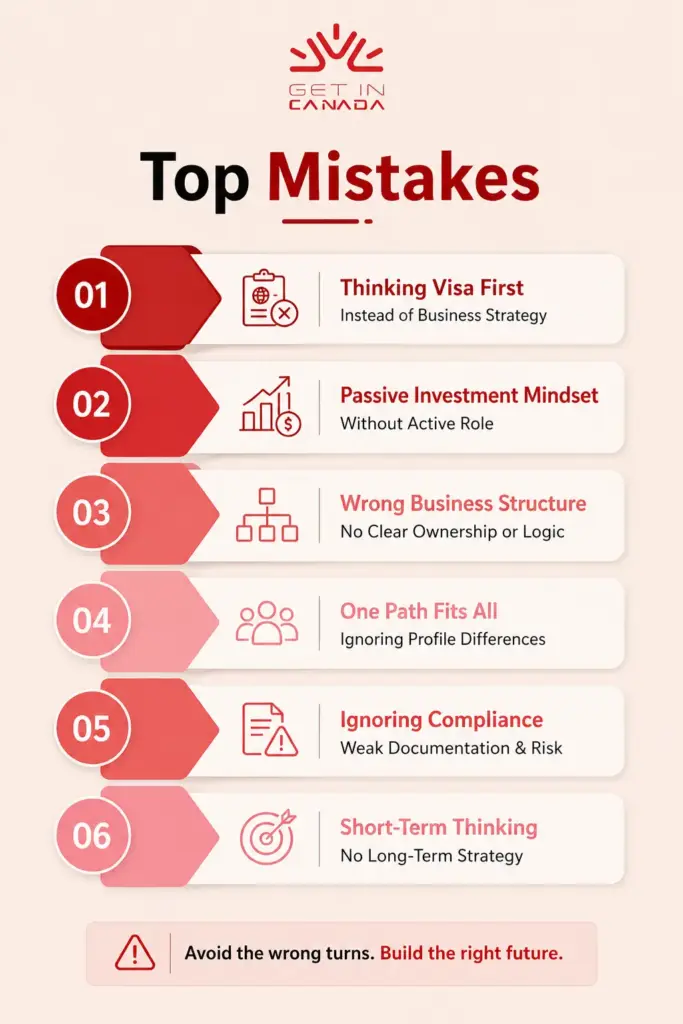
5. Mistake #5: Ignoring Market Fit
What works in Dubai, Riyadh, or Doha won’t always work in Toronto or Vancouver.
Canadian consumers:
- Value transparency and ethical business practices
- Expect high service standards
- Are highly competitive in pricing comparisons
Failing to adapt your product, pricing, or branding to the Canadian audience is a fast way to lose traction.
Mistake #6: viewing Canada as a short-term move instead of a long-term
The strongest entrepreneurs assess Canada with a multi-layered lens. They do not ask only whether they can enter Canada. They ask whether Canada can serve as a market base, a growth jurisdiction, a family continuity strategy, a governance jurisdiction, or a long-term North American foothold.
That is the shift I am seeing more clearly in 2026.
The most serious Middle East business owners are no longer looking at Canada only through an immigration lens. They are looking at Canada through a business architecture lens.
FAQs About Top Mistakes Middle East Business Owners Make When Assessing Canada in 2026
Canada is not a “plug-and-play” expansion market. It rewards preparation, realistic expectations, and strategic planning.
Book Your Consultation Session →
If you approach it with the mindset that worked in your home country, you might struggle. But if you take the time to understand the differences—economic, cultural, and regulatory—you’ll position your business for real, long-term success.