Have Canada’s Asylum Laws Changed in 2026? Everything You Need to Know
Canada remains the top global destination for individuals seeking safety, stability, and a new life filled with opportunities. However, if you have been following the news recently, you have likely noticed significant updates surrounding the legal immigration systems here. Navigating the finer details of immigration can feel overwhelming, but don’t worry at all! In this comprehensive guide, we will take you through a clear and simplified overview to uncover the reality of recent changes, helping you establish your next step with complete confidence and success.
1. An Overview of Canada’s Asylum System
Canada’s humanitarian framework focuses on providing legal protection to individuals facing genuine risks in their home countries. This system is designed to be fair and structured through clear processing streams.
Primary Application Pathways:
- Ports of Entry (POE): Filing an immediate claim upon arrival at Canadian airports, land borders, or marine ports.
- Inland Offices: Submitting a refugee claim in Canada online through authorized immigration portals after physically entering the country.
2. Have Canada’s Asylum Laws Changed in 2026?
Yes, fundamentally! Canada refugee laws 2026 have undergone structural updates aimed primarily at balancing humanitarian responses with faster administrative processing.
The Core Concept of New Updates: Recent Canada immigration updates focus on accelerating the initial screening phase and tightening border controls. This ensures that genuine files are processed as quickly as possible while reducing tribunal backlogs.
Key Highlights of Current Legislative Changes:
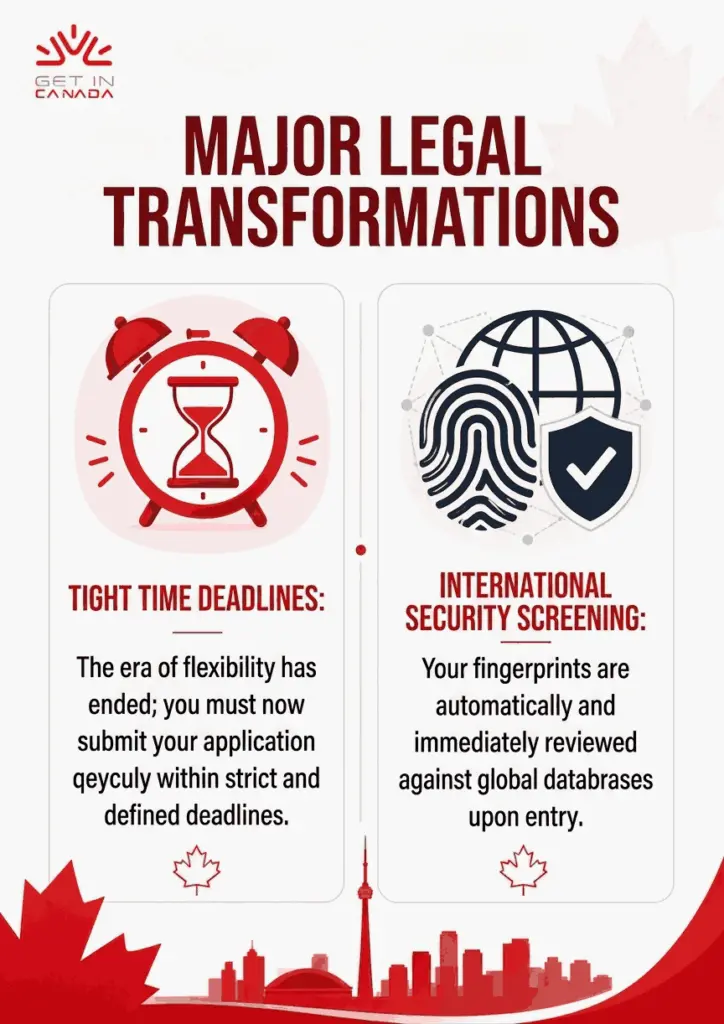
- Shortened Timelines: Accelerating the period allowed for claimants to submit supporting documentation and evidence.
- Expanded Authority for Border Officers: Granting screening agents clearer tools to identify ineligible files early on.
- Global Digital Integration: Activating stricter, real-time biometric cross-checking across international networks.
3. What Must an Asylum Seeker Know Before Applying?
Before taking any official steps, it is vital to fully comprehend the Canada refugee requirements to avoid administrative loopholes that could close your file before it ever reaches a judge. The federal government enforces strict criteria regarding an applicant’s geographic transit and international registry track record.
| Statutory Standard | Requirement Details | Procedural Outcome of Violation |
| First Safe Country | Claims must be made in the first safe nation an individual reaches (e.g., the US). | Immediate claim exclusion and turnback at the land border. |
| Global Biometric Record | Clean records with no active asylum applications in the US, UK, Australia, or New Zealand. | Automatic forfeiture of federal eligibility under shared biometric matching. |
| Prior Safe Haven | No official refugee status or durable residency that guarantees actual protection in a third country. | Instant administrative refusal due to the availability of an alternative safe haven. |
4. What Are the Steps to File an Asylum Claim?
Navigating Canada refugee processing follows a specific, sequential track that requires a high level of organization for civil documents and legal arguments.
Steps of the Official Application Process:
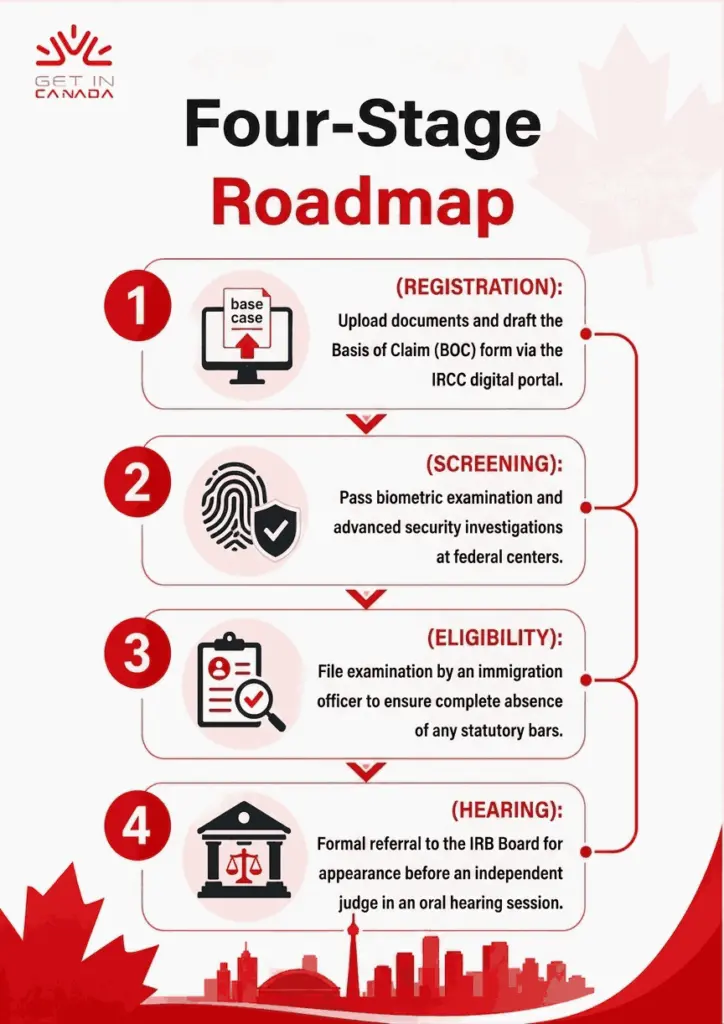
- Phase 1 (Registration & Screening): Completing federal forms and uploading files via the immigration portal, or handing them directly to a border officer.
- Phase 2 (Biometric & Security Check): Undergoing mandatory fingerprinting and comprehensive international criminal background checks.
- Phase 3 (The Oral Merit Hearing): Presenting testimony and discussing case merits directly before independent judges at the Immigration and Refugee Board (IRB).
5. What Documents Are Usually Required?
Securing refugee protection in Canada relies heavily on the strength of objective, corroborative evidence. Standard required documents include:
- Official Identity Records: Valid passports, national identity cards, and civil documents (birth and marriage certificates).
- The Written Narrative: A detailed, accurate, and legally translated personal statement explaining the specific grounds for seeking humanitarian protection.
- Corroborative Physical Evidence: Official reports, medical documents, photos, or any tangible proof confirming a direct and real risk to the applicant’s life.
6. How Long Does an Asylum Claim Take in Canada?
Processing timelines vary constantly based on administrative backlogs and case complexity. With recent updates focused on speeding up file closures, estimated timelines are broken down as follows:
- Preliminary Eligibility Audit: Usually takes anywhere from a few days to a few weeks to issue a decision allowing entry into the tribunal stream.
- Final Merit Hearing Scheduling: The total time to resolve a case and receive a substantive decision averages between a few months to a full year, depending on the nature of the file.
7. Major Mistakes to Avoid and When to Seek Professional Help?
Falling into administrative traps during the initial stages can cause irreversible damage to your legal case later on.
Critical Pitfalls That Weaken Your Claim:
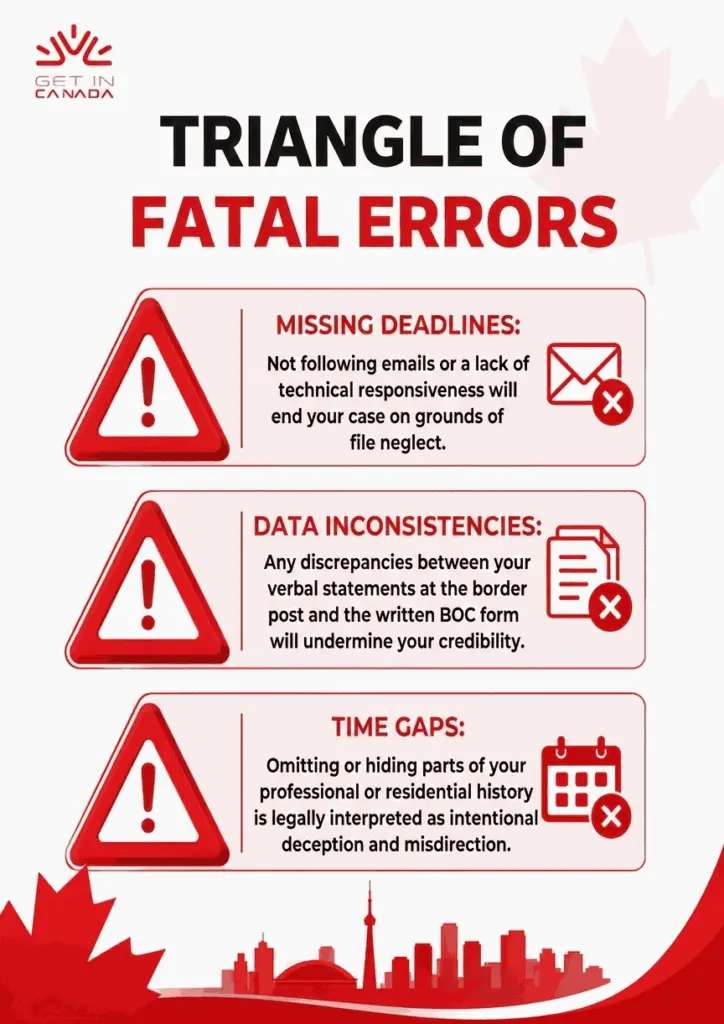
- Testimony Contradictions: Discrepancies between your written narrative and oral statements made during preliminary interviews.
- Concealing Travel History: Failing to declare previous visas, fingerprints, or immigration applications tied to other countries.
- Delayed Document Submission: Missing the strict deadlines enforced by updated 2026 regulations for submitting supporting evidence.
Why You Need Certified Legal Counsel:
Dealing with federal frameworks demands absolute precision. Coordinating with a licensed immigration consultant or specialized lawyer ensures your narrative and physical evidence align perfectly with strict 2026 legal metrics. This significantly increases your success rate and shields your file from automatic administrative rejections.
FAQs About How Canada’s Asylum Laws Changed in 2026?
Book Your Consultation Session →
Your Journey Toward Stability Begins with the Right Step!
Remember, new policy adjustments are not designed to close doors, but rather to organize border entry and make the system efficient for those truly in need. Your future in Canada deserves close attention to every detail; organizing your paperwork correctly from day one is your path to safe haven.