Canada Took Away His Permanent Residency After Nearly 30 Years: Why This Ex-Refugee’s Deportation Could Become a Landmark Case
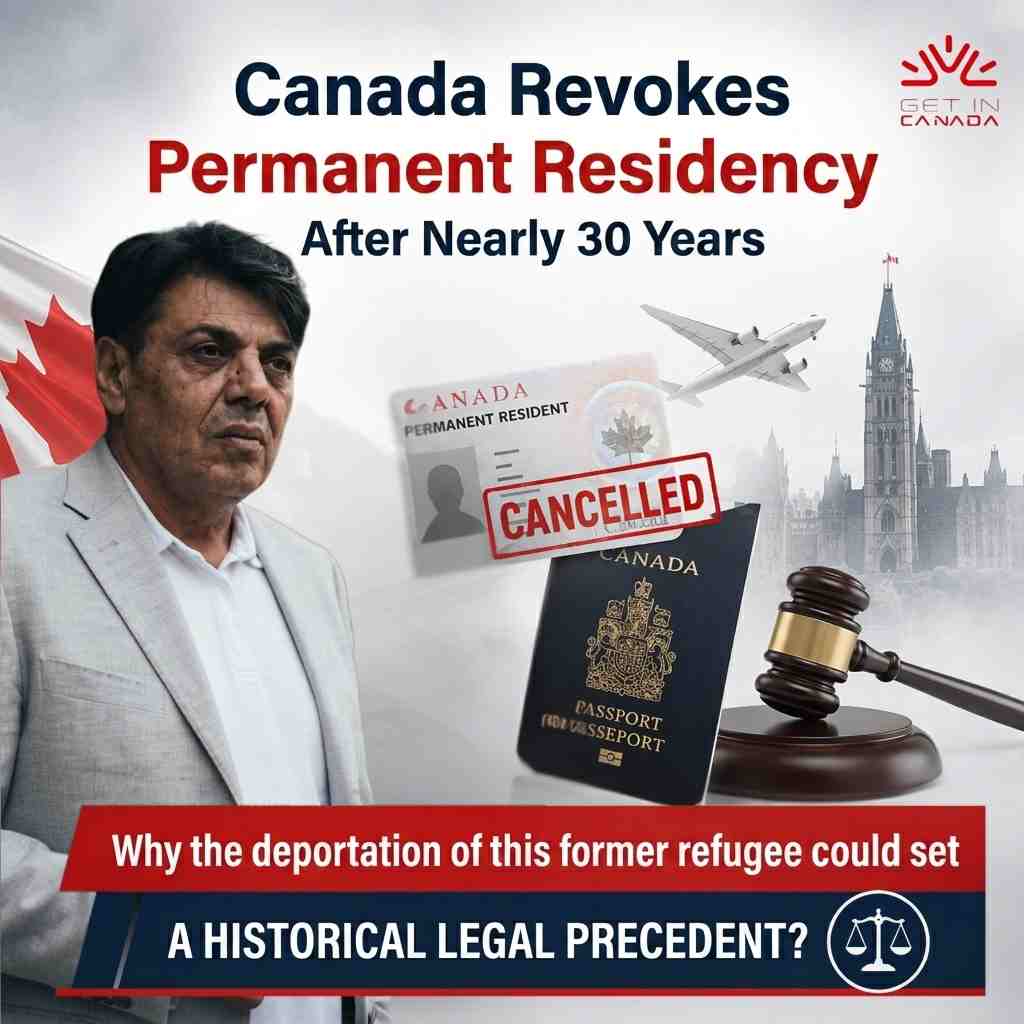
Many newcomers believe that getting Canadian permanent residence closes a refugee file forever and protects them from deportation. The case of Roman Slepcsik shows that protected person status remains legally distinct from permanent resident status. Even after living in Canada for nearly 30 years and raising Canadian children, a person can still lose both refugee protection and permanent residence if they travel back to their home country or renew their home country passport.
1. The Story of Roman Slepcsik and How Status Was Lost
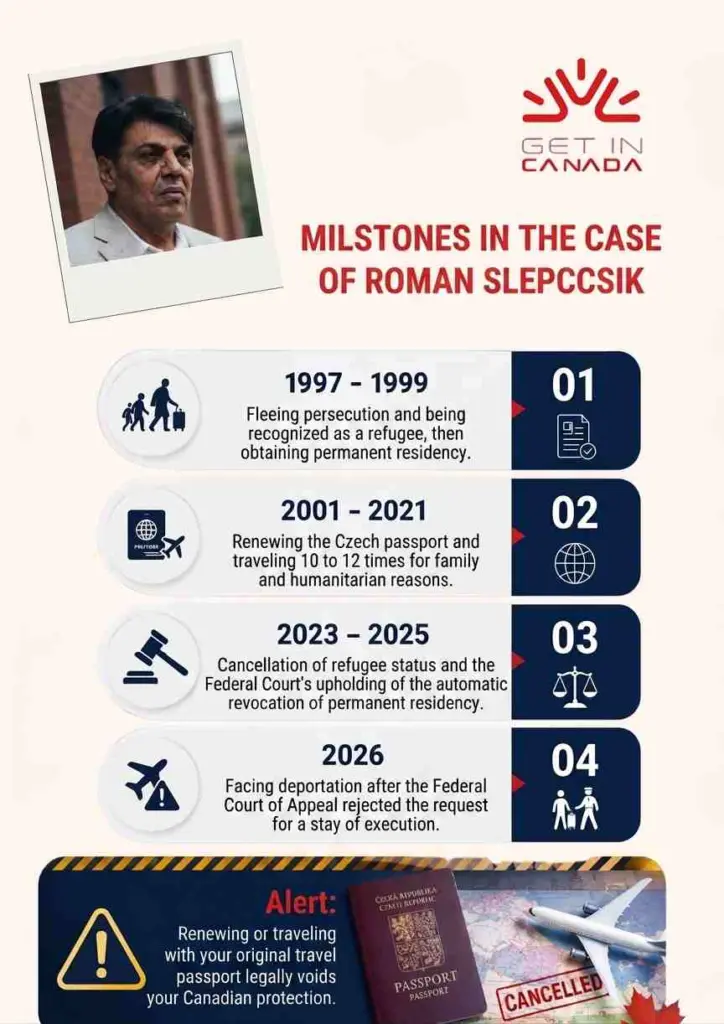
Roman Slepcsik arrived in Canada from the Czech Republic in 1997 fleeing violence and discrimination directed at Roma. Canada recognized him as a Convention refugee in 1998, and he became a permanent resident in 1999. Over the following decades, he built a life in Canada and raised two Canadian daughters.
Between 2001 and 2021, Slepcsik renewed his Czech passport and visited the Czech Republic about 10 to 12 times. He travelled for personal reasons, including caring for a critically ill brother and attending family funerals.
In 2021, the Minister applied to the Refugee Protection Division to end his refugee status. In 2023, the decision maker granted the application because renewing a passport and visiting his home country showed voluntary reavailment of Czech state protection. The Federal Court upheld this decision in Slepcsik v. Canada (2025 FC 1840), confirming that compassionate reasons cannot override statutory cessation grounds.
Book Your Consultation Session →
2. How the Law Works on Loss of Status
Under the Immigration and Refugee Protection Act, refugee protection and permanent residence are related but independent legal statuses. If refugee protection ceases under certain grounds, permanent resident status is stripped automatically by law:
- Voluntary Reavailment: Renewing a national passport or traveling back home creates a strong presumption of accepting national protection, leading to automatic loss of permanent residence.
- Getting a New Nationality: Acquiring citizenship and protection from another country also causes an automatic loss of permanent resident status.
- Voluntary Re-establishment: Moving back to live permanently in the home country ends Canadian refugee protection and cancels permanent residence.
- Change in Country Conditions: If safety conditions in the home country improve fundamentally without personal action, refugee status ceases, but permanent residence is kept.
- The 2012 Law Amendments: Parliament added Sections 40.1 and 46(1)(c.1) to the Act, meaning cessation for voluntary actions triggers mandatory loss of PR with zero power for decision makers to consider years of residence or family ties.
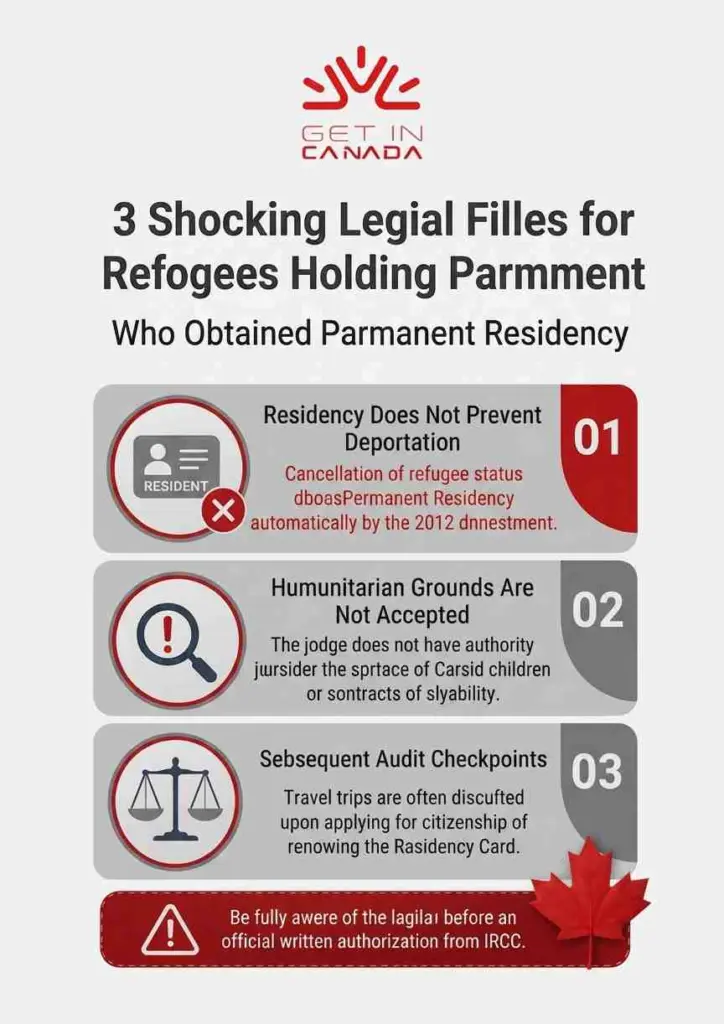
3. The Constitutional Appeal and Landmark Status
Slepcsik took his case to court to challenge the law. He argued that taking away permanent residence automatically from long-term residents without looking at family and humanitarian ties violates the Canadian Charter of Rights and Freedoms.
- Certified Serious Questions: The Federal Court certified important questions on whether sections 40.1 and 46(1)(c.1) violate Sections 2(d), 7, 12, or 15 of the Charter, which opened the path to the Federal Court of Appeal.
- Appeal Underway: The case moved forward under Court File No. A-427-25 to review whether the automatic loss of status regime is constitutional.
- Stay of Removal Ruling (2026 FCA 137): On August 11, 2026, the Federal Court of Appeal dismissed Slepcsik’s request for a temporary pause on his removal because irreparable harm was not proven, leaving the core constitutional questions to be decided in the ongoing main appeal.
FAQs
Book Your Consultation Session →
A Critical Warning for Protected Persons in Canada
Roman Slepcsik’s case shows the real human cost of refugee cessation after decades of living in Canada. Holding a valid permanent resident card does not eliminate the risk of deportation if you re-engage with your country of origin. If you gained status as a refugee, never obtain a passport from your home country or travel back without receiving specialized legal guidance first.