How to Read a Canadian Job Posting Before Applying?
Are you sending out dozens of resumes to Canadian employers without receiving a single interview request? The issue rarely stems from your professional qualifications; more often, it is a failure to decode the specific legal language, operational requirements, and automated screening filters embedded in Canadian job descriptions. Canadian recruiters and Applicant Tracking Systems (ATS) use strict parameters to separate legally eligible applicants from immediate rejections. This guide explains how to dissect a Canadian job posting, evaluate legal eligibility, match your qualifications, and protect your time from postings not open to international recruitment.
1. Where to Find Eligibility Requirements in a Job Posting?
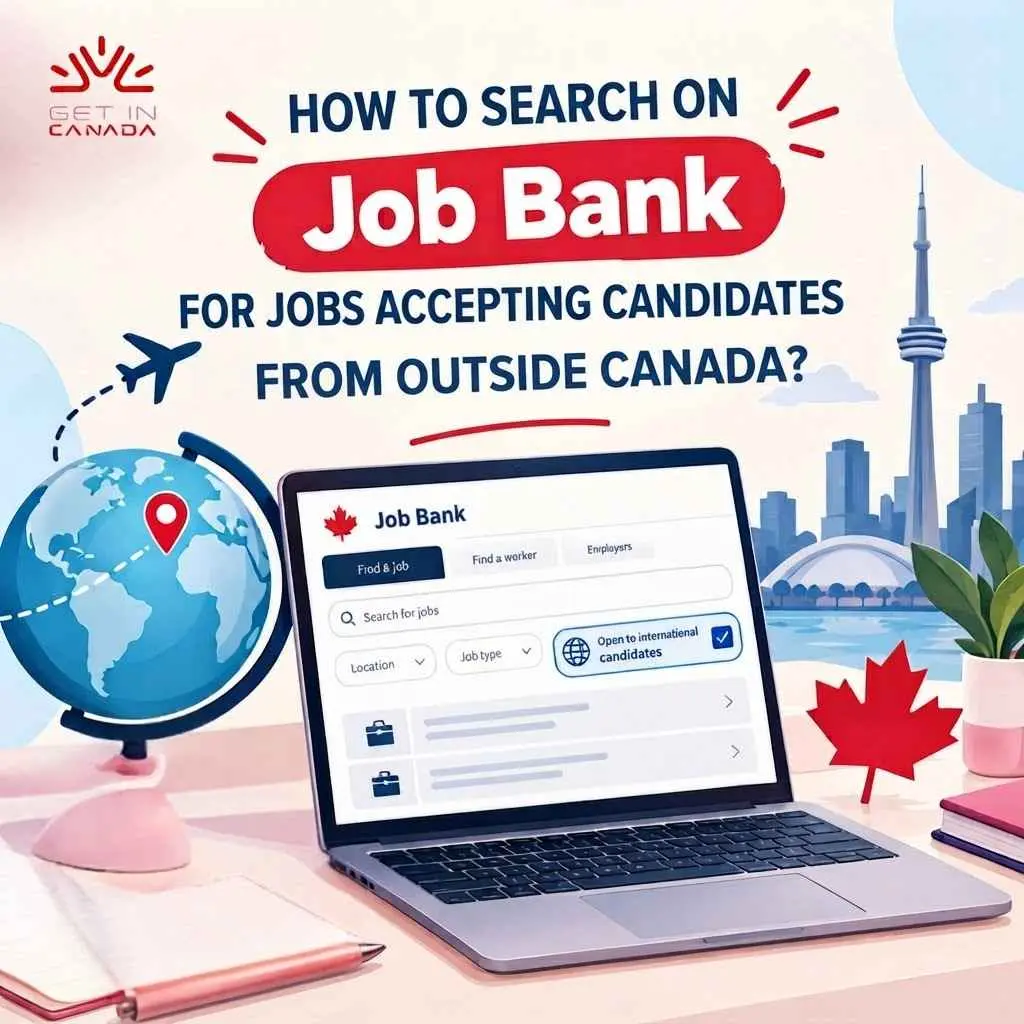
Reading a Canadian job posting effectively means starting from the bottom rather than the top. Official hiring platforms, such as Job Bank, place binding legal eligibility criteria in dedicated sections at the end of the notice. Reviewing these parameters first ensures you do not spend time customizing cover letters and resumes for positions restricted entirely to domestic candidates.
The “Who Can Apply” Section
This critical section appears near the end of the listing and defines exactly who is legally allowed to submit an application.
- International Applicants: Postings that explicitly welcome candidates from inside and outside Canada, with or without a valid Canadian work permit.
- Domestic Only: Listings strictly restricted to Canadian citizens, permanent residents, or active temporary resident permit holders.
- Automated Screening Notices: System warnings stating that applications submitted without existing Canadian work authorization will be deleted without review.
Understanding the NOC/TEER Code Role
Every formal job posting corresponds to a National Occupational Classification (NOC) and TEER category defining baseline education and skill levels. Aligning your background with this classification ensures immigration compliance later on.
- Occupational Skill Tier: Verifies whether the vacancy represents management, professional, technical, or intermediate trade labor.
- Baseline Educational Benchmarks: Outlines whether a formal university degree, diploma, or specific trade certification is legally required.
- Workplace Modality & Location: Details whether the role demands physical relocation to a specific province, hybrid presence, or allows remote operations.
Book Your Consultation Session →
2. What Does “Authorized to Work in Canada” Really Mean?
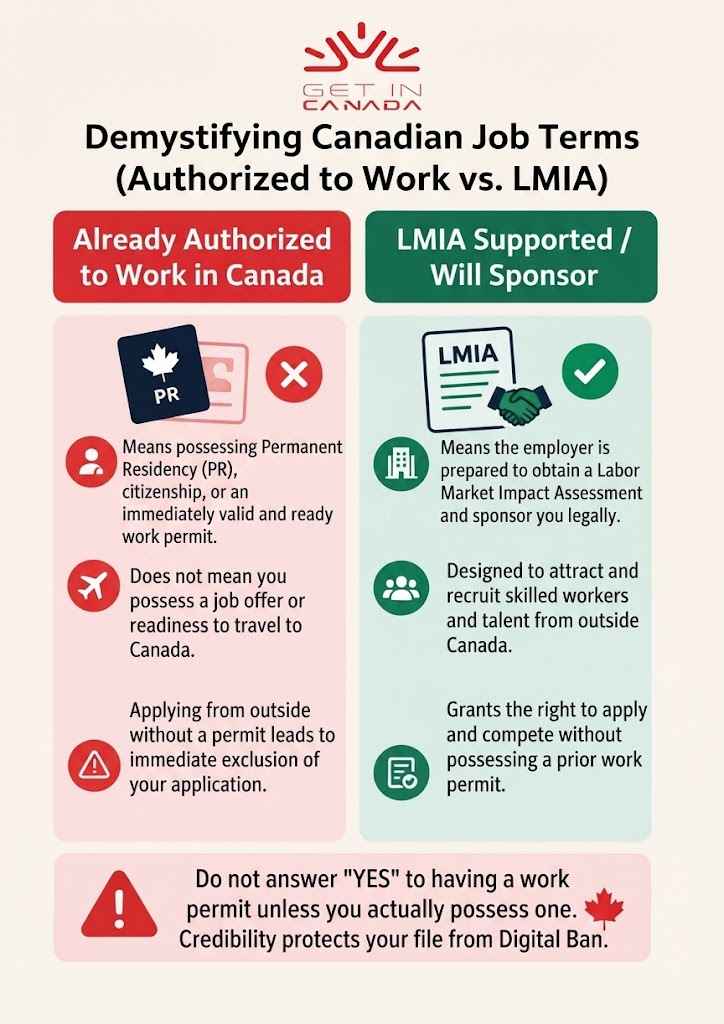
The phrase “authorized to work in Canada” is among the most frequently misunderstood clauses by overseas job seekers. It does not indicate your willingness to relocate or your intention to obtain a visa; it refers strictly to your current legal immigration status inside Canada today.
The Strict Legal Definition
Canadian employers use this condition to confirm that a candidate can be onboarded onto payroll immediately without immigration processing delays. Answering affirmatively without holding actual documentation is considered misrepresentation and triggers immediate disqualification.
- Citizens and Permanent Residents: Individuals possessing constitutional, unrestricted rights to work for any employer nationwide.
- Valid Open Work Permits: Candidates holding documents such as a Post-Graduation Work Permit (PGWP) or spousal work permit.
- Offshore Candidates: If you reside outside Canada and hold no active permit or permanent status, you are legally not authorized to work in Canada.
Exceptions for LMIA Sponsorship
The only scenario where an offshore candidate may proceed with such roles is when the employer explicitly commits to sponsoring a new Labour Market Impact Assessment (LMIA).
- Explicit Sponsorship Language: The posting notes that the employer has applied for or already secured a positive LMIA for international hiring.
- LMIA-Exempt Streams (IMP): The applicant qualifies independently under international trade agreements or company transfer categories.
- Screening Elimination: Selecting “Yes” to work authorization on digital application portals when you do not hold legal status leads to automated blacklisting.
Book Your Consultation Session →
3. How to Match Your Experience and Qualifications with Job Requirements?
Canadian recruiters rely on Applicant Tracking Systems (ATS) to cross-reference keywords from your resume against published job criteria. Blindly applying without separating essential qualifications from secondary preferences lowers your chances of securing an interview. A strategic approach requires evaluating the daily duties rather than relying solely on the job title.
Mandatory Requirements vs. Assets
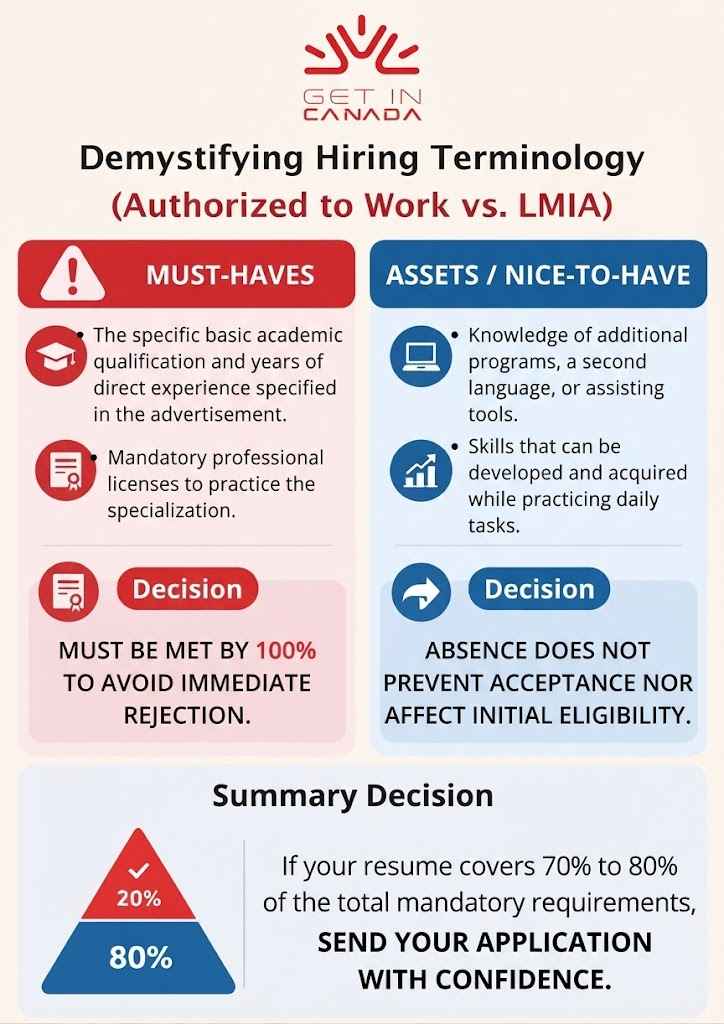
Professional postings distinguish clearly between core baseline needs and supplementary skills that can be acquired on the job.
- Mandatory Requirements (Must-haves): Absolute non-negotiables, including specific university credentials, mandatory industry licenses, and baseline years of experience.
- Assets (Nice-to-haves): Secondary software tools, additional languages, or supplementary certifications that add value but are not required for consideration.
- The 80% Rule: You should submit an application if your verified background covers at least 70% to 80% of the listed core duties.
ATS Resume Keyword Synchronization
Automated parsing software screens out applications that lack the exact industry terminology listed in the vacancy description. Adapting your resume for each target role ensures it reaches human recruiters.
- Direct Terminology Alignment: Mirror the exact technical terminology, software names, and procedural phrases used in the posting.
- Quantified Achievements: Highlight measurable results, percentages, and metrics to validate your operational competency.
- Avoiding Verbatim Copying: Integrate keywords contextually into your actual accomplishments rather than copying text blocks directly.
4. What Details to Review Regarding Location, Salary, and Hours?
Scrutinizing operational details protects you from substandard employment offers or positions that fail to qualify for immigration programs. A valid job offer must meet strict provincial labor standards and federal prevailing wage thresholds.
Prevailing Wages and Weekly Hours
Canadian immigration authorities verify that compensation levels match regional industry standards before granting work permits.
- Prevailing Wage Compliance: Ensure the stated wage matches or exceeds the median provincial hourly rate published on Job Bank for that NOC code.
- Full-Time Permanent Status: Confirm the position guarantees at least 30 hours per week year-round, which is mandatory for work permit and PR eligibility.
- Compensation Transparency: Check for clear disclosures regarding health benefits, paid annual leave, and overtime terms.
Geographic Considerations and Modality
Living expenses vary significantly across Canadian provinces, making location analysis essential before accepting an offer.
- Urban Centers vs. Regional Markets: Evaluate high living and housing costs in major hubs like Toronto and Vancouver against regional markets with acute labor shortages.
- Remote Work Boundaries: Verify whether a remote role allows working from outside Canada or strictly mandates physical residence within a specific province.
- Provincial Nominee Program (PNP) Links: Confirm whether the employer’s physical base allows you to access regional immigration pathways.
Book Your Consultation Session →
5. When Is It Best to Skip the Posting and Look Elsewhere?
Recognizing when to move past a job posting saves dozens of hours otherwise lost on inevitable rejections. Identifying legal roadblocks and fraudulent postings early preserves your momentum for viable opportunities.
Mandatory Legal Roadblocks
Certain regulatory constraints make offshore hiring impossible regardless of an applicant’s qualifications.
- Domestic-Only Restrictions: Postings explicitly limited to citizens and permanent residents.
- Unlicensed Regulated Occupations: Positions in regulated fields (e.g., healthcare, engineering, law) requiring provincial licensure before practice.
- Explicit No-Sponsorship Clauses: Statements confirming the employer will not support LMIA filings or work permit documentation.
Red Flags and Recruitment Scams
Fraudulent actors frequently use the promise of Canadian employment to target international candidates. Spotting these signs keeps your personal information and finances safe.
- Upfront Financial Requests: Demands for application processing, interview fees, or placement charges (strictly illegal under Canadian labor laws).
- Generic Email Domains: Correspondence originating from free email services (e.g.,
@gmail.com,@yahoo.com) instead of verified corporate domains. - Unrealistic Compensation: Disproportionately high salaries offered for basic entry-level roles requiring minimal expertise.
FAQs
Book Your Consultation Session →
Apply Smarter, Not Harder
Navigating Canadian job postings successfully requires prioritizing verified, offshore-friendly vacancies over mass applications. By focusing on listings that provide legal sponsorship avenues and tailoring your resume to the exact NOC requirements, you significantly improve your response rate.
If you need a professional assessment of your qualifications against Canadian immigration streams, consult with a Regulated Canadian Immigration Consultant (RCIC) to ensure your employment strategy aligns with federal and provincial standards.