Job Offer vs. LMIA vs. Work Permit: What’s the Difference?
Can you land in Canada and start working the moment a Canadian employer sends you a job offer? A common misconception among international professionals is treating an employment letter as an immediate travel document. In Canadian immigration law, securing a job offer, obtaining government authorization, and receiving legal worker status are three distinct phases.
This guide breaks down the legal definitions, mandatory sequencing, and core differences between a Job Offer, an LMIA, and a Work Permit so you can navigate your pathway without risking costly delays or immigration fraud.
1. Job Offer vs. LMIA vs. Work Permit: The Core Differences
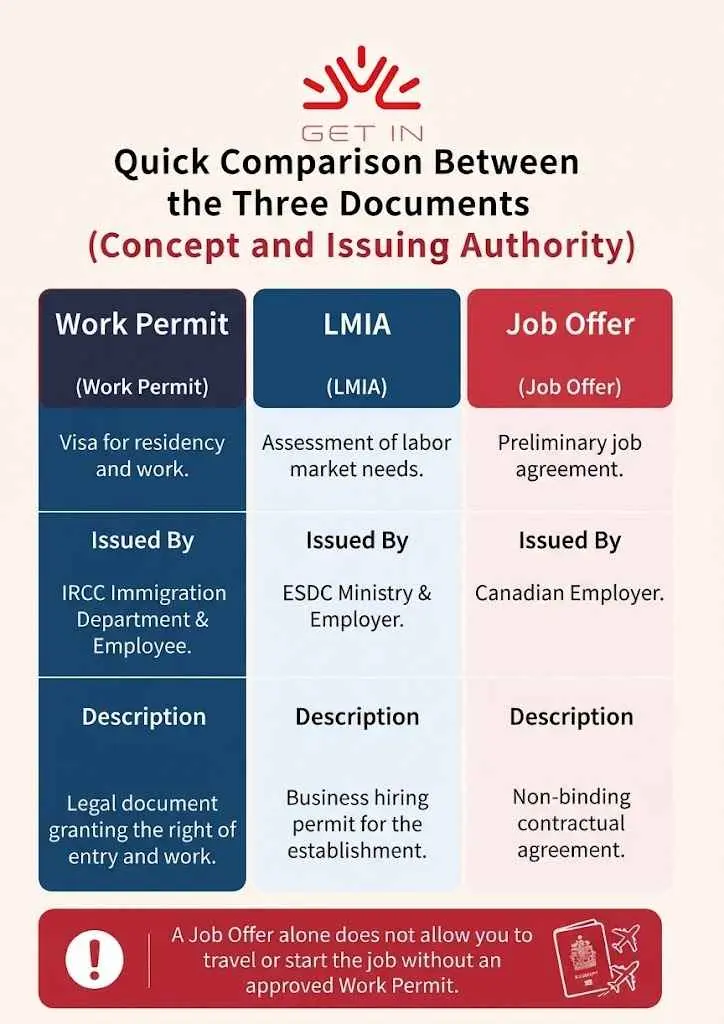
Understanding how these three legal components interact is the foundation of a successful Canadian work authorization strategy. Each serves a unique administrative purpose: one is an agreement between private parties, one is a corporate labor audit, and one is federal legal status.
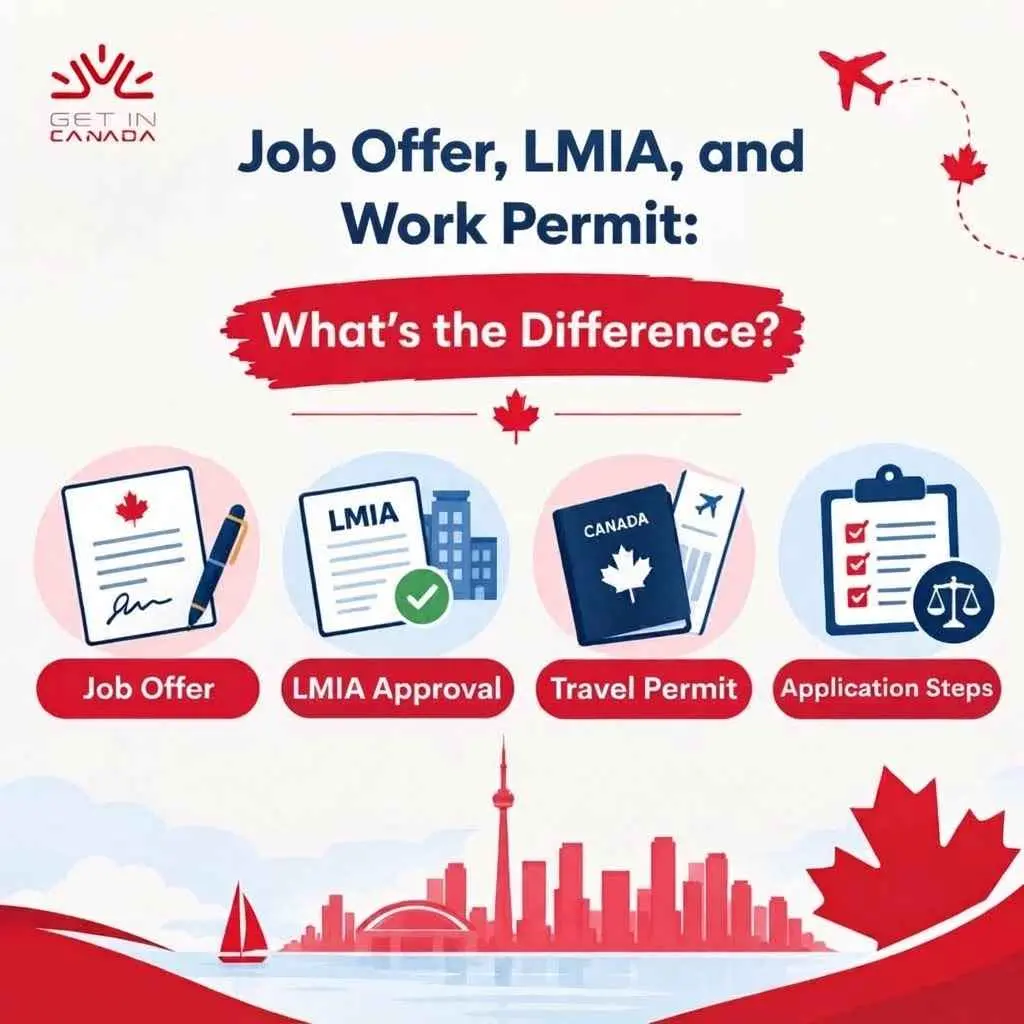
- Job Offer: An official agreement issued directly by a Canadian employer outlining role responsibilities, hours, and wages.
- LMIA (Labour Market Impact Assessment): A federal authorization issued to the employer confirming no Canadian citizen or permanent resident is available to fill the position.
- Work Permit: The legal temporary resident document issued by IRCC granting a foreign national permission to enter and work in Canada.
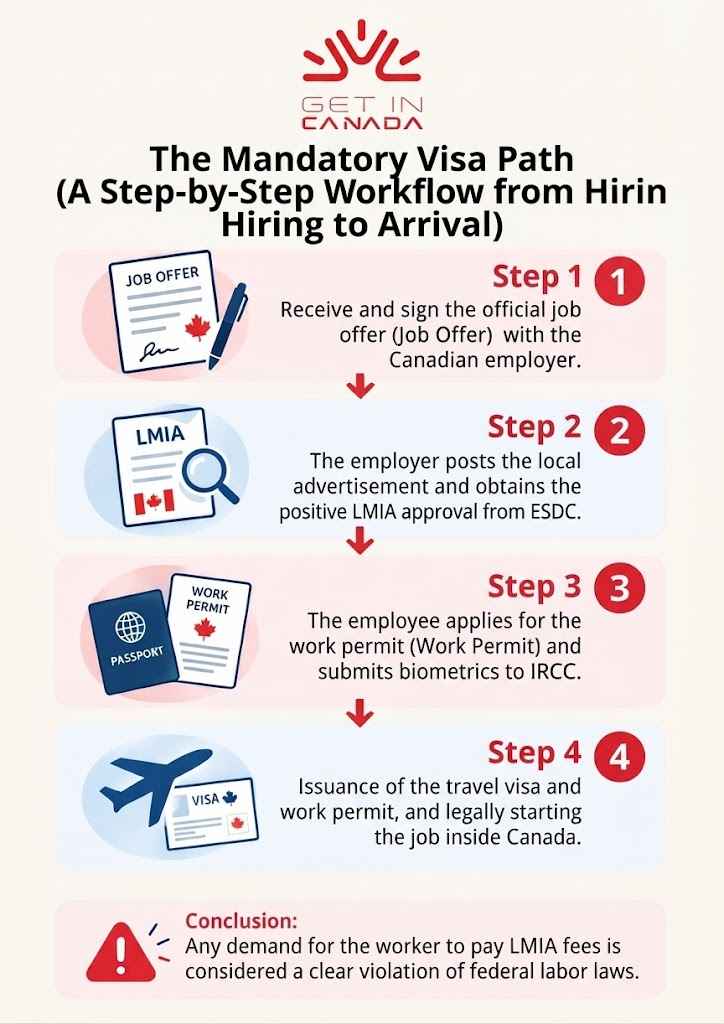
- The Legal Sequence: In standard streams, a job offer triggers the employer’s LMIA filing, and the approved LMIA enables the candidate’s work permit application.
Book Your Consultation Session →
2. What Is a Canadian Job Offer?
In the context of Canadian immigration, a valid job offer is a formal letter from a legitimately registered Canadian business offering genuine, full-time employment. It acts as an operational foundation rather than a legal entry visa, carrying no sovereign authority on its own.
- Mandatory Job Specifics: Outlines the National Occupational Classification (NOC/TEER) code, core duties, and designated work location.
- Wages & Working Conditions: Specifies the hourly wage or annual salary, meeting or exceeding regional prevailing wage benchmarks.
- Conditional Clause: Valid Canadian offers typically state that employment begins only after federal authorizations and permits are granted.
- No Travel Rights: Holding an employment contract does not authorize you to board a commercial flight to Canada or report for duty.
3. What Is an LMIA?
An LMIA (Labour Market Impact Assessment) is an official document issued by Employment and Social Development Canada (ESDC). It audits the Canadian company’s hiring practices to verify that recruiting an international worker will not negatively affect the domestic labor force.
- Positive LMIA (“Confirmation Letter”): Verifies that the employer demonstrated genuine recruitment efforts with no qualified Canadian workers available.
- Negative LMIA: Denies the application due to available local labor or employer non-compliance, stopping the hiring process immediately.
- Mandatory Advertising: Employers must advertise the open position across national portals like Job Bank for several consecutive weeks prior to applying.
- Corporate Government Fee: ESDC charges a non-refundable application fee of CAD $1,000 per position, strictly payable by the employer.
4. Who Applies for the LMIA?
The Canadian employer is exclusively responsible for filing, managing, and paying for the entire LMIA process. Canadian federal law strictly prohibits charging LMIA fees to prospective foreign workers or deducting corporate immigration expenses from employee paychecks.
- Employer-Led Process: The employer prepares recruitment evidence, financial records, and operational justifications directly for ESDC.
- Licensed Representation: Employers may appoint an authorized immigration lawyer or Regulated Canadian Immigration Consultant (RCIC) to represent the business.
- Zero Worker Liability: Any third-party recruitment agency or employer demanding that you pay for an LMIA is operating in violation of Canadian labor standards.
- Compliance Oversight: ESDC routinely inspects businesses to verify working conditions, payroll compliance, and job integrity.
Read more about:
How to Find Jobs Open to International Candidates on Job Bank?
How to Find a Job in Canada From Abroad: A Practical Guide
Canada Opens Work Permits and Status Extensions for Palestinians
Book Your Consultation Session →
5. What Is a Canadian Work Permit?
A work permit is an official immigration document issued solely by Immigration, Refugees and Citizenship Canada (IRCC). It confers legal temporary resident status, specifying how long and under what operational boundaries a foreign citizen may work in Canada.
- Employer-Specific (Closed) Work Permit: Restricts your employment strictly to the company, location, and role listed on the document.
- Open Work Permit: Permits you to work for virtually any Canadian employer in any province without being tied to a single sponsor.
- Travel Authorization: Overseas approvals include an entry visa (TRV) or electronic Travel Authorization (eTA) counterfoil in your passport.
- The Definitive Document: While a job offer and LMIA are prerequisite supporting records, only the work permit confers the lawful right to work.
6. The LMIA-Required Stream: TFWP
When a position requires labor market testing, the application falls under the Temporary Foreign Worker Program (TFWP). This stream provides Canadian companies with access to global talent to fill verified domestic labor shortages.
- High-Wage Stream: Applies to positions paying at or above the provincial/territorial median hourly wage, requiring a formal Transition Plan.
- Low-Wage Stream: Covers roles paying below the regional median wage, subject to provincial caps on foreign worker percentages.
- Global Talent Stream (GTS): An expedited two-week processing framework designed for designated tech occupations and high-growth innovators.
- Agricultural Streams: Streamlined channels supporting primary agriculture, seasonal harvest production, and food security sectors.
7. The LMIA-Exempt Stream: IMP
Many foreign nationals do not require an LMIA to work in Canada, entering instead through the International Mobility Program (IMP). These exemptions are grounded in broader economic, social, and cultural advantages for Canada rather than local labor shortages.
- Post-Graduation Work Permit (PGWP): Open permits issued to international graduates of Canadian Designated Learning Institutions (DLIs).
- Spousal Open Work Permits: Granted to spouses of qualifying foreign skilled workers or full-time international students.
- Intra-Company Transferees (ICT): Facilitates executive, managerial, or specialized knowledge personnel transfers between international branches.
- Free Trade Agreements: Channels established under multilateral trade treaties such as CUSMA, CETA, and bilateral youth mobility partnerships (IEC).
Book Your Consultation Session →
8. Real-World Practical Scenarios
These practical scenarios illustrate how these immigration components operate during real hiring workflows:
- Scenario A: Direct International Hire (TFWP Pathway)
A software engineer in Dubai receives a job offer from an IT firm in Calgary. The company advertises locally, proves a shortage, and secures a positive LMIA. The engineer then submits a closed work permit application to IRCC, receives visa approval, and boards their flight to Canada. - Scenario B: Onshore Graduate Hire (IMP Pathway)
An international student completes a degree in Toronto and secures a 3-year PGWP, which is an open, LMIA-exempt permit. They receive a competitive corporate job offer and begin employment immediately without the hiring company ever contacting ESDC. - Scenario C: Voided Job Offer Due to LMIA Refusal
A hospitality candidate abroad signs an overseas employment agreement with an Ontario resort. ESDC subsequently issues a negative LMIA after determining that sufficient local applicants applied. The job offer is rendered void, preventing the filing of any work permit application.
9. What Does Not Guarantee Work Permit Approval?
Holding a signed employment agreement or a positive LMIA confirmation does not guarantee an approved Canadian work permit. IRCC visa officers review applicants independently to evaluate individual admissibility, technical competency, and credibility.
- Discrepancies in Experience: The visa officer may refuse the permit if your documented resume, education, or language skills do not match the job requirements.
- Dual Intent & Temporary Status: Doubts regarding whether you will comply with temporary residency conditions and leave Canada upon permit expiry.
- Criminal Inadmissibility: Failing federal background verifications, including past criminal convictions or security red flags.
- Medical Inadmissibility: Failing immigration medical examinations (IME) due to conditions that could place excessive demand on Canada’s public healthcare system.
FAQs
Book Your Consultation Session →
Final Takeaway: Building a Compliant Canadian Career Path
Securing employment in Canada is a structured process governed by clear federal compliance stages. A legitimate job offer begins the dialogue, an LMIA confirms the economic justification, and a work permit delivers your lawful temporary status. Knowing the boundaries of each prevents exposure to employment scams and keeps your transition on schedule.
If you are evaluating an overseas employment offer or preparing an employer-specific work permit submission, consult with a Regulated Canadian Immigration Consultant (RCIC) or an immigration attorney. Professional oversight safeguards your legal status and aligns your employment with long-term Canadian permanent residency goals.