Canada Opens Work Permits and Status Extensions for Palestinians: Full Details & Requirements (2026–2027)
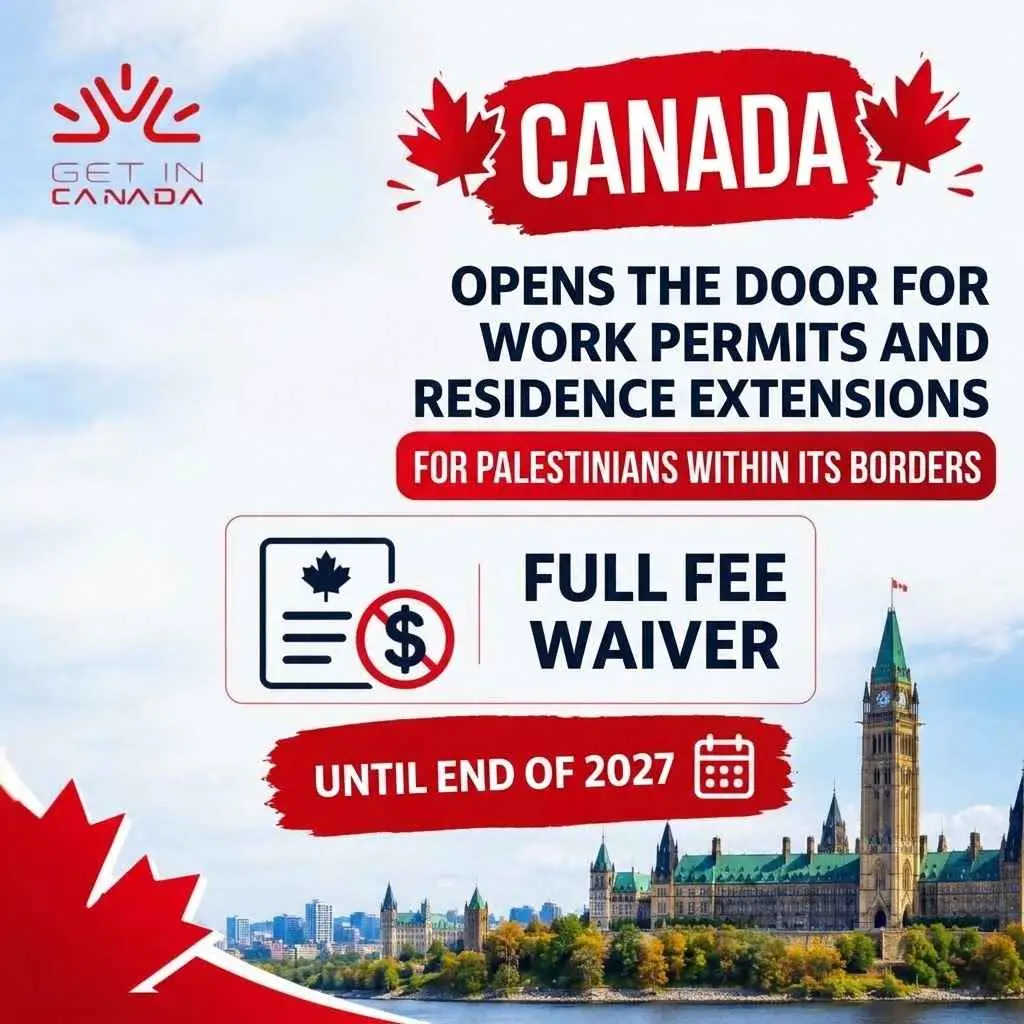
Immigration, Refugees and Citizenship Canada (IRCC) has officially implemented dedicated facilitative measures under its special policy for temporary residents affected by the crisis in Palestine, running from August 1, 2026, to December 30, 2027. This public policy provides legal certainty and humanitarian relief to Palestinian nationals and their eligible family members physically present in Canada, enabling them to secure fee-exempt open work permits, obtain study permits, or extend their temporary visitor status without incurring government processing charges.
1. Eligible Applicant Groups (August 1, 2026 – December 30, 2027)
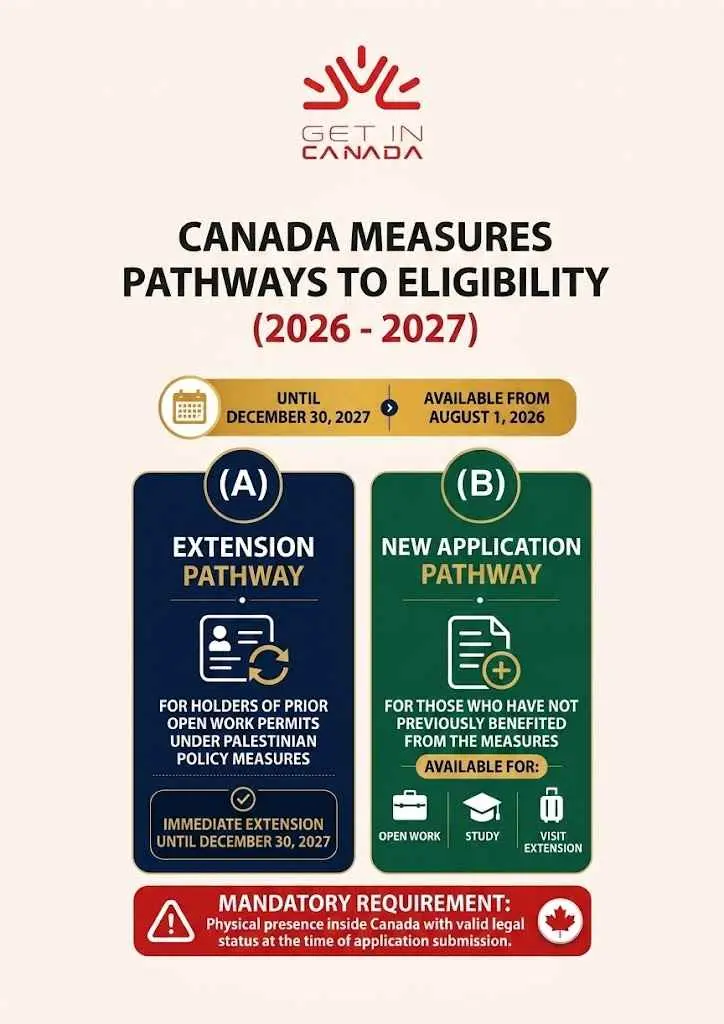
Ministerial instructions establish two clear categories of temporary residents eligible to benefit from this policy:
- Group 1 (Existing Permit Holders Seeking Extensions): Temporary residents currently in Canada who want to extend an open work permit that was previously issued under one of the public policies for Palestinians and eligible family members.
- Group 2 (First-Time In-Canada Applicants): Temporary residents in Canada who have not previously applied for an open work permit, study permit, or an extension of their stay under any of the public policies created for Palestinians and eligible family members.
- Physical In-Canada Presence: The principal applicant must be physically present in Canada with valid temporary resident status (or be eligible for restoration of status) both when submitting the application and when the final decision is rendered.
- Eligible Family Members: Spouses, common-law partners, and dependent children (under 22, or 22 and older if financially dependent due to a physical or mental condition) who are currently in Canada with the applicant qualify under the same fee exemptions, regardless of their own nationality.
Book Your Consultation Session →
2. Available Legal Pathways and Core Benefits
The public policy provides comprehensive options tailored to individual settlement, professional, and educational goals:
- Open Work Permits (LMIA-Exempt): Work for any employer across Canada without occupational or geographical restrictions, completely exempt from the Labour Market Impact Assessment (LMIA) requirement.
- Fee-Exempt Study Permits: Enroll in or continue academic programs at Designated Learning Institutions (DLIs) across Canada without standard study permit application fees.
- Visitor Status Extensions: Remain legally in Canada without working or studying, ensuring lawful presence while circumstances unfold.
- Protection via Maintained Status: Applicants who submit an extension before their current permit expires benefit from maintained (implied) status, allowing them to legally continue working or studying under identical conditions until a decision is issued.
- Access to Provincial Healthcare: In most provinces, holding a long-term open work permit allows workers and their accompanying family members to apply for provincial health insurance coverage (e.g., OHIP, MSP, or RAMQ).
- Status Restoration Provisions: Individuals whose temporary resident status lapsed shortly before applying can request restoration of status alongside their permit application under relaxed public policy terms.
Book Your Consultation Session →
3. Government Fee Exemptions and Financial Relief
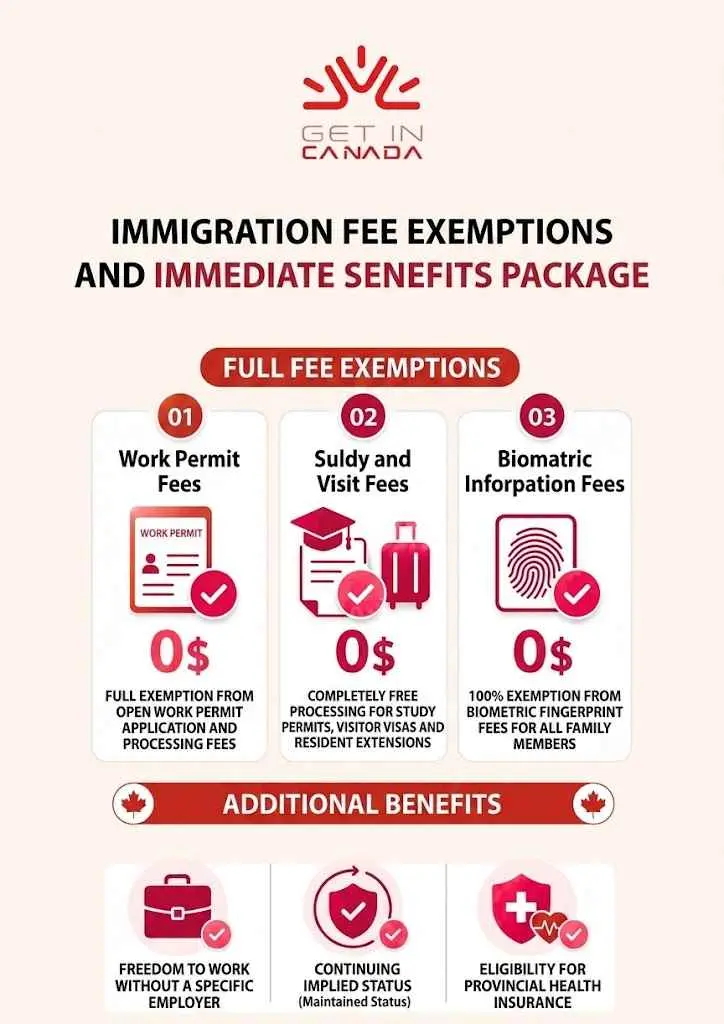
To alleviate financial pressure on affected families, IRCC has waived all primary administrative processing and biometrics fees:
- Work & Study Permit Fees: 100% fee waivers on the work permit processing fee ($155 CAD), the open work permit holder fee ($100 CAD), and the study permit processing fee ($150 CAD).
- Extension & Restoration Charges: Standard fees for visitor record extensions and status restoration applications are fully waived.
- Biometrics Collection Fees: Complete exemption from biometric fees ($85 CAD per individual or $170 CAD per family), even if updated biometrics are required.
- Relaxed Proof-of-Funds Thresholds: Relief from standard stringent upfront settlement fund requirements for open work permits, recognizing self-sufficiency through active Canadian employment.
4. Step-by-Step Online Application and Required Documentation
All submissions must be processed electronically through the official IRCC secure web portal:
- Documenting Palestinian Identity: Upload clear, valid color copies of a Palestinian Authority passport, Palestinian refugee travel documents issued by third countries, or recognized birth and civil status records confirming Palestinian origin.
- Verifying Current In-Canada Residence: Provide entry stamps, previous visa foils, current work/study permits, or visitor records establishing physical residence inside Canada.
- Proof of Family Relationships: Attach official marriage certificates and children’s birth certificates to include family members on the application under the fee-exempt policy.
- Identifying the Public Policy in Forms: Select the in-Canada application stream to extend or change conditions, and clearly declare that the application is made under the “Temporary Facilitative Measures for Palestinians in Canada” to trigger automated fee waivers.
- Submitting a Letter of Explanation (LOE): Include a concise explanation letter stating your current temporary status, identity credentials, and explicit request for relief under the public policy running to December 30, 2027.
FAQs
Book Your Consultation Session →
Action Plan to Maintain Lawful Status in Canada
These facilitative measures provide a secure legal framework and essential labor and educational opportunities for Palestinians and their families living in Canada. Preparing civil documents, verifying identity records, and submitting your online application via the IRCC portal well before the December 30, 2027 deadline will ensure uninterrupted legal standing and protect your career and academic progress.