Canada CRS Score 2026: How to Calculate Your Points and Improve Your Score
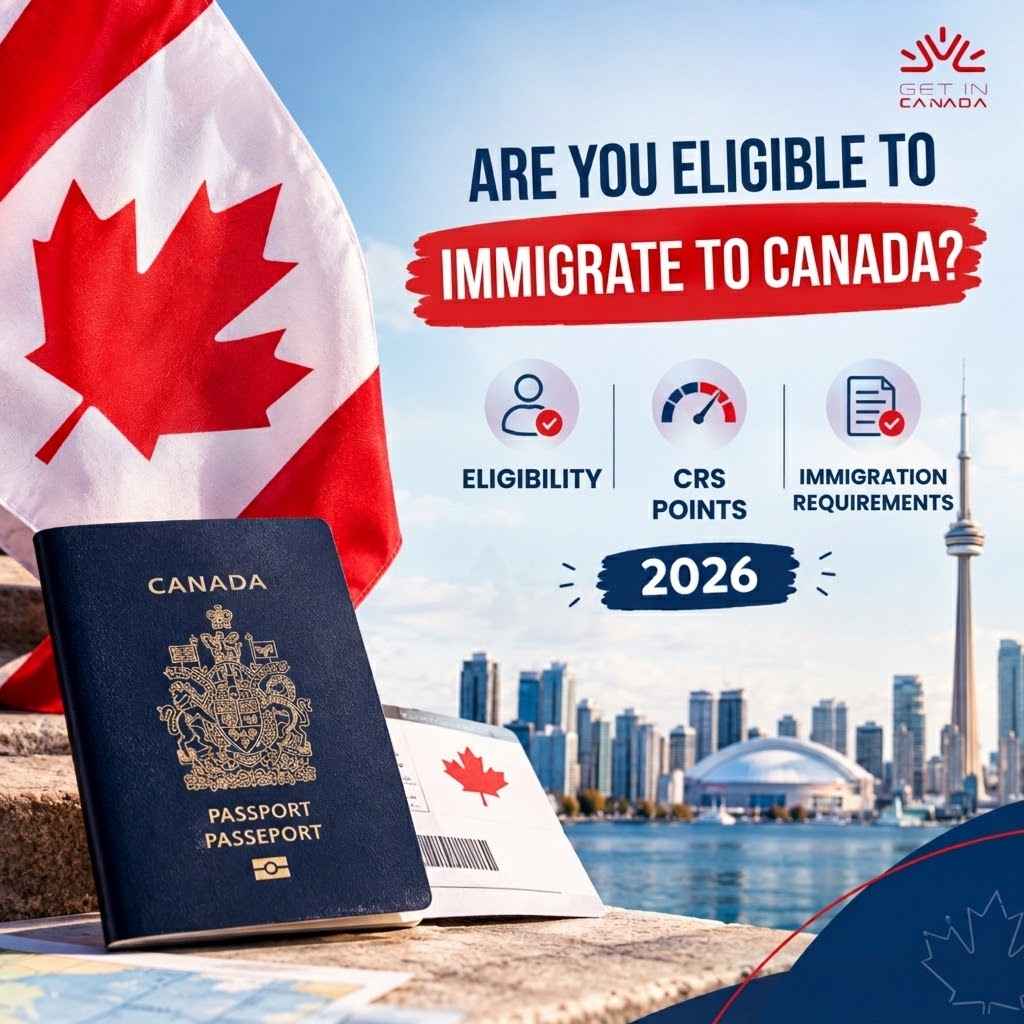
Are you wondering whether your CRS score is high enough to receive an invitation to apply for Canadian permanent residence? If you are planning to immigrate through Express Entry, understanding how the Comprehensive Ranking System (CRS) works can help you assess your profile, identify opportunities to improve your score, and make informed decisions about your immigration plans.
This guide explains how CRS points are calculated, how age, education, language proficiency, and work experience affect your score, and how options such as French-language proficiency and Provincial Nominee Programs (PNPs) may strengthen your profile. You will also find answers to common questions about CRS scores in 2026, including job offers, spouse factors, and foreign educational credentials.
1. What Is the CRS Score in Canada?
The Comprehensive Ranking System (CRS) is a points-based system used by Immigration, Refugees and Citizenship Canada (IRCC) to rank candidates in the Express Entry pool. Your CRS score helps determine your position relative to other candidates and whether you may receive an invitation to apply for Canadian permanent residence.
Your score is based on several factors, including age, education, language proficiency, work experience, and other eligible qualifications. Understanding how these factors affect your profile can help you identify opportunities to improve your score and assess your potential immigration options.
A higher CRS score can improve your ranking, but it does not guarantee an invitation. The minimum score required varies depending on the type of Express Entry draw and the candidates selected.
Book Your Consultation Session →
2. How Is the CRS Score Calculated in 2026?
The CRS system has a maximum of 1,200 points. Your total is calculated using several groups of factors:
- Core human capital factors: Age, education, language proficiency, and Canadian work experience.
- Spouse or partner factors: If you have an accompanying spouse or common-law partner, their education, language skills, and Canadian work experience may contribute points.
- Skill transferability factors: Combinations of education, language proficiency, and work experience may earn additional points.
- Additional points: These may include points for an eligible provincial nomination, qualifying Canadian education, French-language proficiency, and certain family connections in Canada.
An eligible provincial nomination linked to Express Entry can add 600 CRS points, potentially making a substantial difference to your ranking.
To estimate your score, use the official IRCC CRS calculator. Enter your actual qualifications and circumstances to obtain a more reliable estimate before deciding which factors to improve.
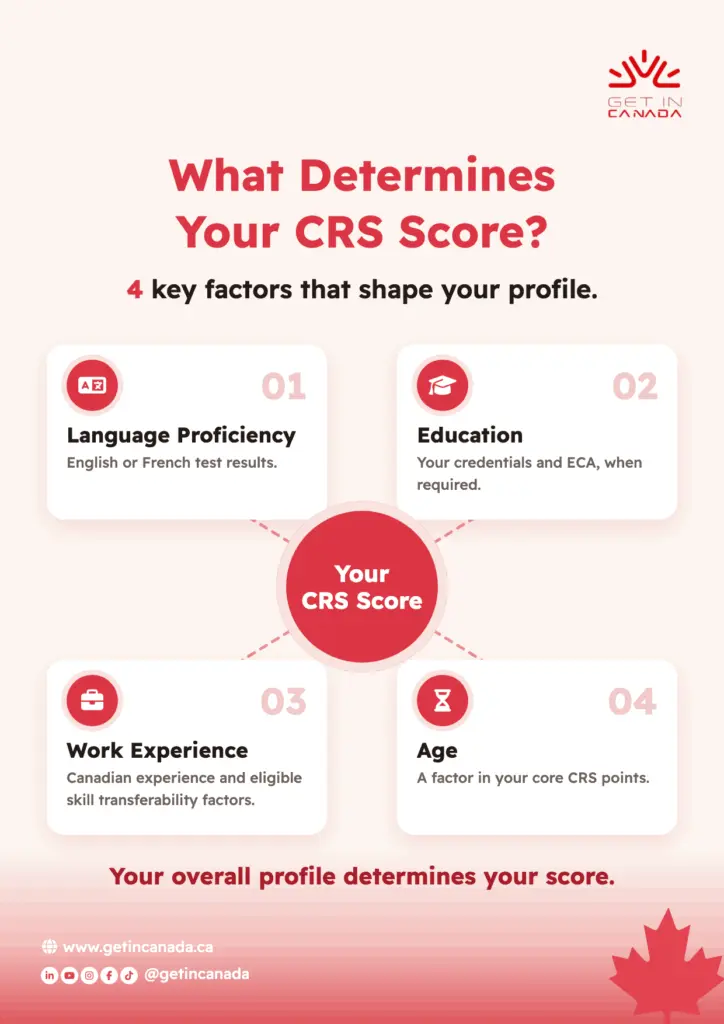
3. What Factors Affect Your CRS Score?
Not all Express Entry candidates receive the same number of points, even when they have similar qualifications. Your CRS score depends on how your personal circumstances, education, language results, and work experience fit into the system’s scoring criteria.
The main factors include:
- Age: Your age affects the number of points you receive.
- Education: Higher educational credentials may earn more points.
- Language proficiency: English and French test results can affect your core score and skill transferability points.
- Work experience: Qualifying Canadian work experience can increase your score.
- Spouse or partner factors: An accompanying spouse’s education, language skills, and Canadian work experience may contribute points.
- Additional factors: These can include a provincial nomination, French-language proficiency, eligible Canadian education, and having a qualifying sibling in Canada.
Understanding these factors helps you identify which parts of your profile may offer the greatest opportunities for improvement.
Book Your Consultation Session →
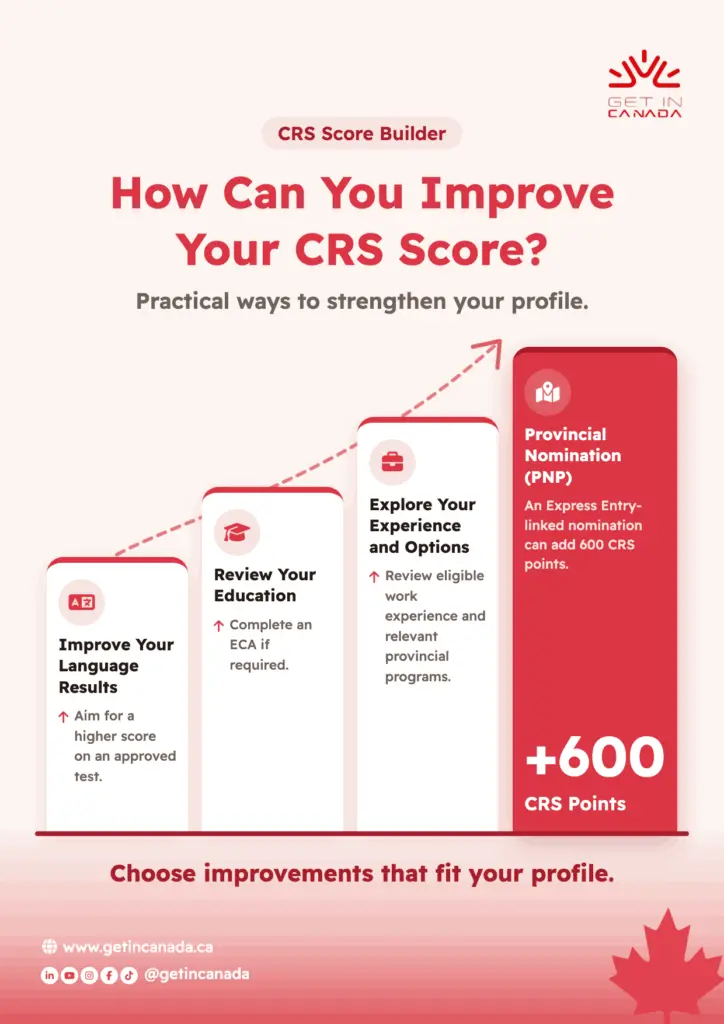
4. How Can You Increase Your CRS Score Quickly?
If your current CRS score is lower than you hoped, improving specific parts of your profile may help you become more competitive. The best strategy depends on your current qualifications, available time, and eligibility for different immigration pathways.
Consider these options:
- Improve your language results: A higher score on an approved English or French test may increase your CRS points.
- Review your educational credentials: Make sure your foreign education is assessed when an Educational Credential Assessment (ECA) is required.
- Gain eligible work experience: Additional qualifying experience may improve your profile, depending on the applicable CRS factors.
- Learn French: French proficiency can provide additional points and may make you eligible for French-language selection rounds.
- Explore Provincial Nominee Programs: An eligible provincial nomination through an Express Entry-linked stream can add 600 CRS points.
There is no guaranteed shortcut to a higher score. Focus on improvements that are realistic for your circumstances and relevant to the programs you may qualify for.
5. Does a Job Offer Give You CRS Points in 2026?
The rules for job offers have changed, so it is important to distinguish between a job offer’s role in program eligibility and its effect on your CRS score.
As of October 2026, job offers do not receive additional CRS points under the rules introduced on March 25, 2025. However, some immigration programs may still require a qualifying job offer or use one as part of their eligibility requirements.
Starting November 3, 2026, Canada plans to introduce new CRS rules that will award points under a new Labour Market Integration factor. Eligible high-wage job offers may receive 50, 70, or 100 points, depending on the wage level relative to the applicable median wage. The new rules will also change how Canadian work experience is scored.
These changes mean that candidates should check the official rules that apply when their profiles are assessed rather than assuming that every job offer will increase their score.
6. Do Spouse or Partner Factors Count Toward CRS?
Yes. If your spouse or common-law partner accompanies you to Canada, their qualifications may contribute additional CRS points. The maximum available for spouse or partner factors is 40 points.
These factors include:
- Education: Your spouse’s or partner’s educational qualifications.
- Language proficiency: Their results from an approved English or French test.
- Canadian work experience: Their eligible work experience gained in Canada.
Your own core-factor points may also differ depending on whether you have an accompanying spouse or partner. Entering your family situation accurately in the official CRS calculator is therefore important when estimating your score.
Book Your Consultation Session →
7. Does the CRS Score Differ by Immigration Category?
The CRS is used to rank candidates in the Express Entry pool, but the minimum score needed to receive an invitation varies by draw. A candidate may qualify for one type of round but not meet the cutoff in another.
Express Entry rounds can include:
- General rounds: Invitations are issued according to the criteria for the round.
- Program-specific rounds: Invitations target candidates eligible for a particular Express Entry program.
- Category-based rounds: Invitations target candidates who meet criteria for a specific category, such as French-language proficiency or eligible work experience in selected occupations.
This is why comparing your score with just one cutoff can be misleading. Review recent official draw results and focus on the rounds that match your qualifications and eligibility.
8. Do Degrees from Arab Universities Count Toward CRS?
Yes. Degrees and other educational credentials earned outside Canada, including those from Arab universities, may count toward your CRS score if they meet the applicable requirements. Depending on your immigration pathway, you may need an Educational Credential Assessment (ECA) to establish the Canadian equivalent of your foreign qualification.
An ECA can help you:
- Determine the Canadian equivalent of your foreign credential.
- Claim eligible education points under CRS.
- Meet educational requirements for certain immigration programs.
You must obtain an assessment from an organization designated by the Canadian government. Your credential is not automatically rejected because it was earned outside Canada, but the points awarded depend on the Canadian equivalency established in your report.
FAQs About CRS Scores in Canada
Book Your Consultation Session →
Final Thoughts
Understanding the CRS is about more than knowing your total score. It helps you assess your profile, identify areas for improvement, and understand which Express Entry opportunities may be relevant to your qualifications.
Start by using the official CRS calculator, reviewing your strongest and weakest factors, and checking recent invitation rounds. A well-assessed profile and a clear strategy can help you make more informed decisions about your pathway to Canadian permanent residence.