Are You Eligible to Immigrate to Canada? Your 2026 Assessment Guide
Asking about your eligibility is the first threshold that separates a “dream” from a successful “action plan” to reach Canada and secure your sustainable future. In 2026, with consecutive updates to Canadian immigration laws, wondering “Am I eligible to immigrate to Canada?” is no longer just a passing desire; it has become a precise calculation based on your profile data and your ability to meet the strict criteria that guarantee acceptance and competitiveness.
1. Conditions for Immigrating to Canada: The Essential Entry Criteria
Immigration conditions serve as the first legal “filter” that determines whether your profile possesses the basic elements to compete in the global immigration market or if it needs further development. The Canadian government sets these standards to ensure that new immigrants have the immediate ability to integrate into society and contribute to the national economy from the moment they arrive. Meeting these conditions means you have passed the most difficult stage and have effectively begun mapping your path toward Permanent Residency.
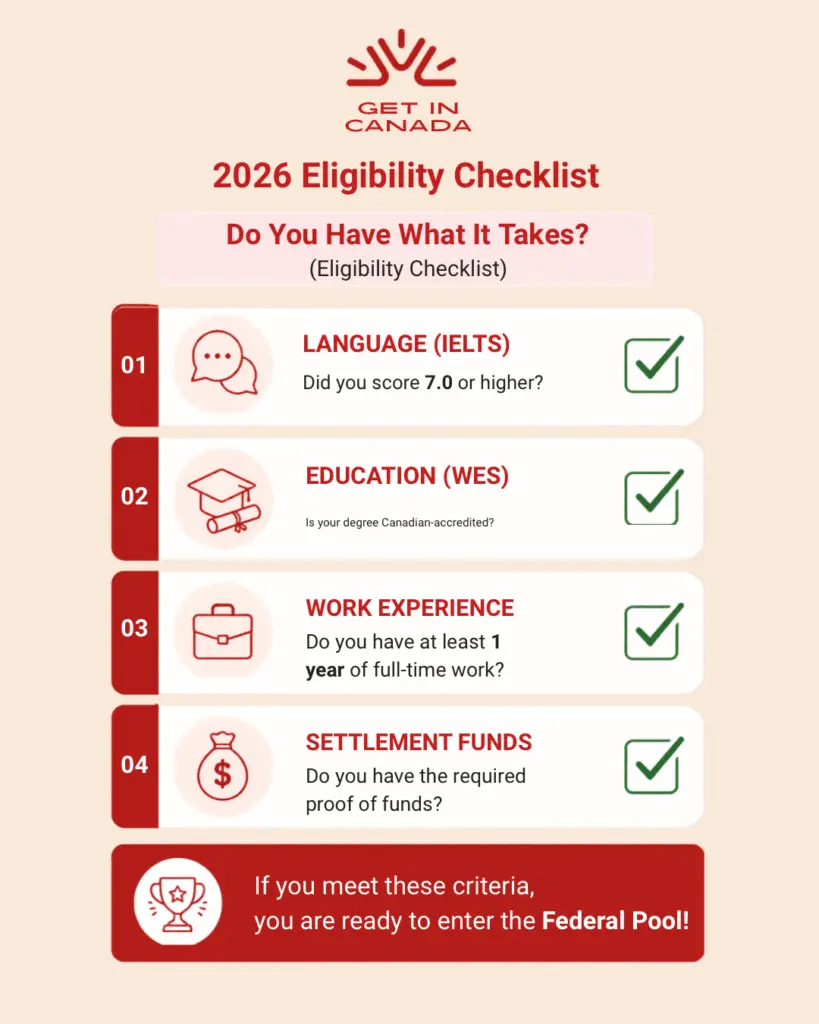
- Language Proficiency: Achieving minimum scores in IELTS or CELPIP exams (usually CLB 7 or higher).
- Educational Level: Holding a university degree or diploma that is accredited and documented by Canadian assessment bodies such as WES.
- Professional Experience: At least one year of full-time work experience in an occupation falling under the approved TEER classifications.
- Security & Medical Records: The applicant and their family must be free of any criminal records or infectious diseases that threaten public health in Canada.
Book Your Consultation Session →
2. What is the Canada Immigration Points System (CRS)?
The points system is known as the “digital scale” that Canada uses to distinguish between hundreds of thousands of applicants worldwide and select the best among them based on competency. Your choice of the best immigration program for Canada based on your case depends entirely on the total score you accumulate in the Comprehensive Ranking System (CRS), which determines your rank in the federal “pool.” The higher your score, the greater your chances of receiving an official Invitation to Apply (ITA) and starting a new life in Canada within a few months.
- Personal Factor Points: These include age, educational level, and proficiency in English or French.
- Skill Transferability Points: Combining your education level, work experience, and language skills to boost your total score.
- Additional Points: You can receive 600 points at once if you obtain a Provincial Nomination (PNP) or extra points for an approved job offer.
Approximate CRS Points Distribution for 2026:
| Core Factor | Max Points (Without Spouse) | Max Points (With Spouse) |
| Age (Highest between 20-29) | 110 Points | 100 Points |
| Education Level | 150 Points | 140 Points |
| First Language Proficiency | 136 Points | 128 Points |
| Canadian Experience (If any) | 80 Points | 70 Points |
3. How is the Canada Immigration Application Evaluated?
The evaluation process is not instantaneous; it is a legal journey that passes through several strict audit stations to ensure the accuracy of the data provided and its compliance with federal and provincial standards. Once your profile is submitted, it enters an automated system that ranks you based on your points, followed by human auditing and comprehensive security and health reviews to ensure your full eligibility. Understanding these steps gives you peace of mind and helps you prepare your documents accurately to avoid any delays or technical rejections of your file.
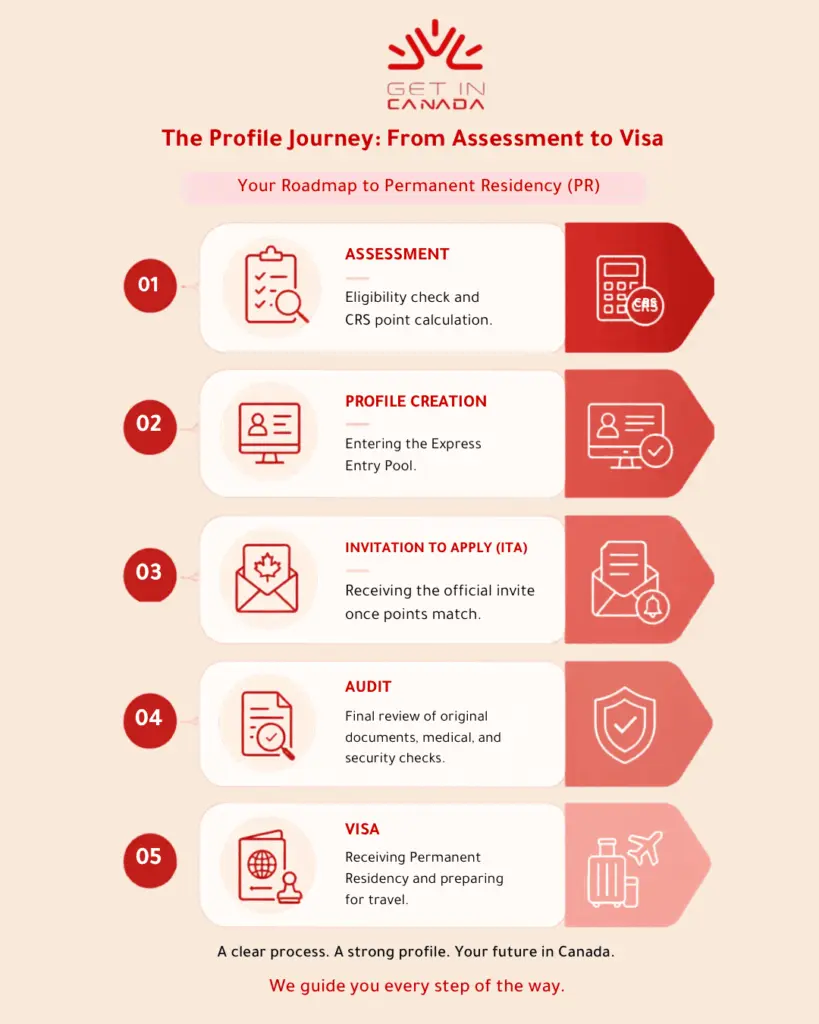
- Profile Stage: You enter your data into the Express Entry system and join the “pool” waiting for an Invitation to Apply.
- Invitation to Apply (ITA): If your score reaches the required threshold in a draw, you receive an official invitation to submit a full Permanent Residency application.
- Final Audit: IRCC reviews all original documents, medical exams, and security clearances before issuing the final visa.
Book Your Consultation Session →
4. What if You Are Not Eligible to Immigrate to Canada Currently?
Ineligibility at the current moment does not mean the door is closed forever; it is a sign that you need to change your strategy and intelligently improve the weaknesses in your profile. There are always alternative pathways specifically designed for those whose profiles do not meet the direct federal general draw requirements, giving them a second chance at settlement and success. A “Plan B” is what separates those who give up from those who actually reach Canadian soil, achieving their dreams.
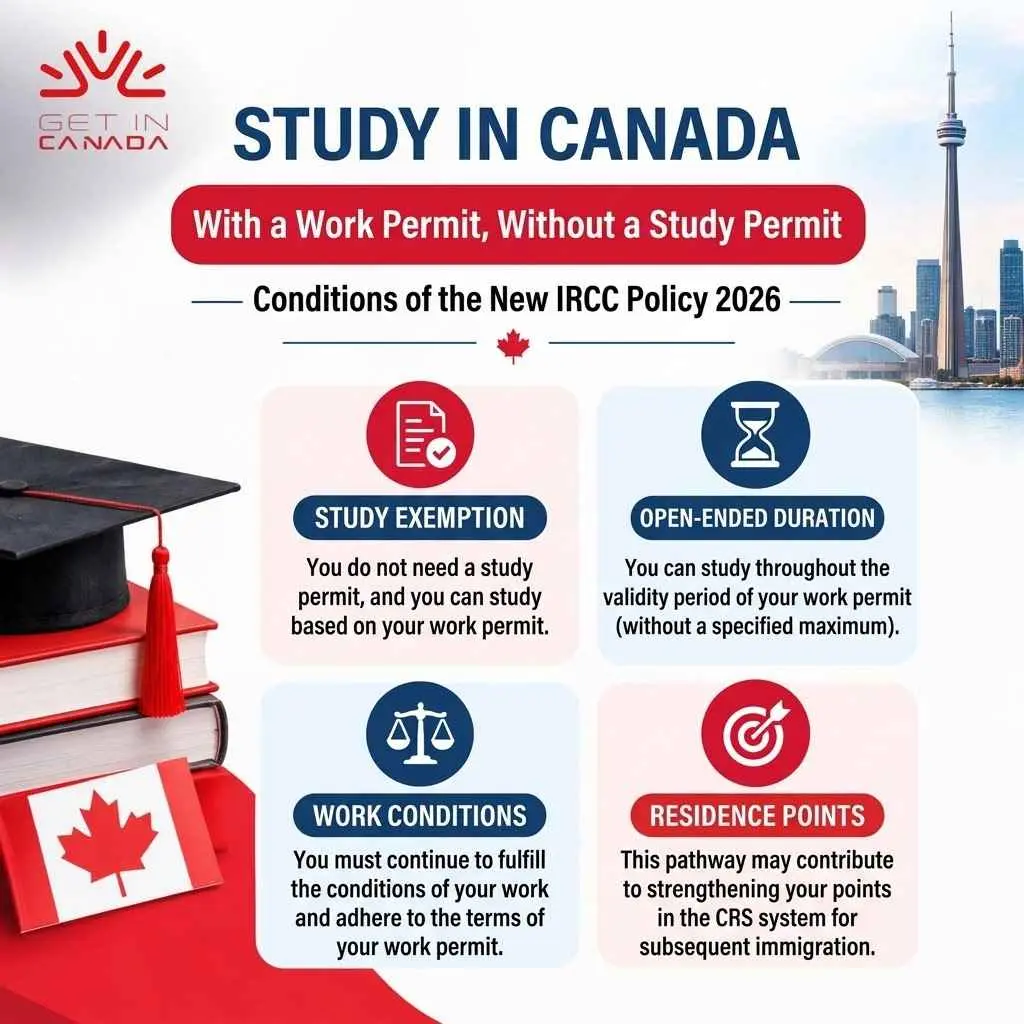
- The Study Pathway: Considered the “Golden Bridge,” as it massively boosts your score through Canadian education and grants you work rights later.
- Improve Language Scores: Retaking the IELTS and getting a higher score (especially in Listening) can raise your total by over 30 points.
- Provincial Nominee Programs (PNP): Searching for a province that specifically seeks your professional expertise, granting you 600 points and guaranteed PR.
Your Eligibility is Your Investment.. Start Planning Correctly Today
At “Get In Canada,” we understand that knowing “Am I eligible to immigrate to Canada?” is only the beginning, and the real challenge lies in managing that eligibility to achieve the desired result with minimal time and effort. Your assessment for 2026 requires extreme precision in calculations and a deep understanding of Canadian market shifts and immigration trends. Do not leave your eligibility to chance or guesswork; build it on solid legal foundations that ensure you and your family reach safety and sustainable stability as soon as possible.