Canada Immigration Changes in 2026: A Comprehensive Guide to New Laws and Updates
Keeping track of consecutive legislative updates and ministerial decisions is the core foundation for any candidate seeking to secure their legal pathway toward settlement in North America. Understanding Canada immigration changes 2026 grants you the proactive vision required to adjust your documentation and prevent application rejection resulting from relying on outdated information. In this comprehensive and detailed guide, we review all ongoing regulatory updates and current laws to ensure you build your competitive profile on solid and correct legal ground.
1. What Are the New Changes in Canada Immigration for 2026?
The federal government has enacted a new strategic plan aimed at restructuring intake flows for workers and newcomers to align with the local economy’s absorbing capacity and infrastructure.
• The new Canada immigration decisions focus heavily on managing overall intake levels and directing selection channels toward specific specialized categories capable of immediate productivity and bridging vital economic deficits.
• These updates encompass a thorough review of mechanisms for issuing temporary residency, tightening conditions for transitioning to permanent residency, and enforcing rigid audit criteria for all financial and security clearances.
Book Your Consultation Session →
2. Express Entry System Updates in 2026
The federal express selection system remains the most attractive channel for international talents, but it has undergone fundamental adjustments that have altered the nature of competition within the applicant pool.
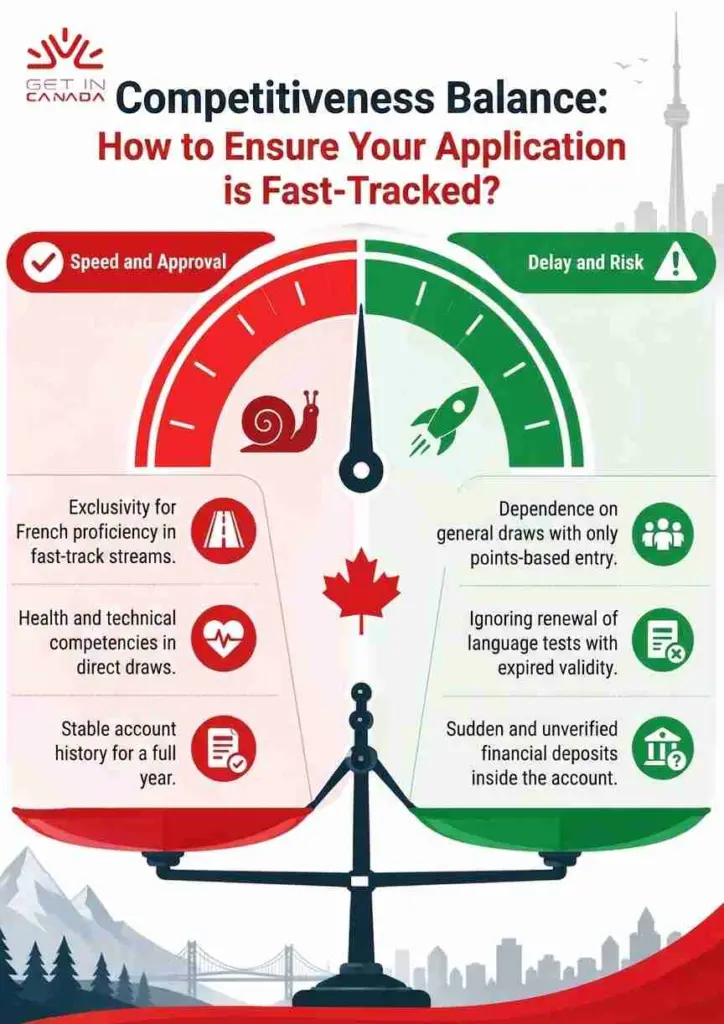
• Current conditions for Canada immigration place a much heavier weight on targeted category-based draw rounds, while general draws have been scaled back in favor of high-deficit occupational sectors.
• Advanced digital verification tools have been deployed to audit uploaded documents instantly, requiring extreme precision when entering profile data to prevent automatic account exclusion by the digital system.
3. Changes in Provincial Nominee Programs (PNP)
Recent amendments have granted regional provinces broader legislative flexibility to draft independent recruitment strategies that precisely fulfill their local market needs.
• The updates to Provincial Nominee Programs feature the launch of exclusive, accelerated pathways targeting skilled talents who are already established within the regions or those who possess verified family ties.
• Provincial nomination quotas have been strictly linked to the region’s capacity to provide housing and medical care, making smaller and rural provinces offer easier pathways and significantly lower point thresholds for applicants.
4. New Laws for Foreign and Temporary Workers
The updated regulations aim to organize the temporary labor market and protect the rights of international employees while ensuring that local employment opportunities for citizens remain unaffected.
• The Canada labor laws 2026 mandate that corporations present definitive proof of their inability to find a local replacement before issuing work permits to foreign laborers.
• New restrictions have been placed on extending open work permits, alongside establishing a rigid time cap on temporary residency durations to nudge candidates toward official economic immigration pathways.
Book Your Consultation Session →
5. Tightening Language Proficiency Requirements
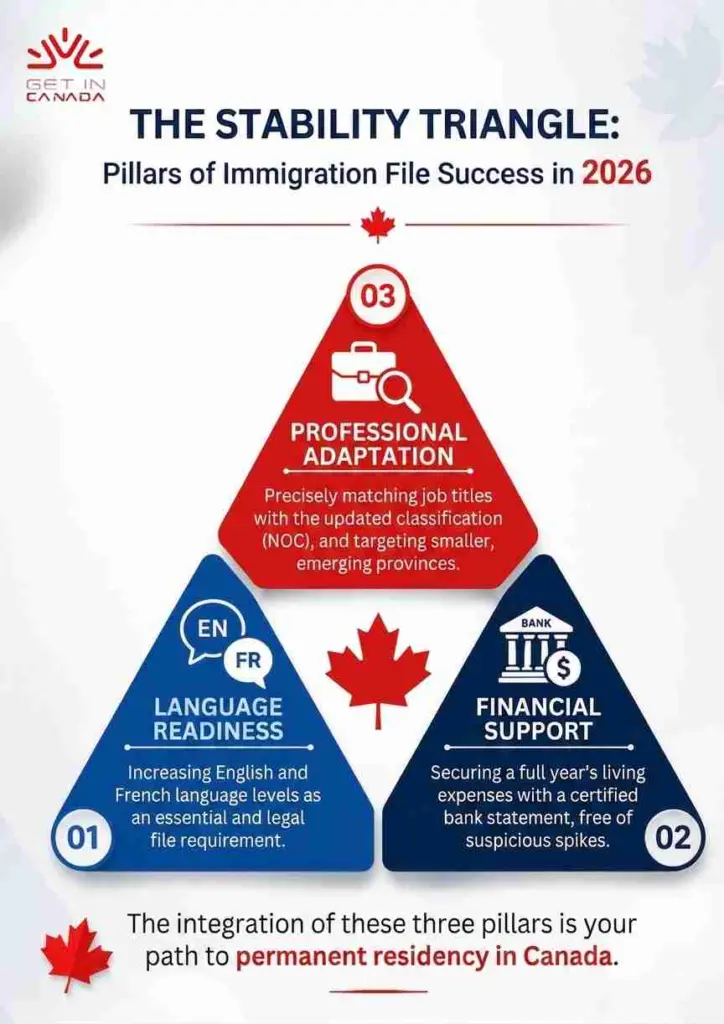
Communication skills are no longer merely a factor for collecting extra bonus points; they have transformed into a baseline prerequisite determining profile eligibility and acceptance across most ongoing programs.
• The changes in language requirements for immigration focus on raising the minimum Canadian Language Benchmark thresholds within official English and French testing systems.
• The laws have introduced massive scoring rewards and exclusive pathways for candidates possessing French as a core or second language, in a serious government step to support cultural diversity across provinces.
6. Amendments to Settlement Funds Criteria for Applicants
Due to rising living costs in major metropolitan areas, federal authorities have updated the mandatory proof of financial support to ensure the stability of arriving families.
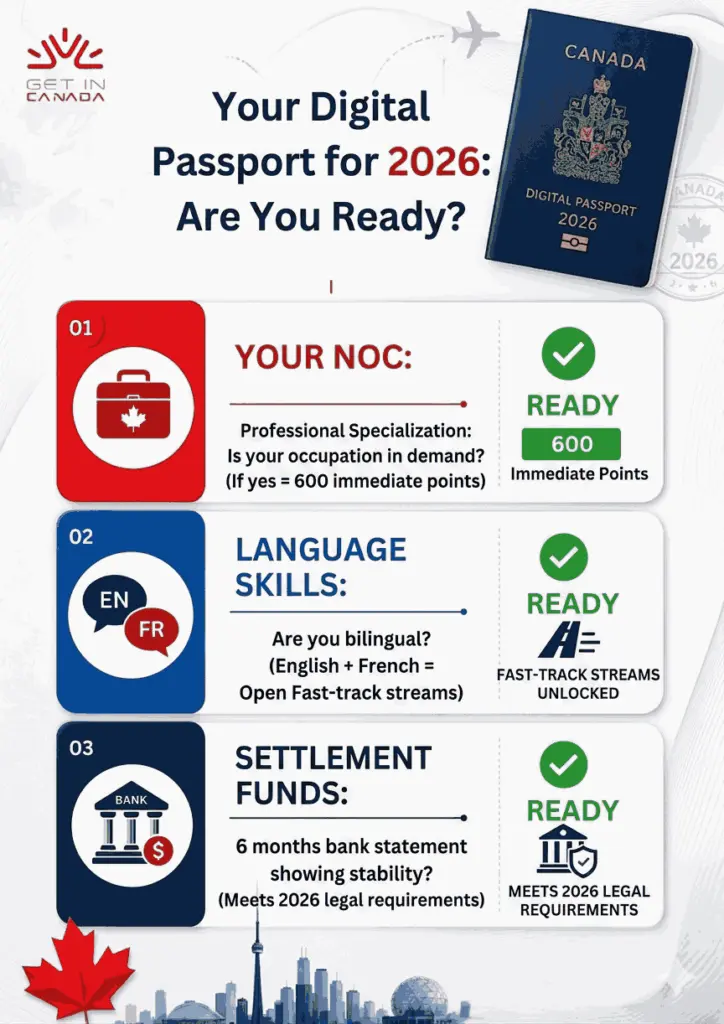
• The Canada conditions for settlement mandate presenting official, certified bank statements showing that the applicant possesses funds covering housing and living expenses for at least a full year without relying on social assistance.
• The regulations have enforced strict audits on capital sources and account histories; bank statements showing sudden, massive deposits are rejected unless accompanied by official legal documents proving their legitimacy.
7. How Do the New Decisions Affect Your Selection Odds?
Understanding the true dimensions of these legislative shifts helps you transform rigid conditions into a competitive advantage that propels your profile to the forefront of selection pools rapidly.
• Excellent opportunities for Canada immigration remain wide open for technically prepared candidates who possess tech, healthcare, or skilled trade specializations that fall under shortage lists.
• Conversely, relying on traditional submissions without advancing your language skills or pursuing regional nomination streams may increase waiting periods and expose your profile to expiration.
8. Smart Strategies to Adapt to Current Changes
If you wish to guarantee a high digital score that surpasses ongoing draw cutoffs, there are practical, structured steps you can apply to your account immediately.
• Targeting Emerging Provincial Programs: Applying through less populated provinces grants you a regional nomination that adds six hundred immediate points, guaranteeing your selection.
• Developing Dual Language Proficiency: Securing a moderate level in French opens exclusive, exceptionally low-threshold selection draws for your profile.
• Precise Occupational Auditing: Matching your profession with the updated national classification protects you from administrative errors that trigger application rejections under core Canada immigration rules.
Book Your Consultation Session →
9. Summary Table of Key Immigration Law Updates for 2026
This technical and simplified table summarizes the nature of ongoing shifts within the legislative framework for easy comprehension and comparison:
| Regulatory Framework in Canadian Law | Nature of the Ongoing Amendment and Change | Direct Impact on the Candidate’s Application |
| Federal Express Entry System | Absolute focus on targeted category-based draws | Major advantage for healthcare and tech specializations |
| Provincial Nominee Programs (PNP) | Linking quotas to regional absorbing capacities | Easier pathways and higher acceptance rates in smaller provinces |
| Language Proficiency Verification | Raising the minimum approved benchmarks | Mandatory need to upgrade English and French exam results |
| Settlement Funds Criteria | Increasing settlement amounts and auditing account histories | Obligation to submit certified bank statements covering a full year |
10. Best Immigration Pathways Available Under the New Laws
Despite challenges and rigid regulations, Canada’s doors remain open and continuous in attracting talents and minds that contribute to building the knowledge economy.
• The federal skilled worker pathway within the skilled workers to Canada category remains the premier choice for academically and linguistically outstanding candidates to secure permanent residency directly.
• Similarly, rural and Atlantic immigration programs serve as excellent, ideal streams for technical trades and service professionals wishing to settle within developing communities that offer high quality of life for families.
FAQs About Canada Immigration Changes in 2026
For more Canadian visa inquiries? Click here to start the process with our help →
Conclusion
Ultimately, managing federal regulations proves that successfully securing a relocation visa requires complete flexibility in absorbing changes and matching them with proactive technical planning. Consistent tracking of ministerial decisions protects you from administrative errors, placing your paperwork at the forefront of digital selection pools across various streams. Given the intricate regulations and overlapping criteria across different programs, we at Get In Canada remain fully committed to providing comprehensive technical reviews of your profile and calculating your points accurately to ensure you walk the safest path to success. Take the initiative today, begin auditing your paperwork, and update your credentials with complete readiness; flawless preparation aligned with the latest standards is your true first step toward long-term stability and permanent success.