The Best Pathways to Transition from Studying to Permanent Residency in Canada
Studying in Canada is one of the smartest steps you can take to unlock the doors to long-term stability and secure permanent residency. As a country, Canada warmly welcomes international students and highly prefers them in the local labor market because they have already lived and integrated into Canadian society. However, the most crucial point to remember is that graduation alone does not automatically grant you permanent residency; you need to plan your steps from day one and choose the right immigration stream. In this comprehensive 2026 guide, we will break down simply how to turn your student visa into permanent residency with the fastest and most efficient methods.
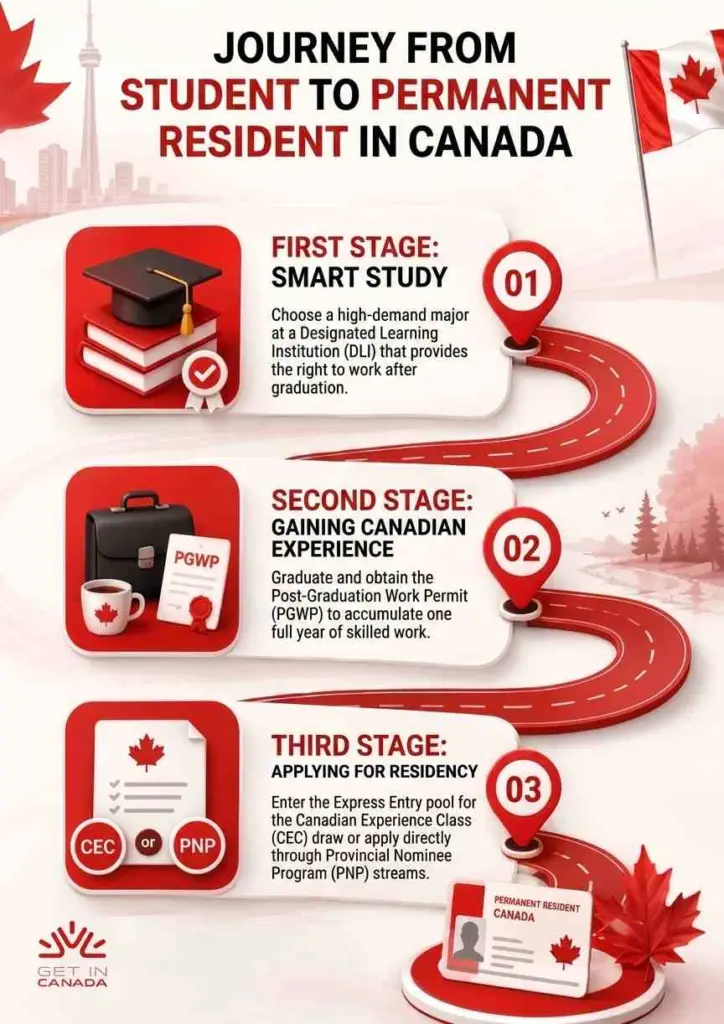
1. Selecting a Designated Learning Institution (DLI) and Securing a Post-Graduation Work Permit (PGWP)
The first and most critical step begins before you even land in Canada pecifically when choosing the university or college you will attend. Work permits are not granted to just any school arbitrarily:
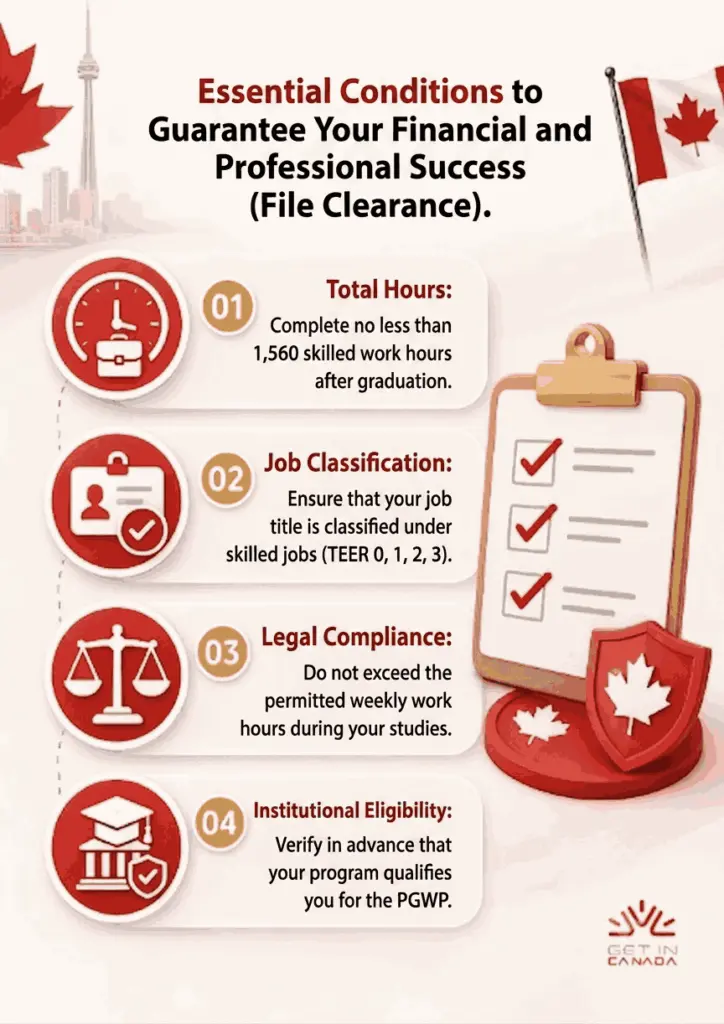
- The DLI Requirement: You must ensure that your educational institution is on the government’s official list of Designated Learning Institutions (DLI) and that your specific program offers full eligibility for the Post-Graduation Work Permit (PGWP).
- The Importance and Rules of the PGWP: This permit is the golden bridge transitioning you from a student to a legal worker in Canada. It allows you to work openly for any employer nationwide for a duration ranging from 1 to 3 years, depending on the length of your academic program. Under the current 2026 regulations, graduates of Master’s degree programs are granted a full 3-year open work permit directly, regardless of the course duration, offering a massive strategic advantage to accumulate the necessary Canadian work experience.
Book Your Consultation Session →
2. The Canadian Experience Class (CEC) via the Express Entry System
Once you graduate, receive your PGWP, and start your employment, the federal Express Entry system opens its fastest track for you through the Canadian Experience Class, tailored specifically for local talent:
- How the Stream Operates: This program requires you to accumulate at least one full year of continuous, skilled work experience within Canada (or an equivalent number of part-time hours, totaling a legal 1,560 hours) within the 3 years preceding your application.
- Why Graduates Prefer This Path: As a graduate of a Canadian institution with local professional experience, the Comprehensive Ranking System (CRS) awards your profile massive bonus points, directly boosting your rank in the pool. Additionally, local experience qualifies you for targeted category-based draws (Category-based draws), which issue invitations at significantly lower point thresholds compared to general draws.
3. International Graduate Streams via Provincial Nominee Programs (PNP)
If your general federal points are not high enough to compete, Provincial Nominee Programs ($PNP$) offer international graduates exceptional and simplified routes to settle in the province where they completed their studies:
- Dedicated Graduate Streams: Most Canadian provinces (such as Ontario, British Columbia, and Alberta) feature tailored pathways specifically named “International Graduate Streams.”
- Advantages of Provincial Nomination: Many of these regional programs waive long work experience requirements. For instance, Ontario’s graduate stream allows you to apply for nomination immediately upon obtaining a Master’s or Ph.D. degree, without even requiring a prior job offer. Once the provincial nomination is issued, it injects 600 bonus points directly into your federal Express Entry profile, guaranteed to pull your file forward in the very next draw.
4. Common Mistakes Students Make That Risk Permanent Residency
Despite how smooth the pathway can be, there are critical administrative and legal slip-ups that applicants often make, which can completely derail their immigration goals:
- Studying in Programs Ineligible for the PGWP: Some private colleges offer highly attractive tuition rates, but their programs are not recognized on the government lists for PGWP eligibility, leaving the student with no legal options to remain and work after graduation.
- Working in Unskilled Occupations: To qualify your profile for permanent residency through the Canadian Experience Class, the job you perform must be classified as a skilled position under the National Occupational Classification (TEER 0, 1, 2, 3). Working in unskilled retail or basic service roles does not count toward immigration experience.
- Breaching Student Work Hour Limits: Canada enforces strict limits on the number of hours students can work off-campus while classes are in session (such as the current 20 or 24-hour weekly caps). Exceeding this limit places you in direct violation of immigration laws, which can lead to a refusal of your PGWP application later for breaching visa conditions.
Book Your Consultation Session →
5. Comparative Matrix: Federal Pathway vs. Provincial Streams for Students
The table below summarizes the core differences between the top paths available to international graduates in 2026 to help you map out your strategy:
| Point of Comparison | Canadian Experience Class (CEC Federal) | International Graduate Streams (PNP) |
| Core Professional Requirement | Requires 1 full year of continuous skilled work within Canada. | Certain streams accept a basic job offer or simple graduation (Master’s/Ph.D.). |
| Job Offer Requirement | Not required; selection is based entirely on competitive pool points. | Required by some provinces as mandatory proof of ties to the region. |
| Geographical Freedom | Absolute flexibility to live and work in any Canadian province. | Obligation to reside and settle within the nominating province for fixed years. |
| PR Processing Speed | Ultra-Fast: 6 to 8 months from the date of the invitation draw. | Moderate: Takes longer due to the two-stage review process (Provincial then Federal). |
FAQs About The Best Pathways to Transition from Studying to Permanent Residency in Canada
For more Canadian visa inquiries? Click here to start the process with our help →
How to Start Planning Your Future with Confidence?
Transitioning successfully from a classroom desk to Canadian permanent residency is the result of strategic planning that starts the moment you select your major and university. Making calculated choices guarantees a secure, stable future and prevents you from sinking tuition capital into programs that do not grant a $PGWP$. Do not leave your future journey to guesswork. Book your legal consultation now with the experts at Get In Canada, and let us help you pick the most reliable path to secure your work permit and carry your profile seamlessly toward permanent residency! 🇨🇦 Your right move begins today.