How to Avoid Canada Immigration Application Rejection 2026
There is nothing more heartbreaking than opening an email to find a Canada immigration rejection after months of preparation and hope. In 2026, the reality is that most applications fail not because the candidate isn’t “good enough,” but because of avoidable mistakes preventing Canada immigration success. These technicalities, often overlooked by those without expert guidance, can turn a solid “Plan B” into a costly setback. This guide breaks down the common pitfalls and shows you exactly how to secure your path to a new life.
Book Your Consultation Session →
1. Common Mistakes That Stop Applications in Their Tracks
Many applicants, particularly from the Gulf region, rely on outdated forums or well-meaning advice from friends that simply doesn’t apply to the 2026 landscape. IRCC’s auditing systems are more sophisticated than ever, and even a minor oversight can trigger a “red flag.” Understanding these common errors is the first step in ensuring your file moves through the system without a hitch.
1.1 Misrepresentation: The “Hidden” Danger
Misrepresentation is one of the most severe mistakes preventing Canada immigration approval. It’s often unintentional; like forgetting to mention a 10-year-old visa refusal from another country, but IRCC treats it as a serious breach of trust. Being “blacklisted” for five years is a high price to pay for a simple omission. Honesty isn’t just the best policy; it’s the only one that works with Canadian immigration.
- Non-Disclosure: Failing to mention previous marriages, all family members (even those not coming with you), or past legal issues.
- Inconsistent Employment History: When the dates on your CV don’t match the official letters from your HR department.
- Suspect Documentation: Submitting self-translated documents or unverified test results that don’t meet IRCC’s strict verification standards.
1.2 Unexplained Gaps in Your Personal History
Immigration officers look for a seamless “story” of your life. If there is a gap of more than six months where you weren’t working or studying, they want to know why. Leaving these periods blank suggests you might be hiding something, which can lead to a Canada immigration rejection. Whether you were traveling, between jobs, or taking care of family, every month needs to be accounted for.
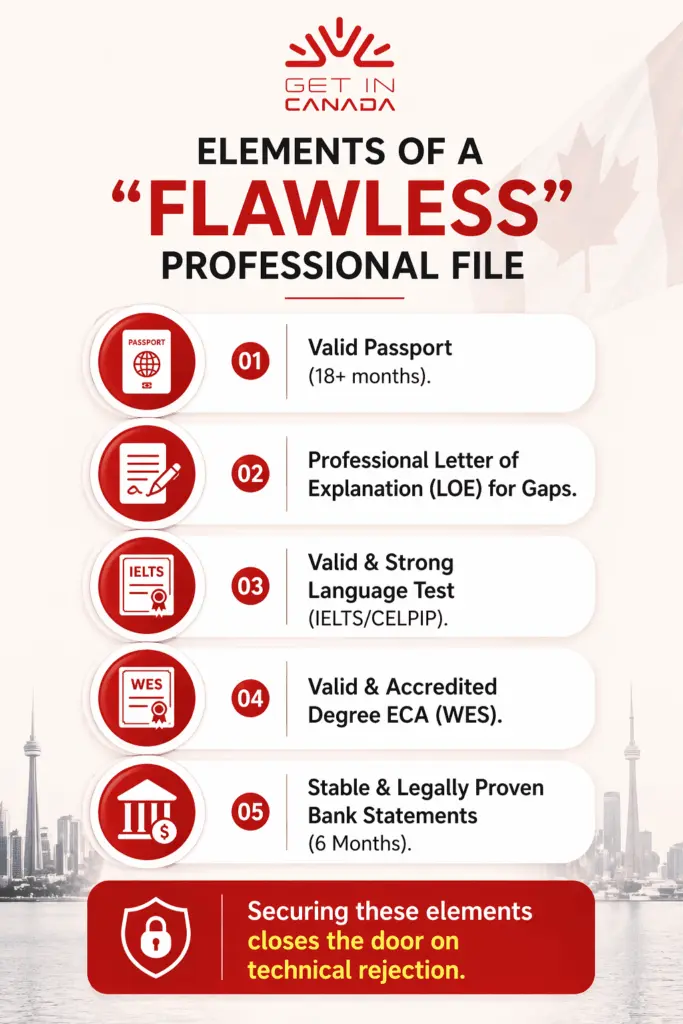
- The “LOE” Solution: A Letter of Explanation should be used to bridge any professional gaps.
- TEER Code Alignment: Ensuring your actual job duties match the (TEER) code you’ve selected, rather than just relying on a fancy job title.
2. The Paper Trail: Technical Gaps That Sink Files
Your application is your “voice” in front of a Canadian official you will likely never meet. If that voice is disorganized or missing key evidence, the application will be rejected for being “incomplete” before it’s even fully reviewed. In 2026, the digital shift means your scans must be perfect, your translations must be certified, and your accreditation must be up to date.
2.1 Accreditation (ECA) and Translation Blunders
Submitting a degree without a proper Educational Credential Assessment (ECA) from a body like WES is a fast track to rejection. Similarly, using a translator who isn’t “certified” or “sworn” can invalidate your entire document package. These are technicalities, but in the world of Canadian law, they are the difference between a visa and a rejection letter.
- Name Matching: Your name must be identical across your passport, degree, and translation. One typo can cause weeks of delays.
- ECA Validity: Most ECAs are only valid for five years. Using an expired one is a guaranteed “technical fail.”
2.2 Proof of Funds (POF): The Financial Trap
This is where many Gulf-based applicants struggle. Canada requires your settlement funds to be “liquid” and stable. If you suddenly deposit a large sum of money a week before applying without a documented “Gift Deed,” IRCC will suspect the money isn’t truly yours. You need to show a clear financial history for at least the last six months to prove you can support your family upon arrival.
- The 6-Month Rule: Avoid large, unexplained “lumps” of cash appearing in your account.
- CAD Conversion: Ensure your bank statement reflects the value in Canadian Dollars to make the officer’s job easier.
Book Your Consultation Session →
3. Program Selection: Why Canada Might Reject You Despite Your Eligibility
Sometimes an applicant is perfectly qualified in terms of points but fails because they chose the wrong pathway that does not align with their specific profile strengths. Rushing into a general “Express Entry” draw when your chances are significantly higher in “Provincial Nominee Programs” is a strategic error that increases the likelihood of Canada immigration rejection.
- Failure to Meet Specific Conditions: Applying for a program that requires a job offer you don’t have, or a provincial program requiring an intent to reside there while your profile shows interest in another province.
- Ignoring 2026 Updates: Immigration laws are dynamic; applying based on old rules that are no longer in effect is a costly administrative mistake.
- Unequal Competition: Persisting in a pathway where the points are too high for your current profile while ignoring a more suitable “Plan B.”
3.1 How to Choose the Right Canada Immigration Program for You?
Identifying the right program is about matching your personal data (age, skills, and cash flow) to the specific “draws” happening in Canada right now. In 2026, the landscape is divided between high-speed federal routes and more “niche” provincial invitations. Choosing the right one is effectively 90% of the battle.
- Express Entry: Best for young professionals (under 32) with high English scores.
- Provincial Nominee Programs (PNP): The “hidden gem” for those with specific skills (Tech, Healthcare, Trades) who need a 600-point boost.
- Study Pathway: The ultimate “Plan B” for those over 35 who want to bypass the points-race and transition to PR from within Canada.
- Targeted Category Draws: Specialized draws within Express Entry for high-demand sectors like STEM and Healthcare.
Read also:
- How to Get Canadian PR with a Two-Year College Degree
- The 8 Most Strategic Cities for Newcomers to Canada 2026
- Government Instructions Leave the Door Open for PGP Canada to Return in 2026
- Express Entry CEC Draw Sees Lower Cut-Off Score
4. How to Avoid Rejection?
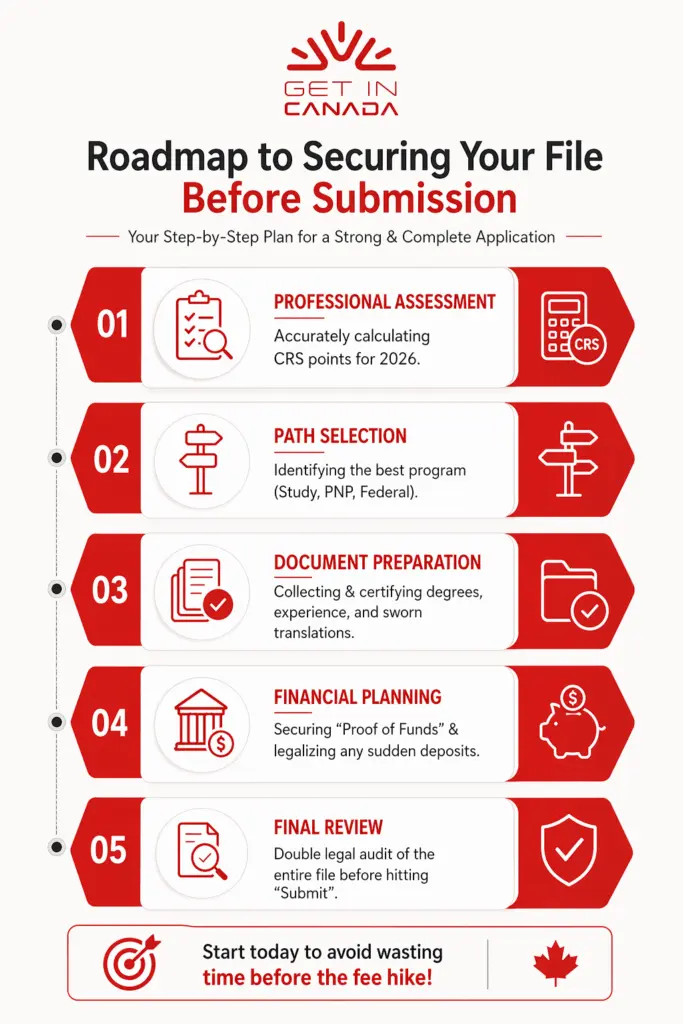
Avoiding failure starts with your very first document. It’s about building a file that is “audit-proof.” A professional review of your application before you hit “Submit” can save you thousands of dollars in lost fees and years of waiting. In 2026, the margin for error is zero, especially with the government fee hike scheduled for April 30, 2026.
4.1 The Final “Double-Check” Audit
Before you finalize your submission, your file should be reviewed through the eyes of an immigration officer. You’re looking for “red flags”—those small inconsistencies that trigger doubt. A clean, well-explained, and perfectly documented file is the only way to ensure your move to Canada happens on schedule.
- Consistency Check: Do the dates in your personal history match your travel history?
- Validity Check: Is your passport valid for at least another 18 months?
- Strategic LOE: Does your Letter of Explanation turn your profile’s weaknesses into logical, explained facts?
Common Mistakes & Their Impact
| The Mistake | The Immediate Result | Can You Fix It? |
|---|---|---|
| Misrepresentation | 5-Year Ban | Almost Never |
| Missing Documents | Immediate Rejection | Yes (Must Re-apply) |
| Insufficient Funds | Rejection | Yes (After 6 Months) |
| Wrong Program Choice | Point Stagnation | Yes (Change Path) |
| Poor Translation | Delay/Technical Reject | Easy (Re-translate) |
Precision is the Key to Your New Life
Your immigration application isn’t just paperwork; it’s the legal foundation for your family’s future. Any shortcut in addressing mistakes preventing Canada immigration success can result in total failure. Avoiding a Canada immigration rejection isn’t about luck; it’s about meticulous planning and professional execution. Don’t leave your “Plan B” to chance; ensure your file is flawless and ready for a 2026 approval before the rules change again.