What Does a Canadian Employer Need to Do to Hire Someone from Abroad?
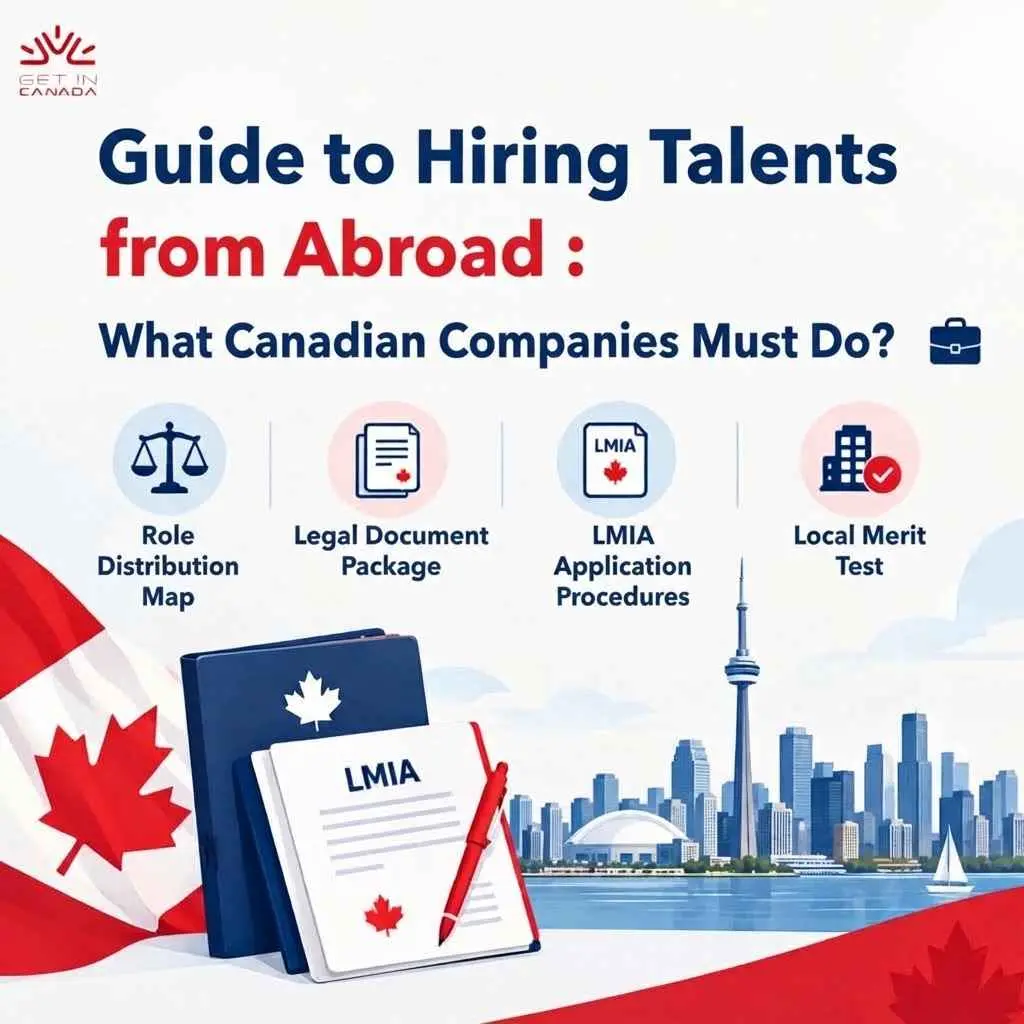
Does landing a Canadian job offer mean you are ready to book your flight? Not yet. An employment contract is merely the starting line of a regulated process. Canadian law requires employers to secure formal labor clearances and pay mandatory compliance fees through ESDC or IRCC before you can even apply for your work permit. This guide outlines what the employer must complete behind the scenes, the essential paperwork you must receive, and the clear division of roles between both sides.
1. What Does an Employer Consider Before Hiring from Abroad?
Hiring from overseas requires corporate investment, regulatory scrutiny, and legal accountability. Before extending an offer to an international candidate, a Canadian employer must verify that domestic labor market options have been exhausted and that the business satisfies federal compliance criteria.
Assessing Domestic Recruitment Efforts and Regional Labor Shortages
Canadian labor regulations mandate prioritizing qualified Canadian citizens and permanent residents before looking internationally.
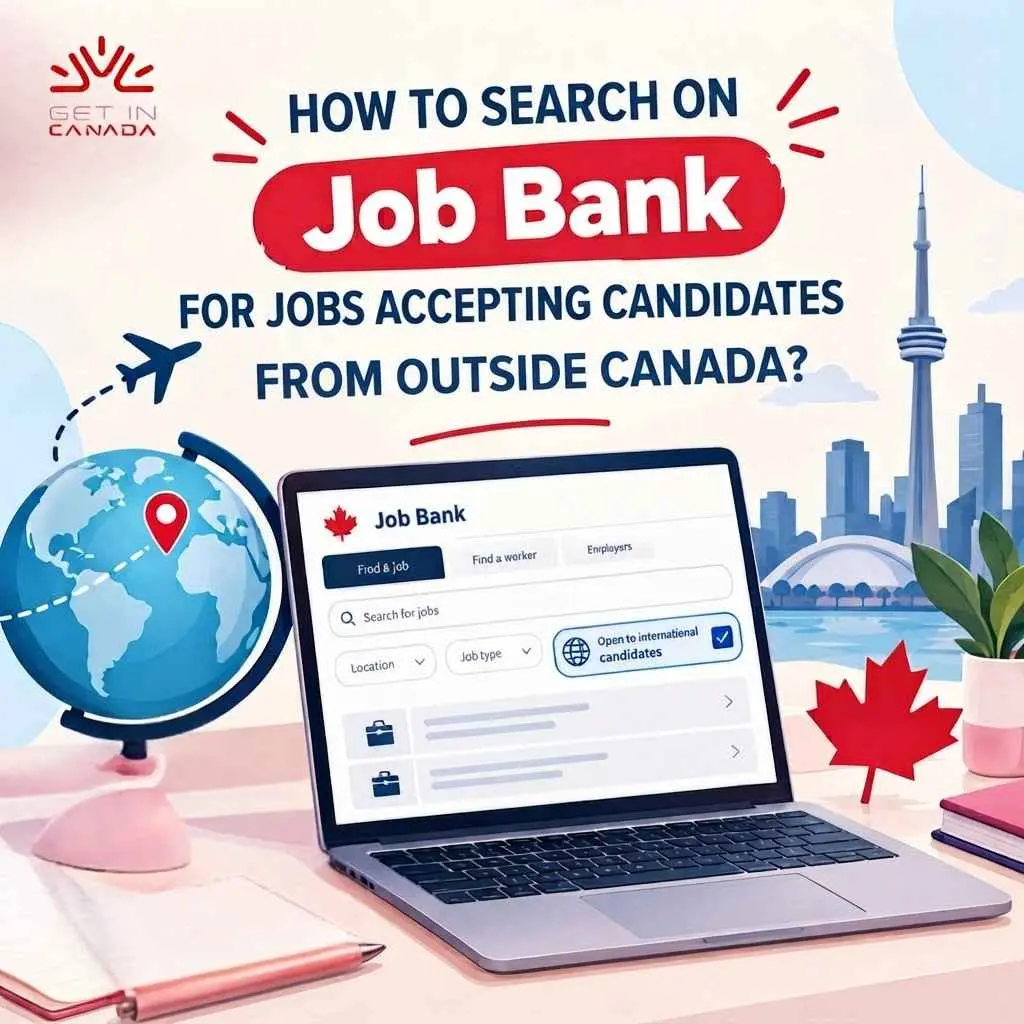
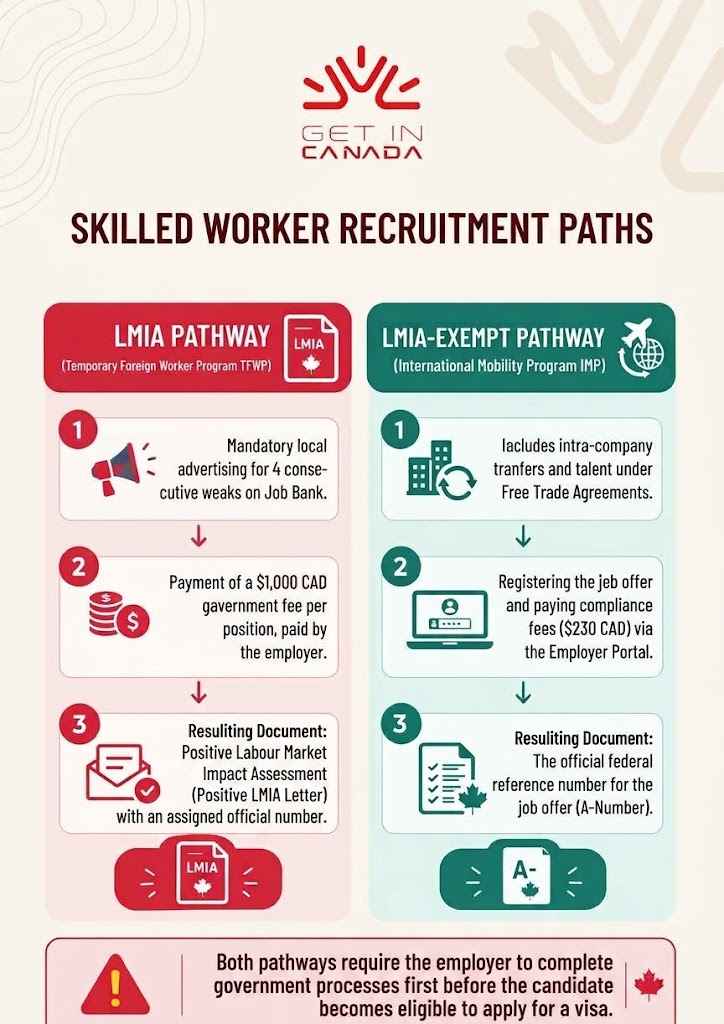
- Mandatory Recruitment Runs: Advertising the vacancy across multiple platforms, including the national Job Bank, for at least 4 consecutive weeks.
- Demonstrating Genuine Shortages: Documenting why domestic candidates were unsuitable for the position or could not be reasonably trained.
- Wage and Working Conditions Parity: Offering pay that matches or exceeds the median prevailing wage for that specific NOC code and economic region.
Book Your Consultation Session →
Corporate Standing and Administrative Readiness
Canadian authorities conduct thorough audits to ensure the hiring organization is legitimate and financially viable.
- Business Legitimacy Verification: Furnishing corporate tax filings, valid business licenses, and proof of active operations to federal reviewers.
- Compliance Checks: Ensuring the employer does not appear on IRCC’s public registry of non-compliant employers prohibited from hiring foreign workers.
- Timeline Buffers: Factoring in multi-month government processing windows to ensure project timelines remain realistic before onboarding overseas staff.
2. When Might an Employer Need an LMIA?
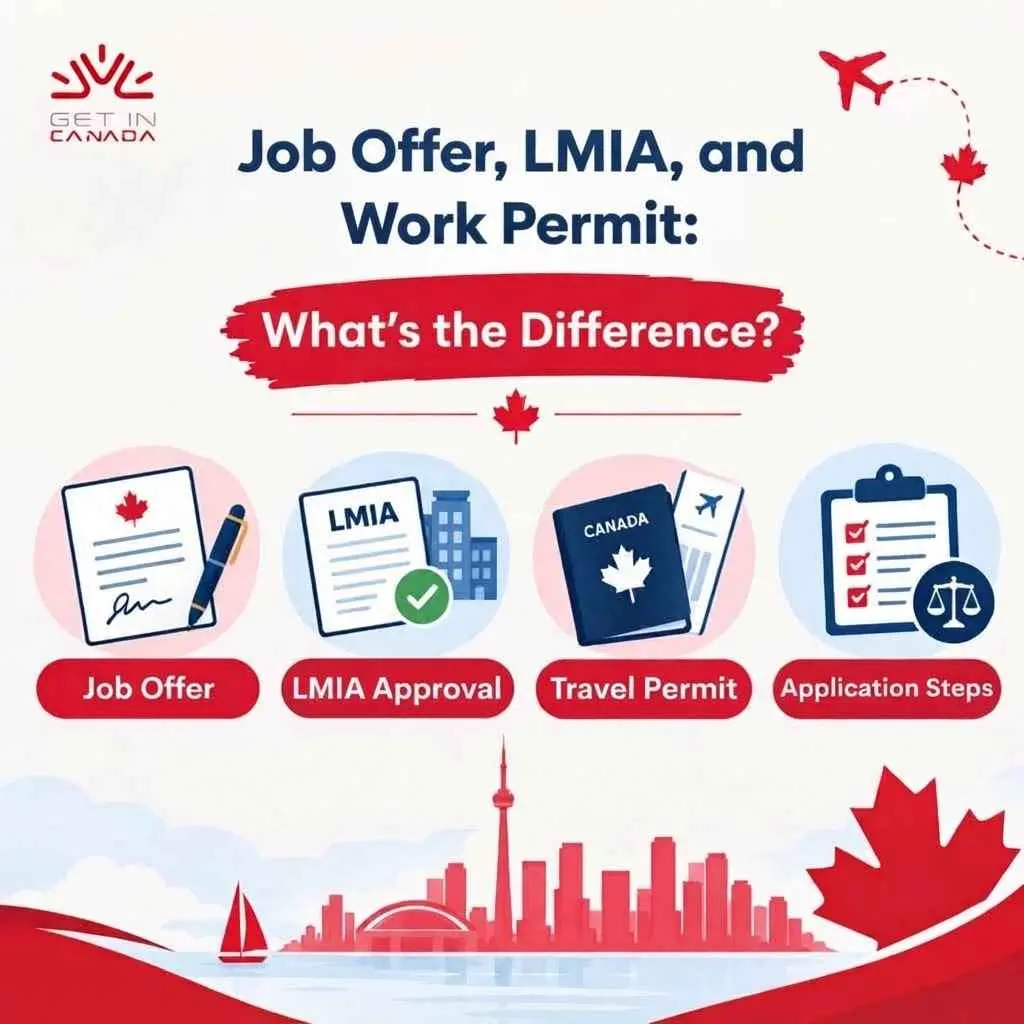
Under standard immigration streams, hiring an overseas worker requires an approved Labour Market Impact Assessment (LMIA). Issued by Employment and Social Development Canada (ESDC), an LMIA serves as formal government verification that hiring a foreign national will not negatively affect the domestic labor market.
The Temporary Foreign Worker Program (TFWP) Framework
Whenever a role does not qualify for an exemption, the employer must apply through the TFWP stream.
- Filing the ESDC Dossier: Submitting advertising records, operational justifications, and corporate financials directly to federal reviewers.
- Wage Tier Determination: Categorizing the position as high-wage or low-wage relative to provincial median hourly wages to determine regulatory obligations.
- Positive LMIA Confirmation: ESDC issues an approval letter containing a unique system number required for the worker’s permit application.
Employer Costs and Government Fees
The employer is exclusively responsible for the costs associated with securing labor market clearance.
- The $1,000 CAD Filing Fee: ESDC charges a non-refundable $1,000 CAD processing fee per requested position.
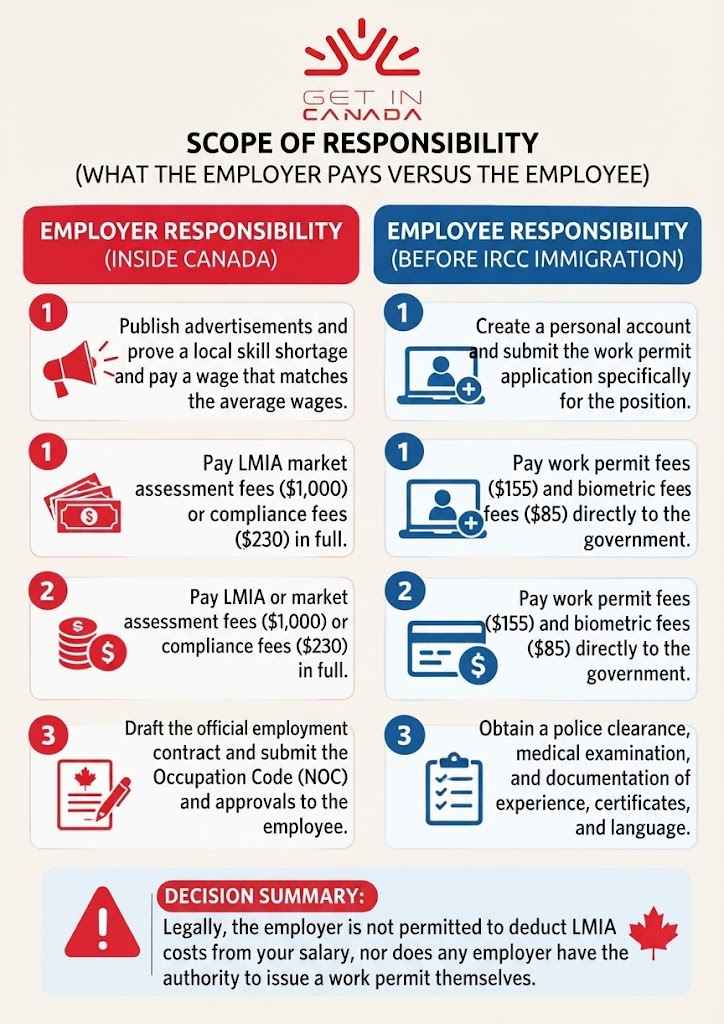
- Prohibition on Fee Recovery: Canadian law strictly prohibits employers and agencies from recovering or deducting LMIA costs from the worker’s earnings.
- Document Validity: The positive LMIA letter must remain valid at the time the candidate submits their work permit application.
Book Your Consultation Session →
3. What May the Employer Need to Do in an LMIA-Exempt Case?
Roles under the International Mobility Program (IMP) bypass the ESDC labor assessment because they provide significant economic, cultural, or reciprocal trade benefits. However, an LMIA exemption does not remove the employer’s administrative obligations; formal federal filings are still mandatory before the candidate can apply.
The Employer Portal and Compliance Fee
Employers must submit the employment offer directly through the IRCC online Employer Portal.
- Submitting the Digital Offer: Entering detailed NOC tasks, compensation terms, and working conditions into the portal.
- The $230 CAD Compliance Fee: Paying the mandatory federal compliance fee online to validate the job offer.
- Generating the “A-Number”: The portal generates an official Offer of Employment number (beginning with an “A”) required for the work permit application.
Common LMIA-Exempt Streams
Several business streams operate outside standard LMIA parameters.
- Intra-Company Transferees (ICT): Transferring senior managers, executives, or specialized knowledge personnel from foreign offices to Canadian branches.
- International Trade Compacts: Professional mobility provisions established under agreements like CUSMA, CETA, and CPTPP.
- Significant Benefit Programs: Specialized roles that create proven economic or cultural advantages for Canadian communities.
Overview: Employer Administrative Tracks
| Feature / Obligation | LMIA Track (TFWP) PNG | LMIA-Exempt Track (IMP) |
| Government Body | Employment and Social Development Canada (ESDC) | Immigration, Refugees and Citizenship Canada (IRCC) |
| Employer Fee | $1,000 CAD per requested position | $230 CAD Employer Compliance Fee |
| Mandatory Advertising | 4 weeks on multiple job boards (Job Bank mandatory) | Exempt in most operational streams |
| Key Output for Applicant | Positive LMIA Decision Letter (System Number) | Official Offer of Employment Number (“A-Number”) |
| Worker Cost Recovery | 100% illegal to deduct from candidate earnings | Paid solely by the employer via the Portal |
4. What Information and Documents Does the Worker Need from the Employer?
Once backend clearances are secured, the employer must issue a standardized documentation package. IRCC cannot process an employer-specific closed work permit application without these records.
The Formal Job Offer and Employment Contract
A formal employment contract provides the legal foundation for the application.
- Corporate Letterhead: Displays the registered business name, physical Canadian address, business number, and direct contact details.
- Terms of Employment: Outlines core NOC duties, hourly wages, standard weekly hours (minimum 30 hours for full-time), and benefits.
- Immigration Conditions: Explicitly states that employment begins only after IRCC issues an approved work permit.
Government Authorization Proofs
The employer must provide the candidate with the applicable official government confirmation.
- Positive LMIA Decision Copy: The full confirmation letter displaying the ESDC reference code and validity expiration date.
- Offer of Employment Number (“A-Number”): The confirmation sheet generated by the IRCC Employer Portal for exempt streams.
- Provincial Endorsement Letters: Provincial Nominee Program (PNP) support letters when hiring through regional pilot initiatives.
Book Your Consultation Session →
5. Which Steps Belong to the Employer and Which Belong to the Applicant?
Maintaining clear boundaries between employer and applicant responsibilities prevents processing delays and compliance issues.
The Employer’s Exclusive Responsibilities
The employer manages domestic operational obligations and administrative filings:
- Establishing Genuine Vacancies: Offering real positions benchmarked to prevailing wages.
- Filing Government Applications: Submitting LMIA paperwork or Employer Portal registrations and paying all associated employer fees.
- Ensuring Workplace Compliance: Maintaining agreed-upon duties, wages, and working conditions once the employee arrives.
The Applicant’s Exclusive Responsibilities
The candidate manages personal eligibility and immigration filings:
- Submitting the Work Permit Application: Creating an online IRCC account and uploading all personal and supporting forms.
- Paying Individual Fees: Directly paying the work permit processing fee ($155 CAD) and biometrics fee ($85 CAD) to IRCC.
- Clearing Admissibility Checks: Providing police clearance certificates and undergoing medical exams with IRCC-approved panel physicians.
- Proving Qualifications: Submitting educational credentials, credential assessments (ECA), language scores, and verified reference letters.
FAQs
Book Your Consultation Session →
Final Takeaway: A Regulated, Transparent Partnership
International recruitment into Canada is a joint legal process defined by clear corporate accountability and individual eligibility. Knowing an employer’s backend requirements allows you to accurately assess job offers, spot red flags, and navigate your move with confidence.
If you need an employment contract audited or want to confirm the validity of an LMIA approval, consult with a Regulated Canadian Immigration Consultant (RCIC) to ensure your application meets all federal standards.