Are You Eligible to Immigrate to Canada? Points, Requirements and a Self-Check
Are you wondering whether you qualify to immigrate to Canada? Your eligibility depends on several factors, including your age, education, language skills, work experience, occupation, and financial situation. The right immigration pathway also depends on your personal profile and long-term goals.
In this guide, we explain the main eligibility requirements, how immigration points are calculated, and how you can assess your chances before starting your application.
1. What Are the Core Eligibility Criteria for Canada Immigration?
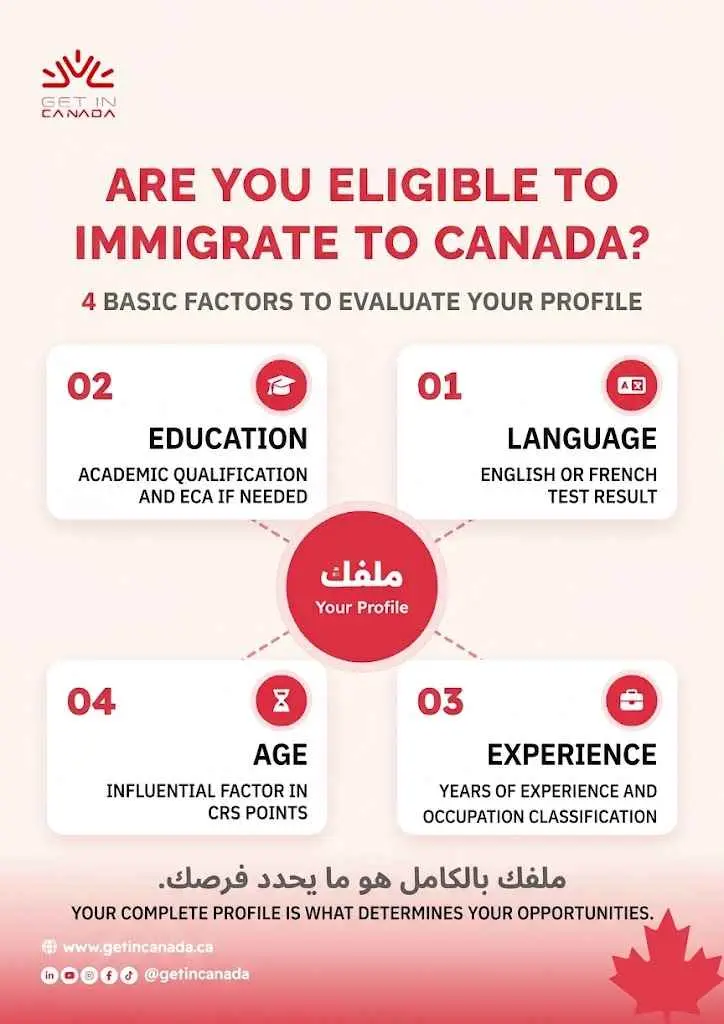
Before choosing an immigration program, it is important to understand what Canadian immigration authorities look for in an applicant. While requirements vary by program, several factors are commonly used to assess eligibility.
These may include:
- Language ability: You may need an approved language test in English or French.
- Education: Your level of education can affect both eligibility and your overall score.
- Work experience: Your experience must generally meet the requirements of the immigration program.
- Age: Age can affect your ranking, particularly under the Comprehensive Ranking System (CRS).
- Financial support: Some programs require proof that you have enough funds to support yourself and your family.
- Medical and police clearance: Applicants may need to meet Canada’s health and admissibility requirements.
Meeting the basic requirements does not always guarantee an invitation to apply. Your profile may also need to be competitive compared with other candidates.
Book Your Consultation Session →
2. Is a Language Test Required for Canada Immigration?
Language ability is one of the most important factors in many Canadian immigration programs, particularly Express Entry. Applicants may need to prove their English or French proficiency through an approved language test.
Accepted tests can include:
- IELTS General Training
- CELPIP-General
- PTE Core
- TEF Canada
- TCF Canada
A stronger language score can also help improve your CRS ranking and increase your competitiveness.
3. How Does Education and NOC/TEER Affect Your Eligibility?
Your education and work experience help determine which immigration programs you may qualify for. If you completed your education outside Canada, you may need an Educational Credential Assessment (ECA) for certain programs.
Your work experience is also assessed according to Canada’s NOC 2021 / TEER system, which classifies occupations based on their duties and skill requirements.
It is therefore important to make sure that your actual job duties match the occupation you claim in your immigration profile.
4. What Are Proof of Funds and Work Experience Requirements?
Financial and work requirements vary depending on the immigration pathway you choose. Some applicants must demonstrate that they have sufficient funds to establish themselves in Canada, while others may be exempt based on their circumstances.
Foreign work experience can also count toward eligibility under certain programs, provided it meets the required conditions for the occupation, duration, and type of employment.
5. What Medical and Police Checks Are Required?
Meeting Canada’s admissibility requirements is an important part of the immigration process. Depending on the program and your circumstances, you may need to complete a medical examination and provide police certificates.
These requirements help Canadian authorities determine whether an applicant is admissible to Canada.
Book Your Consultation Session →
6. How Are Immigration Points Calculated?
For candidates applying through Express Entry, your CRS score plays an important role in determining your ranking in the pool. The score is based on several factors related to your personal and professional profile.
These can include:
- Age
- Education
- Language proficiency
- Canadian and foreign work experience
- Spouse or partner factors
- Additional points, such as those associated with a provincial nomination
There is no single CRS score that guarantees an invitation. The score required can change from one invitation round to another.

7. How Can You Estimate Your CRS Score?
Calculating your CRS score can help you understand how competitive your profile may be before you enter the Express Entry pool. It can also show you which areas of your profile may be improved.
For example, improving your language results, gaining additional eligible work experience, or obtaining a provincial nomination may affect your overall ranking.
The best strategy depends on your individual profile, so avoid relying on a single score as a guarantee of success.
8. Can PNP or French Help Improve Your Chances?
Express Entry is not the only option available to skilled immigrants. Provincial Nominee Programs (PNPs) can provide another pathway for candidates whose skills and experience match the needs of a particular province or territory.
French-language ability can also create additional opportunities under Canada’s immigration system, depending on the program and selection criteria.
Exploring these options can be especially useful if your current Express Entry profile is not sufficiently competitive.
9. How Can You Avoid Immigration Scams?
A strong immigration profile is important, but so is choosing reliable information and legitimate services. Be cautious of anyone who guarantees a visa, an invitation, or a specific immigration outcome.
To protect yourself:
- Use official Canadian government sources for immigration requirements.
- Be careful with anyone promising guaranteed approval.
- Do not provide false information or documents.
- Verify the credentials of any immigration representative you hire.
- Avoid paying for services that promise an invitation or guaranteed CRS score.
FAQs
Book Your Consultation Session →
Final Thoughts
Canada immigration eligibility is not determined by one factor or one score. Your age, education, language ability, work experience, occupation, and other circumstances all contribute to determining which pathways may be available to you.
The best place to start is by assessing your profile, estimating your CRS score, and comparing your qualifications with the requirements of the programs that fit your goals.