What Must Applicants for Immigration to Canada Do Before These Deadlines?
Navigating immigration to Canada requires staying ahead of strict Canada immigration deadlines and annual intake caps. If you plan to apply for immigration to Canada, you must understand the core Canada immigration requirements, choose from the available Canada immigration programs, and meet all Canada immigration criteria well in advance to avoid closed intake windows and lost invitations.
1. Key Canada Immigration Deadlines to Monitor
Canada’s immigration streams operate on precise timelines managed by federal and provincial authorities:
- Express Entry Draws: Invitations for general and category-based rounds occur frequently, meaning your profile must stay active, accurate, and ready in the pool.
- Provincial Nominee Program (PNP) Windows: Provinces open limited registration streams that often reach capacity within hours, requiring immediate submission readiness.
- Family Sponsorship Schedules: Sponsoring a spouse, parent, or relative depends on strict annual windows and provincial calendars aligned with federal approvals.
- Pilot and Regional Streams: Specialized pathways and rural programs operate on fixed end-dates and close as soon as legislative quotas fill.
Book Your Consultation Session →
2. Why Early Preparation Matters
Timing is critical. Canadian authorities assess completed digital files, not intended submissions, making proactive preparation essential:
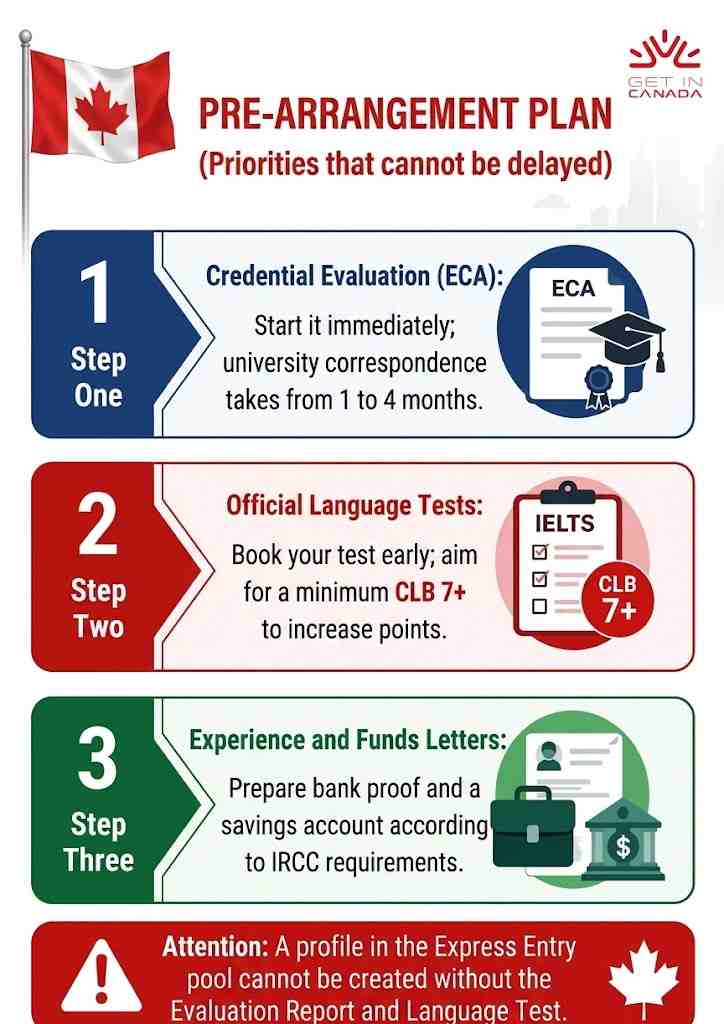
- Third-Party Processing Times: Credential evaluations (ECA) and language tests take weeks or months to finalize before you can create a profile.
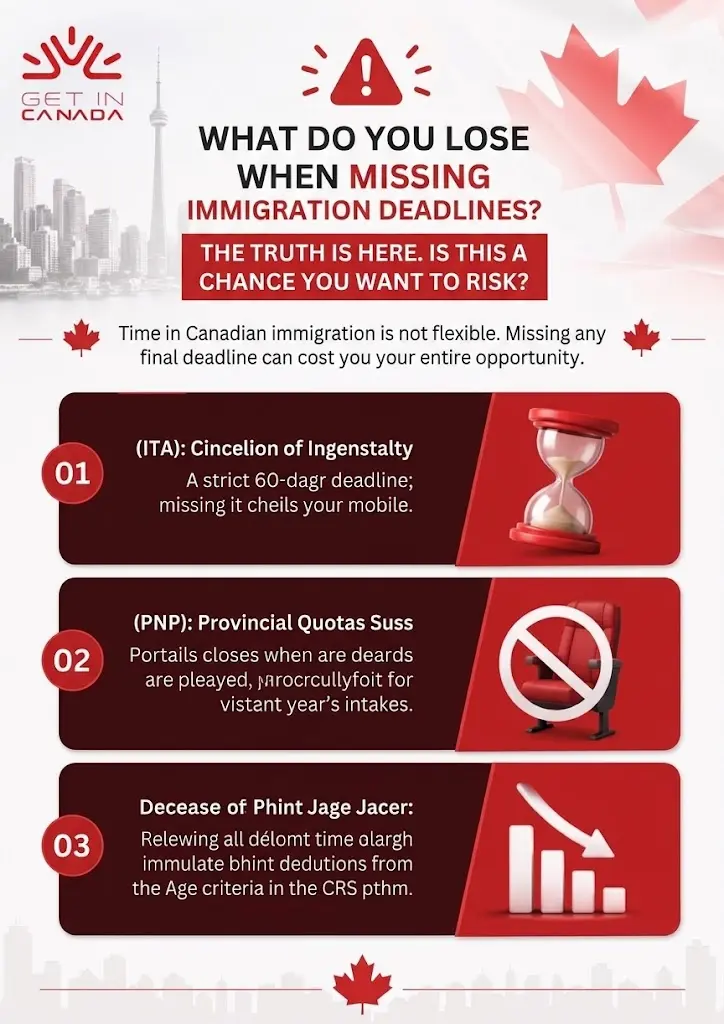
- The 60-Day Post-ITA Window: Once invited to apply (ITA), you have only 60 days to submit every police certificate, medical exam, and work record.
- Unannounced Quota Closures: Many provincial streams operate on a first-come, first-served basis, closing instantly once targets are reached.
- Age-Related Point Reductions: Delays that push your submission past a birthday can reduce your CRS score below draw cut-offs.
3. Checking Program Eligibility and Gathering Documents
Selecting the right pathway and assembling certified records early prevents costly refusals:
- Select the Right Stream: Compare federal Express Entry pathways with occupation-specific PNP streams to find your strongest score match.
- Confirm Eligibility: Verify baseline criteria for age, education, qualifying work experience, and financial settlement funds.
- Map Your NOC / TEER Code: Match your daily duties—not just your job title—to Canada’s National Occupational Classification matrix.
- Prepare Certified Translations & Records: Translate non-English or non-French documents via certified translators, maintain high-resolution color scans, and secure multi-country police clearances.
4. Language Testing and Credential Evaluations (ECA)
Language scores and foreign credential assessments are mandatory prerequisites for entering any economic pool:
- Approved Language Exams: Take designated tests only (IELTS General, PTE Core, CELPIP for English; TEF Canada or TCF Canada for French).
- Target CLB 7+: Achieving Canadian Language Benchmark (CLB) 7 or higher triggers valuable skill transferability points, while bilingual ability adds up to 50 bonus points.
- ECA Reports: Submit transcripts to designated agencies (such as WES, ICAS, or CES; MCC for doctors, PEBC for pharmacists). Evaluations remain valid for 5 years.
- Validity Checks: Ensure language tests remain within their 2-year validity window throughout profile creation, invitation receipt, and final submission.
5. Work Experience, Passports, and Settlement Funds
Proving employment history and financial stability requires objective third-party documentation:
- Detailed Reference Letters: Provide letters on official company letterhead detailing job titles, employment dates, weekly hours, annual salaries, and daily duties.
- Supporting Financial Proof: Back up work history with official payslips, stamped bank statements showing salary deposits, tax returns, and contracts.
- Passport Validity: Ensure your passport has at least 1.5 to 2 years of remaining validity, as visas cannot exceed a travel document’s expiration date.
- Settlement Funds: Maintain liquid funds meeting IRCC’s low-income cut-offs in accessible bank accounts, backed by official 6-month average balance letters.
Book Your Consultation Session →
6. Express Entry Profiles and Provincial Pathways (PNP)
Managing your profile and targeting provincial opportunities expands your selection options:
- Profile Accuracy: Ensure all ECA numbers, language test registrations, and employment dates match your primary source documents precisely.
- Regular Profile Updates: Update information immediately when language scores improve, extra work experience is earned, or family details change.
- Target In-Demand PNPs: Align your profile with provincial labor market shortages in provinces like Alberta, Saskatchewan, or Ontario to gain 600 nomination points.
- Consequences of Missed Deadlines: Letting an ITA expire cancels your application, while missing provincial intake windows means waiting for future annual allocations.
FAQs
Book Your Consultation Session →
Action Plan for Prospective Applicants
Successful immigration to Canada relies on early, systematic execution. Prioritize booking your language exam and ordering your educational credential assessment first, while securing detailed employer letters backed by bank records. With fully verified documents ready in hand, you can enter selection pools immediately and submit a complete application the moment a pathway opens.