How to Write a Canadian Resume When Applying from Abroad
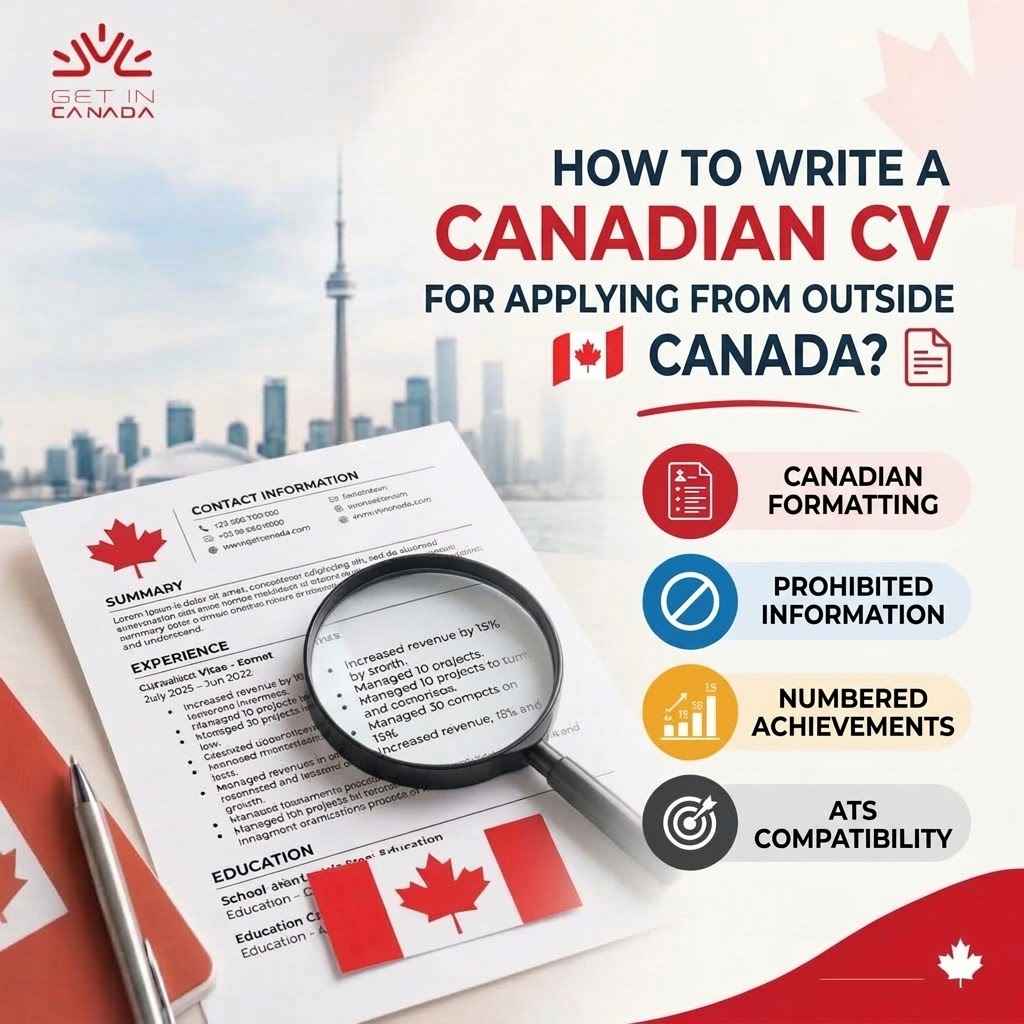
Did you know that submitting a traditional international CV might be the primary reason your Canadian job applications are being rejected? The Canadian hiring ecosystem operates under specific structural expectations and strict federal employment equity regulations. Canadian employers and recruiters do not favor lengthy, autobiographical documents filled with personal background details. Instead, they expect a concise, results-driven document optimized for Applicant Tracking Systems (ATS). This comprehensive guide breaks down the essential sections of a Canadian-style resume, how to frame your international background into measurable accomplishments, and which personal details must be removed immediately.
1. What Are the Core Sections of a Canadian Resume?
A Canadian resume follows a clean, logical architecture designed to let hiring managers and ATS algorithms extract your core qualifications within seconds. Structuring your profile correctly signals your familiarity with North American workplace standards and professional etiquette.
Header and Professional Summary
The document begins with a clean header containing only professional contact information, followed immediately by an impact summary.
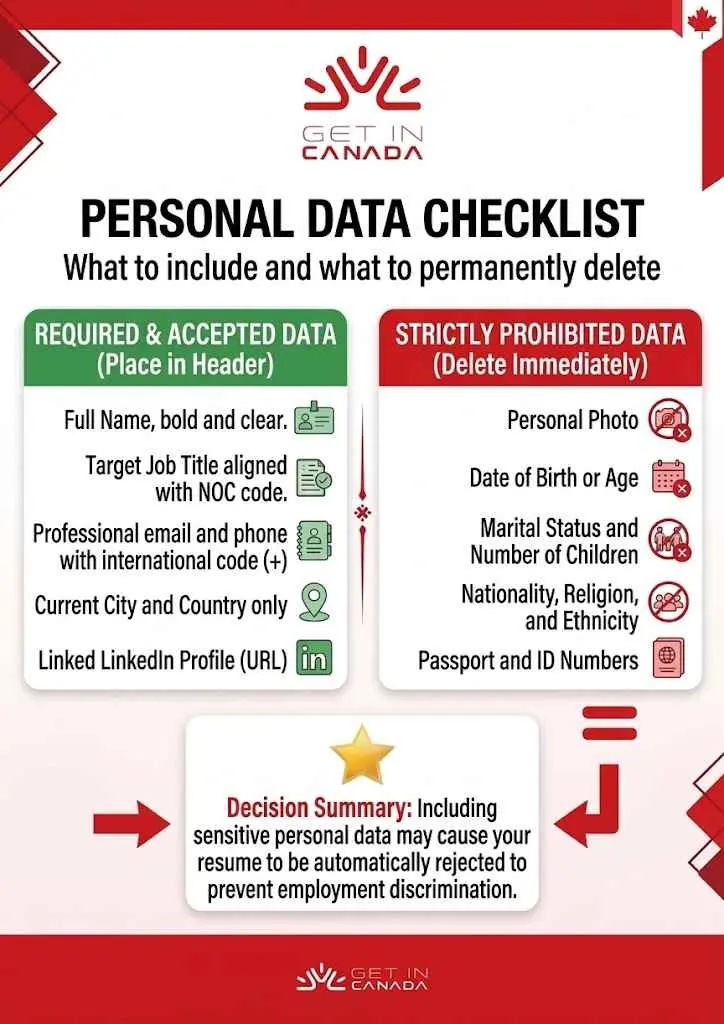
- Contact Information: Full legal name in bold, professional email address, phone number with country code (+), current city/country, and a customized LinkedIn URL.
- Professional Summary: A targeted 3 to 4-sentence overview capturing your specialization, years of core experience, and unique value proposition.
- Target Job Title: A clear headline matching the exact NOC occupation or job title published in the target Canadian job posting.
Book Your Consultation Session →
Professional Experience, Education, and Skills
Work history forms the centerpiece of the document and must always be formatted in reverse-chronological order.
- Work Experience: Clear company names, locations, job titles, and dates of employment (Month/Year), accompanied by bulleted accomplishments.
- Skills Matrix: Categorized core competencies covering relevant software, specialized technical proficiencies, and industry-standard workflows.
- Education & Credentials: Post-secondary degrees, granting institutions, graduation years, and relevant global or industry certifications.
2. How to Write a Job-Specific Professional Summary?
The professional summary replaces the outdated “Objective” statement. Rather than describing what you hope to gain from the employer, this section highlights the immediate, measurable value you bring to their operations. It must be tailored for each application using industry-standard terminology.
Positioning Value Over Aspirations
Canadian employers focus on immediate operational readiness rather than vague personal ambitions.
- Years of Focused Expertise: Open with your occupational identity and total years of verifiable industry experience.
- Core Functional Strengths: Highlight your primary operational domains, such as project optimization, revenue growth, or engineering design.
- Business Impact: State clearly how your background solves specific operational challenges for the hiring firm.
Integrating Targeted Role Keywords
Aligning the wording of your summary with the target job posting ensures high ATS scoring from the outset.
- Targeted Terminology: Embed exact technical keywords and functional phrases from the job advertisement.
- Brevity and Focus: Restrict this opening block to 50–70 words to maximize readability during initial scans.
- Eliminating Fluff: Avoid generic, unprovable adjectives like “hard-working,” “visionary,” or “natural team player”.
Book Your Consultation Session →
3. How to Present Your Experience Through Quantifiable Achievements?
The most common mistake international candidates make is simply copying daily duties and task descriptions from previous employment contracts. Canadian recruiters look for verified business impact and tangible results. Transforming routine obligations into quantified milestones proves your capability and differentiates your profile from local competition.
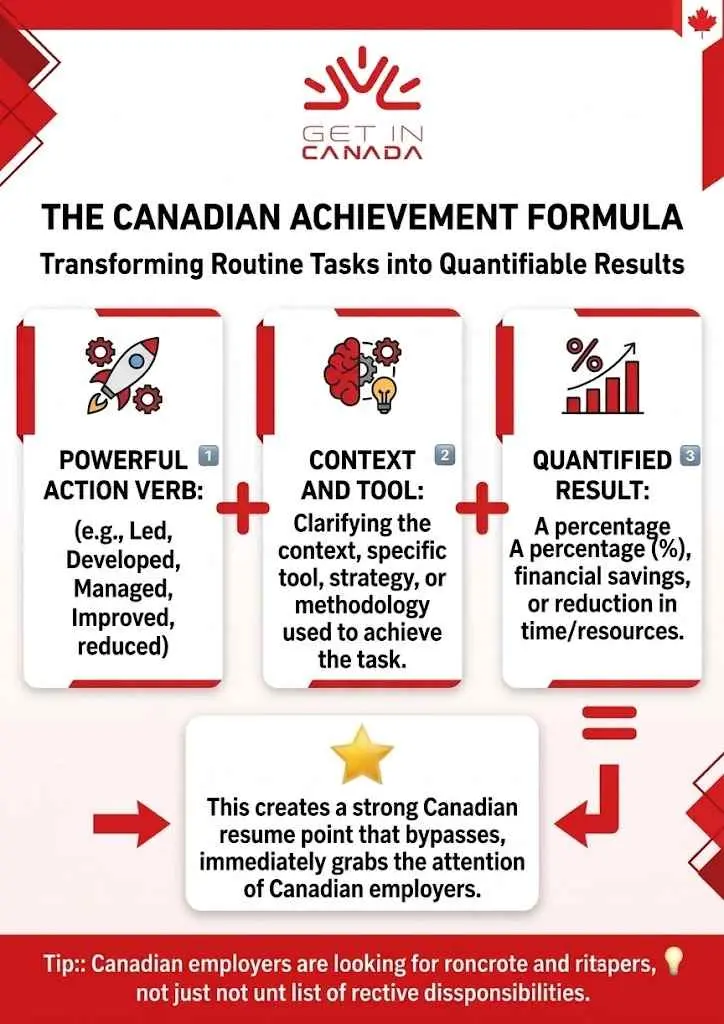
The Canadian Impact Formula: Action Verb + Context + Quantified Result
Every experience bullet point should demonstrate action and measurable outcomes.
- Lead with Strong Action Verbs: Begin every bullet with decisive past-tense verbs (e.g., spearheaded, engineered, optimized, restructured) rather than passive phrases like “responsible for”.
- Provide Operational Context: Explain the specific workflow, methodology, or technical framework utilized to resolve the problem.
- Incorporate Clear Metrics: Back up your assertions with financial metrics, productivity percentages, or verified time-savings.
Task-Based Descriptions vs. Achievement-Driven Bullets
The following matrix illustrates how routine duties are converted into high-impact Canadian accomplishments:
| Passive Task-Based Description PNG | Canadian Achievement-Driven Bullet PNG |
| Responsible for managing customer support staff and processing customer inquiries. | Led an 8-member client support team, reducing average inquiry resolution time by 35% and lifting annual satisfaction scores from 78% to 92%. |
| Managed company social media channels and created marketing posts. | Designed and deployed a multi-platform content strategy that generated a 45% increase in organic traffic and produced 12,000 qualified inbound leads. |
| Handled vendor contracts and company procurement operations. | Renegotiated terms across 14 major supplier agreements, capturing $45,000 in recurring annual operational savings. |
4. What Personal Information Should Be Excluded?
Canada maintains strict federal and provincial human rights and employment equity laws prohibiting hiring discrimination based on personal characteristics, appearance, or background. Including personal details creates legal liabilities for hiring committees, frequently triggering the automated rejection of your application.
Strictly Prohibited Resume Elements
Your Canadian resume must be completely stripped of personal, non-professional identifiers.
- Headshots/Photographs: Never include a photo; resumes with images are often discarded immediately to prevent bias claims.
- Age & Date of Birth: Exclude your exact birthdate or age to avoid age-discrimination compliance issues.
- Marital & Parental Status: Never state whether you are married, single, or have dependents.
- Nationality, Religion, and Gender: Exclude all references to citizenship, ethnic background, religious beliefs, or gender identity.
Details to Exclude When Applying from Abroad
Certain additional elements add clutter without providing value to Canadian recruiters.
- Full Residential Addresses: List only your current city and country rather than complete street addresses.
- Passport & ID Numbers: National ID or passport details are never required on a resume and should only be provided during formal immigration processing.
- Irrelevant Personal Hobbies: Omit casual pastimes unless they directly demonstrate core competencies tied to the target role.
Book Your Consultation Session →
5. How to Tailor Your Resume to Match Job Posting Keywords?
Canadian organizations receive hundreds of submissions per vacancy and rely on Applicant Tracking Systems (ATS) as their first screening filter. A resume will only reach human reviewers if it demonstrates high alignment with the specific keywords in the job announcement. Customizing your document for every individual role is the most reliable way to secure interviews.
Extracting Critical Keywords from the Posting
Carefully analyze the job posting to identify recurring technical terms, proficiencies, and required certifications.
- Hard Skills & Tools: Note the specific software platforms, analytical packages, and programming languages explicitly named.
- Standard Occupational Titles: Match your primary title to the exact phrasing and NOC nomenclature utilized by the employer.
- Industry Methodologies: Incorporate recognized project frameworks (e.g., Agile, Scrum, Lean, Six Sigma) referenced in the requirements.
Authentic Keyword Integration
Keywords must be woven organically throughout the professional summary and accomplishment bullets to pass both automated parsing and human scrutiny.
- Contextual Weaving: Place identified keywords within real career achievements rather than grouping them in an unnatural keyword block.
- Strict Factual Accuracy: Never include software or competencies you cannot defend during a rigorous technical interview.
- Clean Formatting Standards: Use single-column layouts in standard DOCX or text-searchable PDF formats; avoid tables, graphics, or text boxes that disrupt ATS parsing.
FAQs
Book Your Consultation Session →
Position Your Profile for the Canadian Market
Adapting your resume to Canadian standards is a strategic repositioning of your career narrative. By shifting from task lists to measurable achievements, stripping out personal demographic data, and systematically integrating job keywords, you maximize your visibility with Canadian recruiters.
If you need your qualifications assessed against Canadian immigration pathways, or require formal guidance on work permits and labor market sponsorships, consult with a Regulated Canadian Immigration Consultant (RCIC) to ensure your international transition is legally sound and fully compliant.