How to Avoid Scams While Searching for a Job in Canada
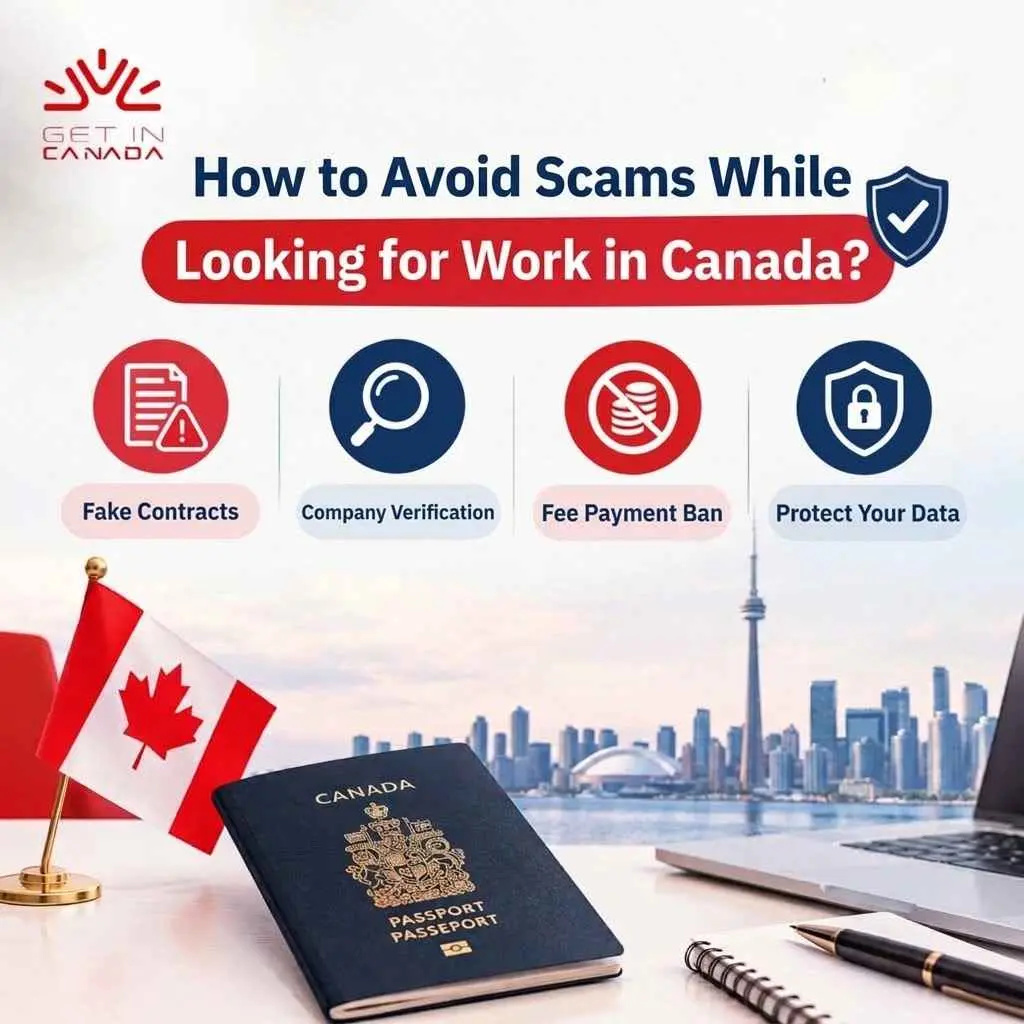
Have you been offered an attractive Canadian employment contract with a “guaranteed” visa approval in exchange for processing or administrative fees? The desire to work and settle in Canada has made overseas job seekers prime targets for international fraud syndicates and unregulated recruitment operators. These entities forge official government letters, misrepresent Canadian labor regulations, and exploit applicants’ unfamiliarity with immigration law. This guide breaks down the most common warning signs, how to legally verify a Canadian employer, and the strict protocols required to safeguard your money and identity.
1. What Are the Common Warning Signs of Fake Job Postings?
Fraudulent job offers follow predictable patterns designed to exploit emotion and urgency, pushing candidates to pay before conducting due diligence. Knowing these initial indicators is your first defense against recruitment schemes.
Unrealistic Compensation and “Guaranteed” Approvals
Scammers advertise terms that contradict established Canadian labor market realities to lure high volumes of applicants.
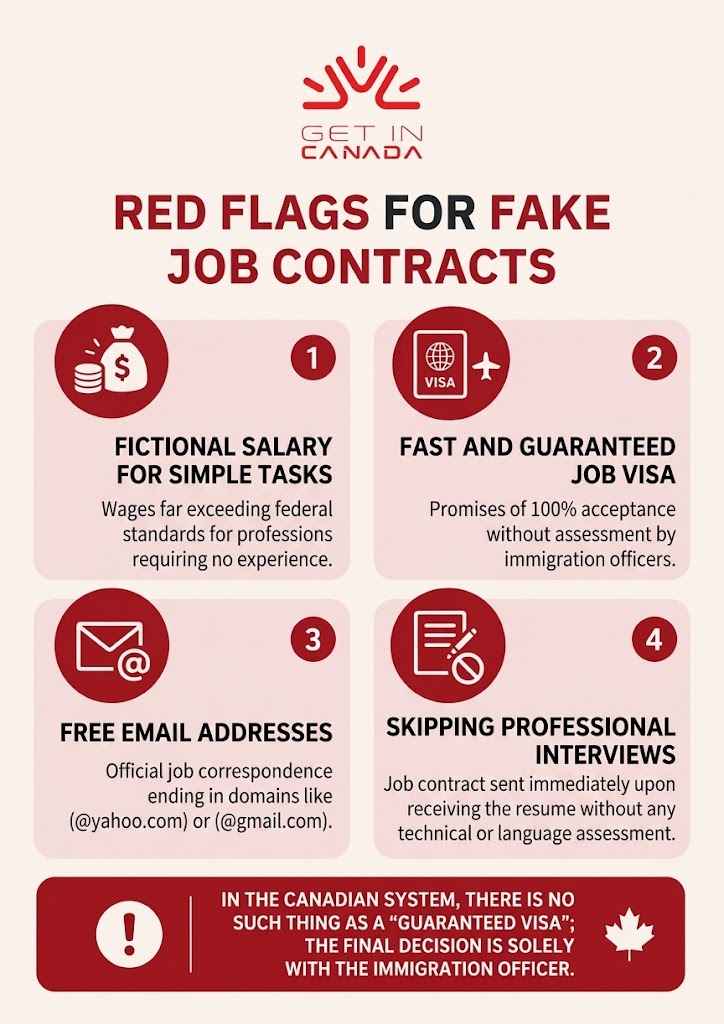
- Inflated Salaries for Basic Roles: Promising above-average wages for entry-level positions requiring no experience or specialized training.
- Expedited or Guaranteed Visas: Promising work permit approvals in days or weeks, bypassing mandatory IRCC scrutiny.
- No Formal Interview Process: Issuing an employment agreement immediately upon CV submission without technical assessments or language screenings.
Lack of Professional Structure and Operational Detail
Fake offers lack the standardized structural components required of legitimate Canadian corporate entities.
- Vague Duty Descriptions: Generic task summaries omitting NOC/TEER classification codes and measurable performance metrics.
- Free Public Email Services: Communication originating from generic domains (
@gmail.com,@yahoo.com, or@outlook.com) rather than a registered corporate domain. - Artificial Pressure Tactics: Demanding signed contracts and money transfers within 24 to 48 hours under threat of forfeiture.
Book Your Consultation Session →
2. How Do You Verify the Company and Contact Information?
Validating an employer’s legal existence in Canada is mandatory before submitting confidential documents. Canada provides public registries to verify corporate status and operational history.
Checking Federal and Provincial Corporate Registries
Every incorporated business in Canada must register federally or provincially.
- Corporations Canada: Search the federal corporate registry database to confirm valid registration numbers and corporate addresses.
- Provincial Registries: Verify local registration through provincial business registries (e.g., Ontario, British Columbia, or Alberta).
- IRCC Ineligible Employers List: Check IRCC’s public registry of non-compliant employers prohibited from hiring foreign workers due to regulatory violations.
Auditing Digital Footprints and Communication Channels
Established Canadian businesses maintain a verifiable corporate web presence.
- Corporate Domain Matching: Confirm inbound email domain names match the employer’s official website URL without variations or extra characters.
- Direct Landline Verification: Check listed phone numbers against Canadian regional area codes and call the public switchboard directly to confirm the HR personnel named.
- LinkedIn Corporate Footprint: Inspect the organization’s official LinkedIn page to confirm real, verifiable staff and internal talent acquisition teams.
3. What Must You Know Before Paying Any Money?
All recruitment scams culminate in one request: transferring money for administrative fees, interview bookings, or visa processing. Canadian federal law strictly prohibits charging prospective foreign workers recruitment fees. Understanding legal cost allocations protects your savings.
The Strict Prohibition on LMIA and Job Offer Fees
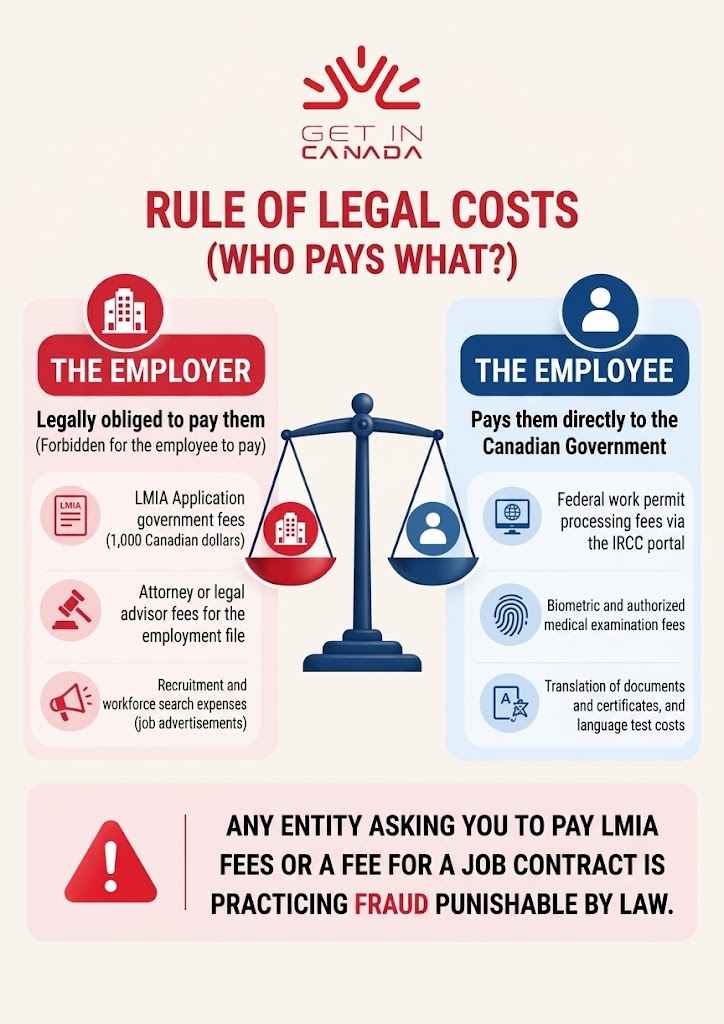
Employment and Social Development Canada (ESDC) assesses a $1,000 CAD government processing fee per requested temporary foreign worker position under the TFWP.
- Exclusive Employer Obligation: Employers are legally mandated to pay all LMIA fees and associated legal costs.
- Illegal Cost Recovery: Deducting LMIA expenses from a foreign worker’s salary or demanding reimbursement is a federal offense under Canadian law.
- The “Job Sale” Scam: Purchasing a job offer or LMIA is illegal, constitutes immigration fraud, and leads to application refusal and multi-year bans.
Official Government Channels vs. Scam Payment Requests
Unregulated agents use untraceable payment channels to prevent fund recovery once fraud is discovered.
- Untraceable Transfer Services: Never transfer recruitment fees via Western Union, MoneyGram, peer-to-peer transfer apps, or cryptocurrency.
- Official IRCC Fees: Visa processing, biometrics, and landing fees are paid directly by the applicant through their official IRCC online account.
- Bogus Service Invoices: Refuse payments for unexpected requirements like “job security bonds,” “fast-track clearance,” or upfront “relocation holding deposits.”
4. How to Protect Your Passport and Personal Data During Applications?
Recruitment schemes often involve identity theft, using stolen credentials to open fraudulent accounts or target additional victims. Scammers frequently demand passport scans and birth certificates early under the guise of “pre-file evaluation”. Guarding your identity is an essential element of a secure job search.
Legitimate Timelines for Identity Verification
Employers do not require identity documents during the initial screening phases.
- Resume Submission Phase: Include only your legal name and contact details; never attach passport scans, identity cards, or birth records.
- Interview Phase: Visual identity checks are conducted live over standard enterprise video platforms, not through email attachments.
- Immigration Filing Phase: Official identification documents are submitted directly to the Government of Canada via the secure IRCC web portal, never to third-party email addresses.
Digital Security Protocols for Essential Documents
If document verification becomes necessary with an authenticated employer, follow data security protocols.
- Apply Security Watermarks: Add a clear digital watermark across the document stating: “For employment verification with [Company Name] only.”
- Redact Non-Essential Identifiers: Obscure national identification numbers and signatures on preliminary review documents.
- No Banking Disclosures: Never provide credit card numbers or personal bank access information at any stage of the application process.
Book Your Consultation Session →
5. What Should You Do If You Suspect Fraud or Fall Victim?
Immediate action minimizes financial loss and limits identity misuse. Canadian enforcement agencies maintain reporting avenues to track domestic and cross-border employment scams.
Immediate Protective Actions
Sever communication as soon as suspicious behavior appears.
- Terminate Communication: Block all phone numbers, messaging accounts, and email addresses associated with the sender; do not respond to threats or demands.
- Notify Financial Institutions: If banking information was shared or funds sent, alert your bank immediately to flag transactions and secure your accounts.
- Update Digital Credentials: Change passwords across your email and professional accounts, enabling two-factor authentication (2FA).
Filing Official Reports with Canadian Authorities
Reporting fraud helps regulators shut down unlawful operations and warn other job seekers.
- Canadian Anti-Fraud Centre (CAFC): File an intake report detailing communication logs, transaction records, and identities used.
- IRCC Fraud Reporting: Submit formal notifications through the IRCC web reporting portal to flag fraudulent entities using forged approvals.
- Job Board Moderation Teams: Report listings on Job Bank, LinkedIn, or Indeed to trigger administrative removals and account bans.
6. Can Anyone Guarantee a Canadian Job or Work Visa?
The short answer is no: absolutely nobody can guarantee a Canadian job or visa approval. Any agency, recruiter, or consultant promising a 100% success rate is misleading you. Canada enforces a clear division between private employers and federal immigration authorities.
- Exclusive IRCC Jurisdiction: The decision to grant an entry visa or work permit rests with authorized IRCC officers evaluating identity, health, and security parameters.
- Employer Authority Limits: An employer can offer a job and obtain an LMIA, but they have no authority over embassy decisions or processing outcomes.
- Regulated Immigration Consultants (RCIC): Licensed practitioners can represent and optimize your application, but federal codes of conduct strictly bar them from guaranteeing outcomes.
Book Your Consultation Session →
7. How Do You Know If a Canadian Job Offer Is Genuine?
A legitimate Canadian job offer meets verifiable legal and contractual standards. Knowing these elements provides confidence as you advance through the hiring process.
Checklist of a Legitimate Job Offer Letter
A formal employment contract includes verifiable operational details.
- Official Company Letterhead: Displays the registered corporate name, physical Canadian address, local telephone contact, and business registration number.
- Comprehensive Terms of Employment: Outlines the specific NOC job title, full-time hours (minimum 30 hours per week), hourly wage or salary, and detailed job duties.
- Conditional Clause on Immigration Approval: States that employment begins only upon the applicant securing a valid work permit from IRCC.
- Authorized Signatures: Features the name, title, and contact details of an authenticated HR officer or company director for independent confirmation.
FAQs
Book Your Consultation Session →
Protect Your Immigration Journey
A legitimate path to Canadian employment requires verified skills, patience, and adherence to established legal processes. Verify corporate registrations through public registries, reject any demands for recruitment fees, and steer clear of agencies promising guaranteed results.
If you need a formal review of an employment contract or want to ensure your immigration path meets federal standards, consult with a Regulated Canadian Immigration Consultant (RCIC) to keep your move secure, compliant, and legally sound.